
How to Track AI Visibility in ChatGPT (Stop Guessing)
One prompt ranked a SaaS brand #1 in an AI answer one day and #8 the next, and that swing is where how to track AI visibility really starts. A single answer is a snapshot, so the job is tracking the trend across engines and checking it against what new customers say.
Watch Besmir Bregasi Break Down How to Track AI Visibility
This episode of AI Rabbit Holes is a conversation with Besmir Bregasi, Chief Growth Officer at ZeroRank, an AI search visibility platform.
ZeroRank is where he works, so weigh his tool claims with that in mind. He flagged it himself on the recording with "obviously I'm biased."
One correction worth making: I introduced him as ZeroRank's founder, which was my mistake. He runs growth there, says he invested in the company, and still runs a few other SaaS products of his own.
If you want to turn what you learn from tracking into content, my Claude Code Skills Stack includes the research and content skills I run for clients.
Same Prompt, Ranked Anywhere From #1 to #8
A single AI answer depends on "many, many things," Besmir said, which is why he samples across browsers, IPs and profiles. His screen share showed the variance, with his dashboard set to the last seven days, two AI models, and only the runs that mentioned AdPlexity Social, a Meta ads tool he owns.
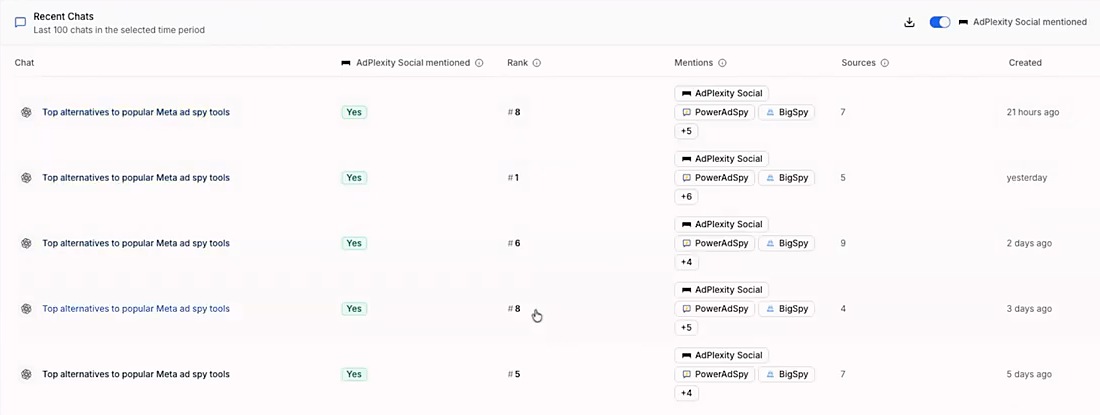
That view listed five runs of one prompt, "Top alternatives to popular Meta ad spy tools." Oldest to newest, the brand ranked #5, #8, #6, #1 and #8.
Even the number of sources behind each answer moved, from 4 to 9. Nothing about the prompt changed between runs.
The filter hides runs that left the brand out, so the total run count isn't on screen. Treat it as the noise inside one prompt over one week.
What Besmir calls statistical significance is his fix. Run the same prompts many times, across browsers, IPs and profiles, and track the share of answers that mention you.
If you are working out how to track AI visibility for your own brand, start there and never report a single run. My roundup of AI visibility tools and what they actually measure makes the same sampling point with a Perplexity test.
How to Track AI Visibility as a Trend, Engine by Engine
So how do you read a number that changes every day? Besmir compares it to a body fat scale, which jumps with how much water you drank but shows the real direction over three months.
Besmir's other rule is that you cannot treat AI search as one thing. "A lot of brands will show in one and won't show the other," he said, because each engine leans on different sources.
From what he has seen across ZeroRank's clients, Perplexity pulls a lot from Reddit and news sites, Google's AI Overviews from Google's own results, and Grok from X. He also said ChatGPT gets a lot from Bing.
I'd hold that one loosely. OpenAI's ChatGPT search help page says it sometimes partners with other search providers without naming them, and I dug into why the ChatGPT answer is contested in which search engine each AI actually uses.
Either way, test each engine separately and expect them to disagree.
Here is what AI search visibility looks like as a trend. Besmir showed the monthly report for AdPlexity Social, his own product measured in his own tool, so read it as an example of the format only.
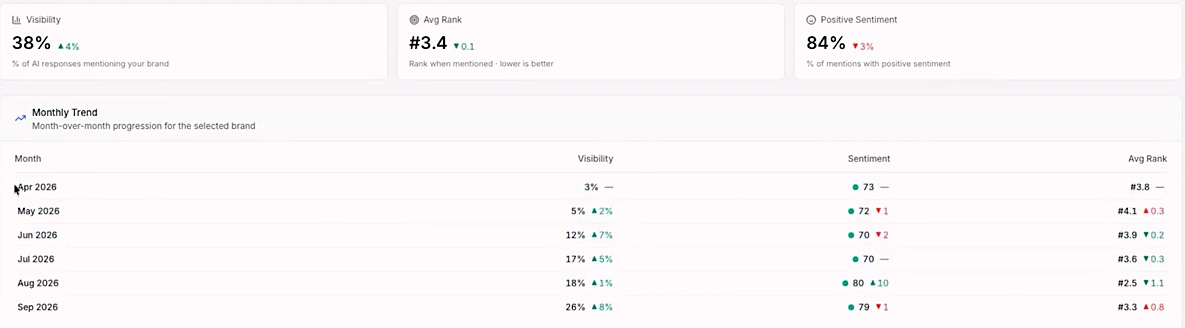
Visibility rose every month, from 3% in April to 26% in September. The 38% card on top is the percentage of tracked AI responses that mentioned the brand over a shorter, more recent window.
Average rank swung over the same months, from #3.8 in April to #4.1, #3.9, #3.6 and #2.5, then back to #3.3 in September. Visibility share is the number that moved in one direction, and it is the metric Besmir called the most important one on the screen.
Ask New Customers How They Found You
I think most advice on how to track AI visibility stops too early, at the dashboard. Besmir ranks one method above every dashboard, and it costs nothing.
He asks every new user at onboarding, and every demo call, the same question: how did you hear about us? "The single most accurate thing you can do is just ask them," he said.
Tracking scripts, in his view, are "never gonna work." A buyer might see you in one place, read a review somewhere else, and finally come straight to your site.
I still call attribution the devil of marketing, especially in a zero-click era. A direct answer from the buyer gets closer than any dashboard.
Two guests from different companies have now landed on the same fix. Sam Dunning asks on forms, signup, demo flows and again on sales calls, as he explained in our episode on measuring SaaS SEO when attribution is a mess.
Asking also tells you which engines your buyers name. In Besmir's post-signup surveys across his own SaaS products, buyers named ChatGPT and Perplexity, and he said "usually these people convert best."
"I don't know why," he added, and he rarely heard Claude named, which he thought might come down to his sample. My guess on ChatGPT is context: people write long, detailed prompts there, so they tend to arrive mid-to-bottom funnel, while a quick Google search is usually top-of-funnel research.
The dashboard shows direction, and your customers confirm it.
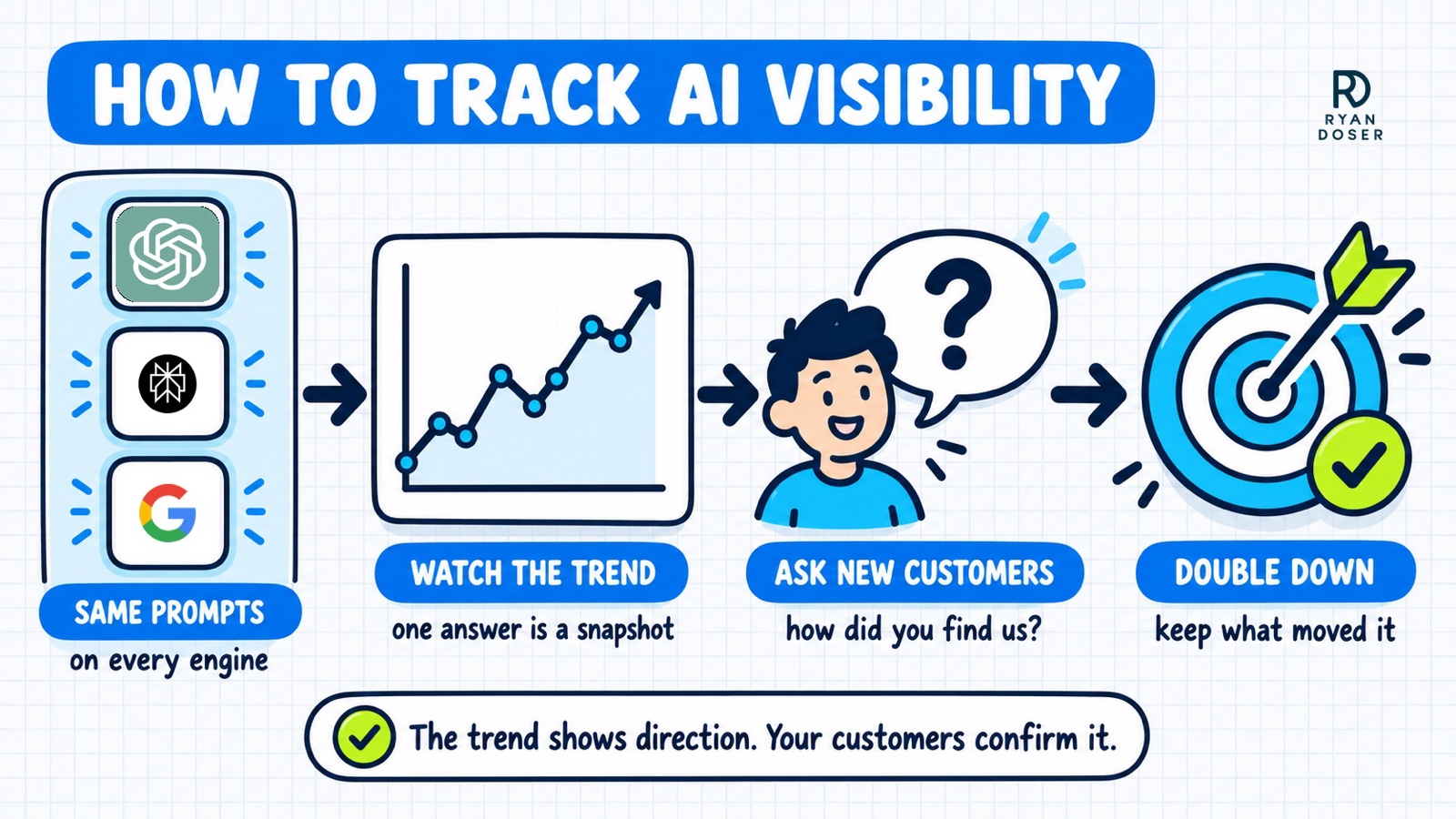
Besmir's loop from there is short. Make a change, track it properly, double down on what worked and drop what didn't.
For a rough second signal, Besmir pointed to Google Search Console, which has offered a Generative AI performance report for AI Overviews and AI Mode to all websites since August 31, 2026.
His example was bottom-of-funnel pages, like competitor alternatives. If those pages show up in AI Overviews, he reads it as buyers in the final stage, and he called the rest of the measurement options "not accurate or noise."
If you want a manual version first, the monthly ask-the-models check in my AI SEO strategy runs in a spreadsheet. Run each prompt more than once, for the reason the screenshot above shows.
What to Do When Competitors Outrank You in AI Answers
Once you know how to track AI visibility, the next question is why five competitors sit above you. The manual step Besmir gave is to open the answer, read the sources it cites, and reverse engineer them.
That shows you which pages the engine trusted over yours. He said ZeroRank's suggestions make the job "way easier," a claim about his own product.
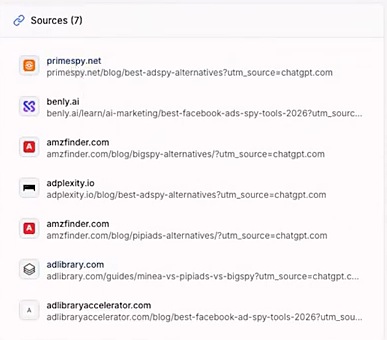
Most of those seven sources were "best tools" and "alternatives" posts. One was AdPlexity's own alternatives post, so own-site listicles clearly can get cited.
Besmir said listicles on your own site tend to work, mainly in low-competition niches. His analogy for why offsite usually wins is a company of 30 people.
Ask one employee how their performance is and they'll say it's good. Ask their colleagues and you get a much better picture.
"Offsite is always going to win compared to whatever you post on your own site," he said, then added, "It doesn't mean you shouldn't." In his view, your pages still count, they just carry less weight than what other people say about you.
These are the offsite signals he sees carrying the most weight:
- YouTube, weighted more on a trusted channel or a video with a lot of views and shares
- Reddit, which he still sees as a very strong source
- Trustworthy news sites and editorial coverage
- Trending fast on one channel, such as X
Besmir also says speed counts, because more mentions in a short window carry more value than the same mentions spread out. In competitive niches, he added, the story has to match everywhere, from your website to Reddit, G2 and Trustpilot.
I'd add that YouTube is the ultimate parasite in the age of AI search. Technically you could be cited without having a website at all, from a YouTube channel, a conference talk or a book.
The opposite move is spinning up a thousand programmatic pages, advice I see everywhere and that honestly infuriates me. Besmir's take was that it can work in very low competition niches but isn't a long-term strategy.
Stop Grading Your Brand on One AI Answer
Pick a fixed set of buyer prompts, run them in each engine, and judge the results over months instead of days. Then add "how did you hear about us?" to your signup flow, because that answer is what ties tracking to revenue.
That is how to track AI visibility without guessing, and the first step is as small as running each buyer prompt more than once.
How to Track AI Visibility FAQs
How do you measure AI visibility?
Measure the share of AI answers that mention your brand across a fixed set of buyer prompts, run repeatedly on each engine. That share, often called AI share of voice, is steadier than any single rank. Pair it with a "how did you hear about us?" question at signup, so you learn which engines actually sent buyers, the way Besmir's own surveys pointed to ChatGPT and Perplexity.
Why does my brand's ChatGPT ranking change every day?
Each answer is generated fresh from whatever sources the engine pulls that time. In Besmir Bregasi's dashboard, one prompt ranked anywhere from #1 to #8 within a single week, and the number of sources behind it ranged from 4 to 9. Report weekly or monthly averages instead of daily ranks, or you will end up reacting to noise.
Is an AI visibility tracker worth paying for?
Only if you will act on the trend. A tracker earns its cost when you make a change, watch whether visibility moves over the following weeks, and keep what worked. Besmir, who works at ZeroRank, calls it money well spent. Until you are ready to act, a manual monthly check in a spreadsheet is enough.
Can Google Search Console show AI Overview traffic?
Partly. Google says it rolled out a Generative AI performance report in Search Console to all websites as of August 31, 2026, counting AI Overview and AI Mode impressions by page, country and device. It does not show clicks, positions or the queries behind them, so use it to spot which pages AI features surface, and judge revenue on signups and what new customers say.