
My AI SEO Strategy in 2026 (Most Advice is Wrong)
My AI SEO strategy comes down to five moves, and the order matters more than any single tactic. This is the process I run for seven-figure clients across SaaS, cybersecurity, and affiliate sites, and it exists to answer one question: why does ChatGPT recommend a competitor and never say your name?
I am assuming you already know what AI SEO is and do not need the acronym tour. If you want the definitions, the short version is that AEO, GEO, and LLMO all describe the same job. What follows is the part nobody hands you: what I actually do, in what order, and where I think most of the money in this category is being wasted.
On that last point, I will be blunt early rather than bury it. Agencies publish AEO retainer rates from $1,500 a month up past $30,000 at enterprise, and it is worth knowing who is actually worth paying for AI search work and what each price tier actually buys you, and for most of the people reading this, that money buys schema, content structure, digital PR, and crawlability. Those are standard SEO deliverables with a new label on the invoice. I cover exactly when a retainer is worth it further down, but plan on running this yourself.
Some of what follows is my read on a full AI SEO playbook that Sabrina Ramonov published and walked through on a livestream. I agree with most of it. I disagree with one part loudly, and I will show you where.
The short version
- AI SEO is getting named, not ranked. An answer names a few brands and has no page two.
- Being cited and being mentioned are different wins. Only 21% of the most-cited domains were also the most-mentioned brand, and readers act on the mention.
- Nothing technical got replaced. A site that cannot rank generally does not get cited either.
- Most of the deciding evidence is off your site. Podcasts, press, and other people's articles do the heavy lifting.
- You probably do not need an AEO retainer. Published rates start around $1,500 a month for work that is mostly standard SEO.
Why Most AI SEO Strategies Fail Before They Start
The strategies I get asked to fix usually fail for the same reason: they were built to chase citations without first deciding what the brand should be cited as. That ordering mistake is expensive, and it is why Step 1 below is positioning rather than a tactic.
The mechanical difference between AI SEO and the SEO you already do is smaller than the acronym sellers want you to believe. The behavioral difference is enormous, and it changes how you should allocate effort.
Old search gave you ten blue links per page, plus page two, plus page three. Ranking fourth still earned real traffic. An AI answer names a few brands and stops, and how few depends heavily on your category. Semrush's AI visibility research measured brand diversity per query and found ChatGPT naming 4.72 brands in business services but only 1.22 in consumer electronics.
Check your own category before you assume you have room. In a low-diversity category, the answer names one brand, and everyone else is invisible for that question.
Being cited and being mentioned are not the same win
A separate Semrush study, covering more than 600,000 citations across 1,094 categories, found the thing that should actually reorganize your priorities. Only 21% of the most-cited domains in a category were also the most-mentioned brand, and the two correlate slightly negatively.
Readers act on the mention, not the footnote. Kevin Indig's consumer research found that 74% of participants chose the item ranked first in the AI's response as their top pick. So chasing a link under the answer is a different job from being the brand the answer talks about first, and the second one is what converts.
AI SEO vs Traditional SEO: What Actually Changes
Here is the honest comparison, including the parts that did not change.
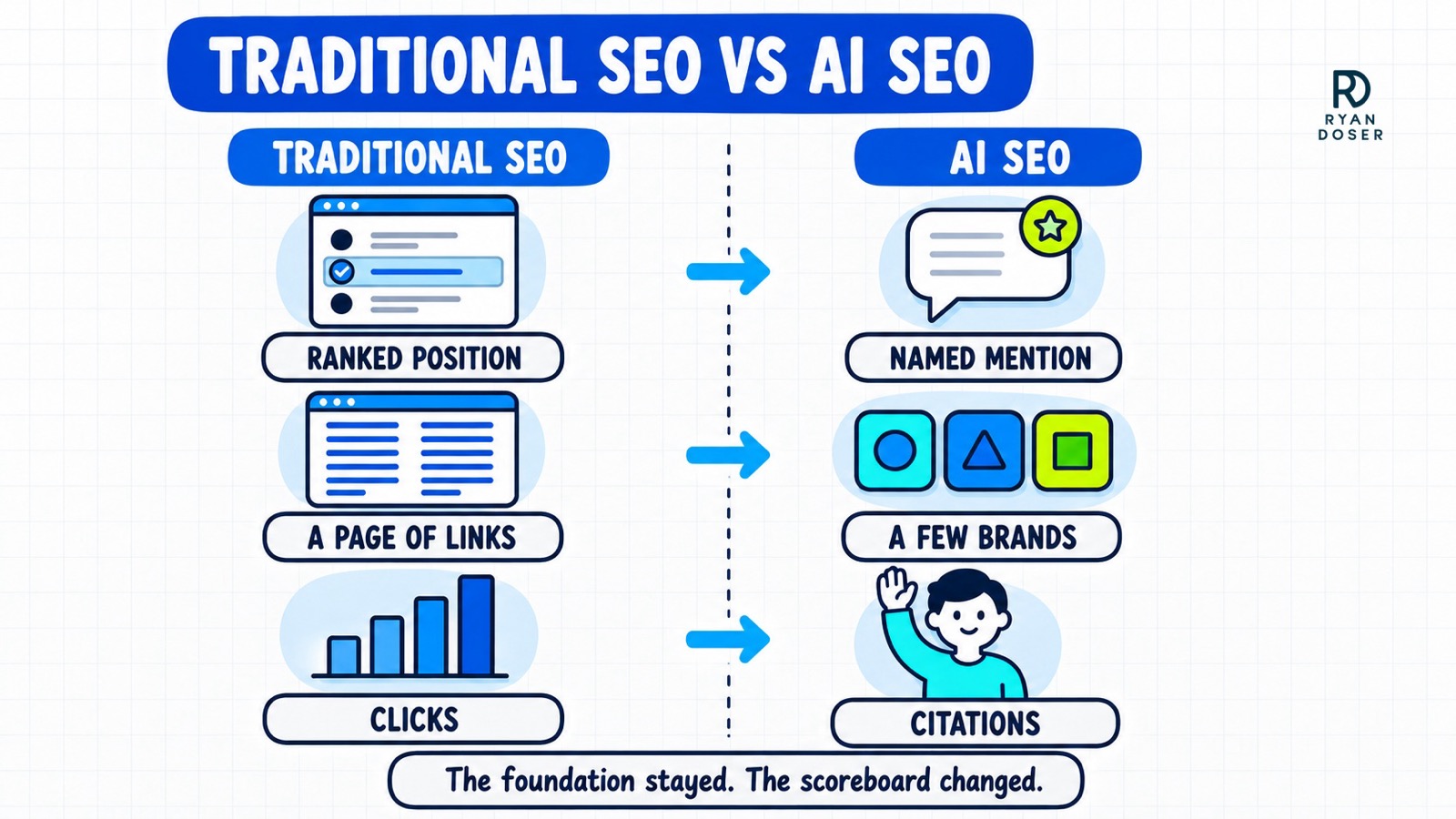
Read that last row carefully, because it is the one the hype crowd skips. The technical foundation did not get replaced. AI engines retrieve live search results when they answer, so a site that cannot rank generally does not get cited either. Every case study I have seen of a site winning AI citations also had working traditional SEO underneath it.
I have written before about what actually moves AI search citations, and the pattern held there too: skipping SEO fundamentals to chase a GEO tactic is the most overrated move in the industry right now.
Why AI SEO Favors Small Sites
This is the genuinely good news, and it is structural.
Ranking a new site against an established brand is a years-long fight over domain authority. Getting cited is a different contest. AI engines are looking for the most specific, most quotable, most clearly-sourced answer to a narrow question.
A 400-word page that answers one question precisely can get pulled into an answer over a 4,000-word corporate guide that hedges. Precision beats page count here, which is the opposite of how the old game rewarded you. That is exactly the edge rank and rent SEO operators exploit: a focused niche site beating a big brand on one specific question.
You can check this for yourself in about a minute, which is the point. Run your own category question in ChatGPT or Perplexity and read which sources it leans on. On the AI SEO queries I track for client work, the cited set regularly mixes Reddit threads and YouTube videos in with the big publishers. Forum posts and videos are not domains you have to outspend. They are formats you can produce this week.
The AI SEO Workflow in Five Moves
The rest of this guide is one process. Here it is on a single screen before we go step by step.
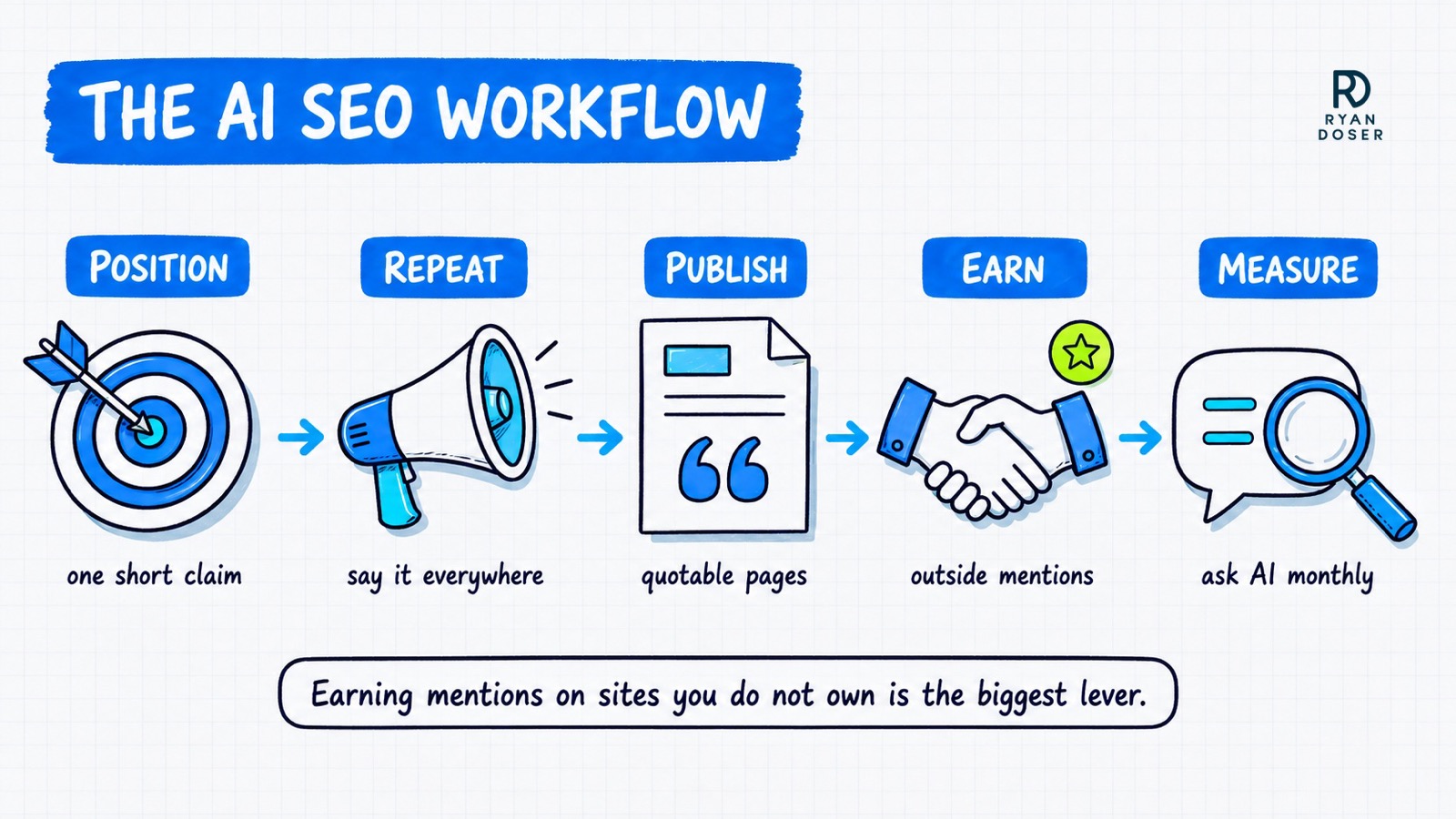
Step 1: Pick the One Thing You Want to Be Known For
Before any tactic, you need a positioning line short enough that a model can repeat it without garbling it.
Sabrina frames this as a specific claim about the value you provide to a specific group of people, rather than a job title, backed by proof points. Hers is "#1 AI Educator for Entrepreneurs." Mine is AI-first marketer. Short enough to survive being repeated by a machine, specific enough to mean something.
The mistake I see most often is the opposite: a ten-page brand document with pillars and archetypes that nobody, human or model, can compress into one sentence. If it takes a page to explain, it will not survive a paraphrase.
The reason this matters more with AI than it did with Google is confusion cost. If your LinkedIn says one thing, your site says another, and a podcast host introduced you as a third thing, the model has no confident answer about what you are. Models resolve that ambiguity by naming someone else.
Step 2: Say the Same Thing Everywhere
Once you have the line, repeat it on every surface a crawler can reach. Your site, every social bio, review profiles like G2 and Trustpilot, directory listings, podcast bios, and your email signature.
Updating your LinkedIn and stopping is the common failure. Consistency across sources is the signal. One updated profile is not.
While you are in the technical layer, open your robots.txt and confirm you are not blocking the crawlers that feed AI answers. The three that decide whether you can be quoted in a live answer are OAI-SearchBot (ChatGPT search), Claude-SearchBot, and PerplexityBot. I have audited client sites that spent months chasing AI visibility while quietly blocking the exact bots they were trying to reach, usually while paying for tactics that were never going to work anyway. Those three bots also read three different indexes, which I broke down in what search engine each AI actually uses.
One correction worth making, because plenty of guides get it wrong: Google-Extended is not in that list. Per Google's own crawler documentation, it controls whether your content trains and grounds Gemini models. Google says so directly.
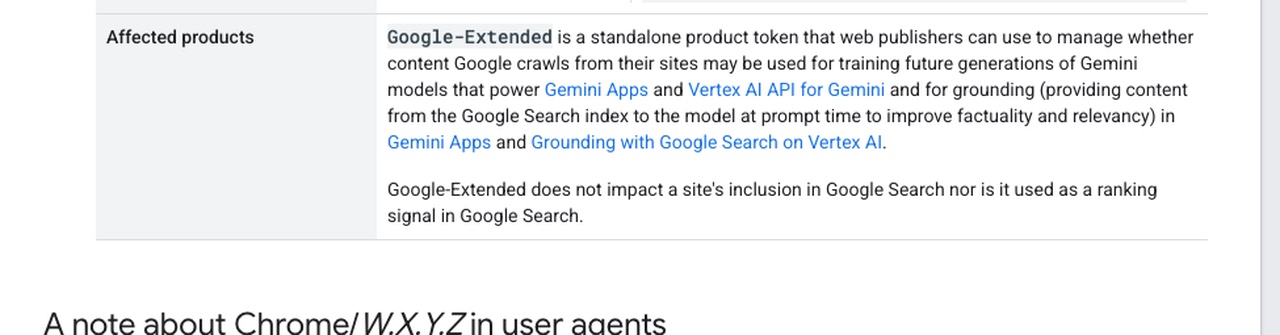
Blocking it is a training decision, not an AI Overview decision. Treat those as separate choices, and ignore any guide that tells you unblocking it will win you AI Overview citations.
Step 3: Build the Page Formats AI Actually Quotes
Three formats get pulled into AI answers far more than anything else, because they map to how people ask buying questions:
- "Best X" lists for category questions
- "X vs Y" comparisons for decision questions
- "X alternatives" pages for switching questions
There is a trap here, and I learned it the expensive way on client work. An even-handed comparison page gets cited constantly, because fairness is exactly what makes it quotable. But a model can lift one sentence out of your honest write-up of a competitor and serve it as a recommendation for that competitor. You supplied the research and your rival got the customer.
The fix is not to lie about competitors. It is to keep every qualifying condition inside the same sentence as any recommendation. Write "Tool X wins if you need Y and have Z" rather than a clean sentence praising Tool X followed by a separate sentence listing its limits. A lifted chunk should not be able to travel without its condition attached.
Then format those pages so a model can lift them cleanly
This is the part people overthink. Five changes do most of the work:
- Make headings the questions people actually ask. Not "Our Methodology" but "How much does AI SEO cost?"
- Answer in the first two sentences under the heading. Models extract chunks, not whole pages.
- Replace vague phrases with specific numbers and named sources. "Significantly faster" is unquotable. "Cut it from 40 minutes to 6" is quotable.
- Keep table rows self-contained. Every cell should make sense pulled out of the table alone.
- Add Organization and FAQ schema. It makes your content machine-readable and costs almost nothing.
The unifying rule: assume any single paragraph will be quoted with zero surrounding context. Write so that lifting it does not misrepresent you.
Step 4: Get Mentioned on Sites You Do Not Own
Most of what a model knows about your brand comes from sources you do not control. That is why on-page work alone stalls.
The workflow I use is straightforward:
- Ask the models the buying question. Run your buyer's category question in ChatGPT, Claude, and Perplexity.
- Read which articles get cited. Those specific pages feed the answer, so they are your target list.
- Pitch those authors. Give them a real reason you belong in the piece, not a link request.
Two channels compound faster than outreach, because they create permanent pages on domains that already have trust.
Podcast appearances. Twelve guest spots is twelve indexed pages on other people's trusted domains, each one describing you in your own positioning language. This is the single most underrated AI SEO tactic I know.
Press releases through a wire service. A real announcement pushed through a wire gets syndicated across news sites, which is a cheap way to create third-party sources that say what you want said. Keep it to genuine news, front-load the who and what, and write it in third person.
Where I Disagree: Do Not Buy an "AEO Service"
Here is my loud disagreement with how this whole category is being sold.
Look at what agencies publish for this work. Stackmatix puts small-business AEO retainers at $1,500 to $5,000 a month, and Digital Elevator's guide has mid-market companies paying $2,000 to $10,000 a month, with enterprise programs running $10,000 to $30,000 and up. A large share of that spend buys renamed SEO fundamentals plus a visibility dashboard. Before you pay for one of those dashboards, it is worth checking whether the vendor keeps its own numbers straight, which is what I found when I went through AIclicks.
If someone pitches you a dedicated AEO retainer as a replacement for your marketing, be skeptical. Ask them one question: what are you doing that is not schema, content structure, digital PR, and technical crawlability? If the answer is a tracking dashboard, you are paying a premium for a rename. The same question is worth asking of the platforms that automate this work, which is why I went through what Search Atlas actually charges and what it does for the money rather than taking the pitch at face value.
The demand is real because the confusion is real. Everybody is asking what AEO and GEO mean, which makes it an easy thing to sell. That does not make it a new discipline.
To be fair to the other side, there are real cases where hiring it out is the right call. Here is how I split it.
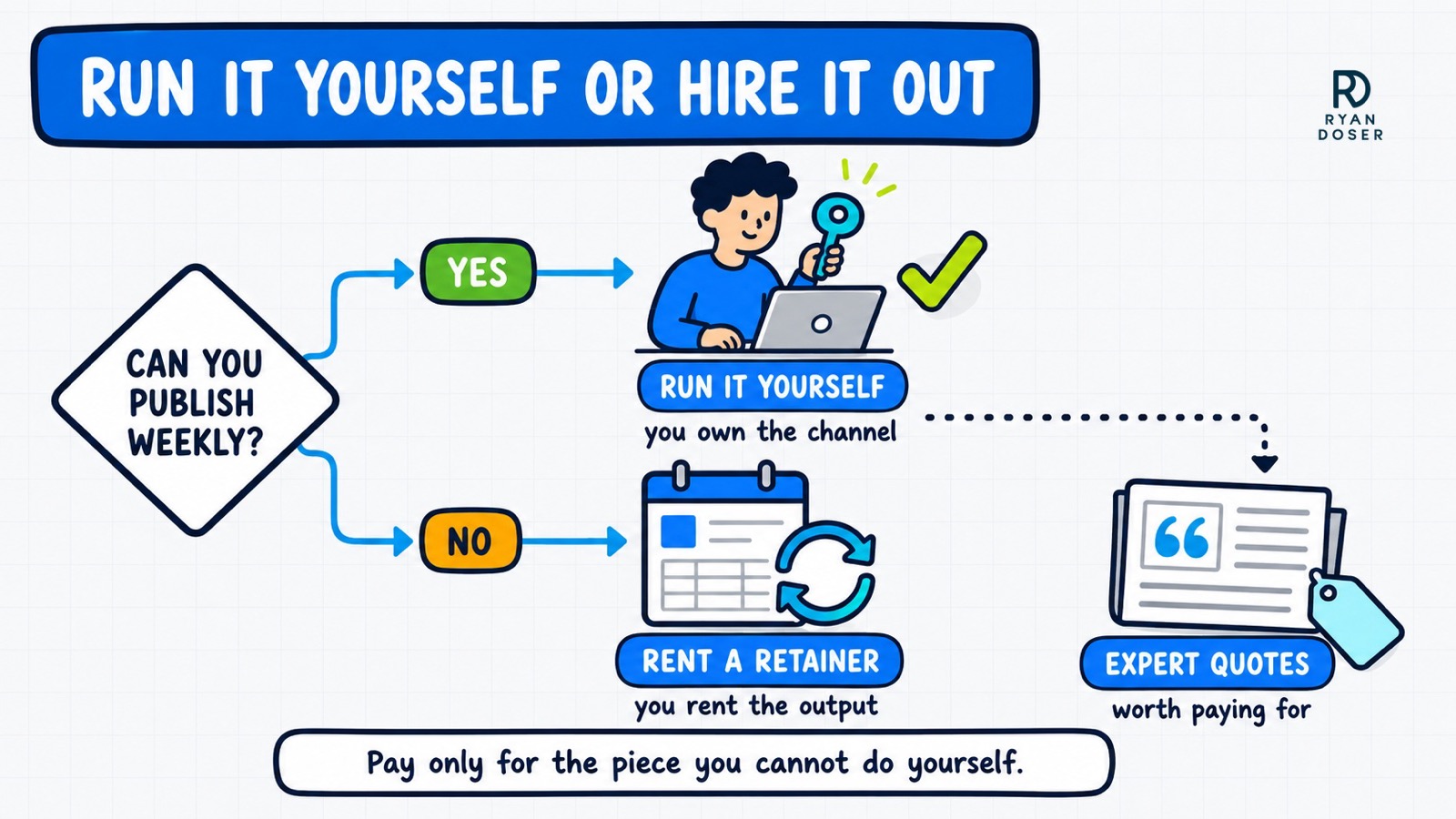
The digital PR piece is the one part I would actually pay for separately, because an attributed expert quote on a publication the models already trust is the cleanest citation signal you can buy. I run that through an automated pitching tool rather than an agency retainer, and I show the real numbers in my Backlinker AI review.
Step 5: Track Whether AI Is Actually Recommending You
Tracking this by hand gets old fast. Connecting a Search Console or SERP data server to Claude turns the weekly check into one prompt.
Most people never measure this, which is how they end up paying for a service with no defined outcome. Here is the whole scorecard on one screen, including the two numbers I deliberately ignore.
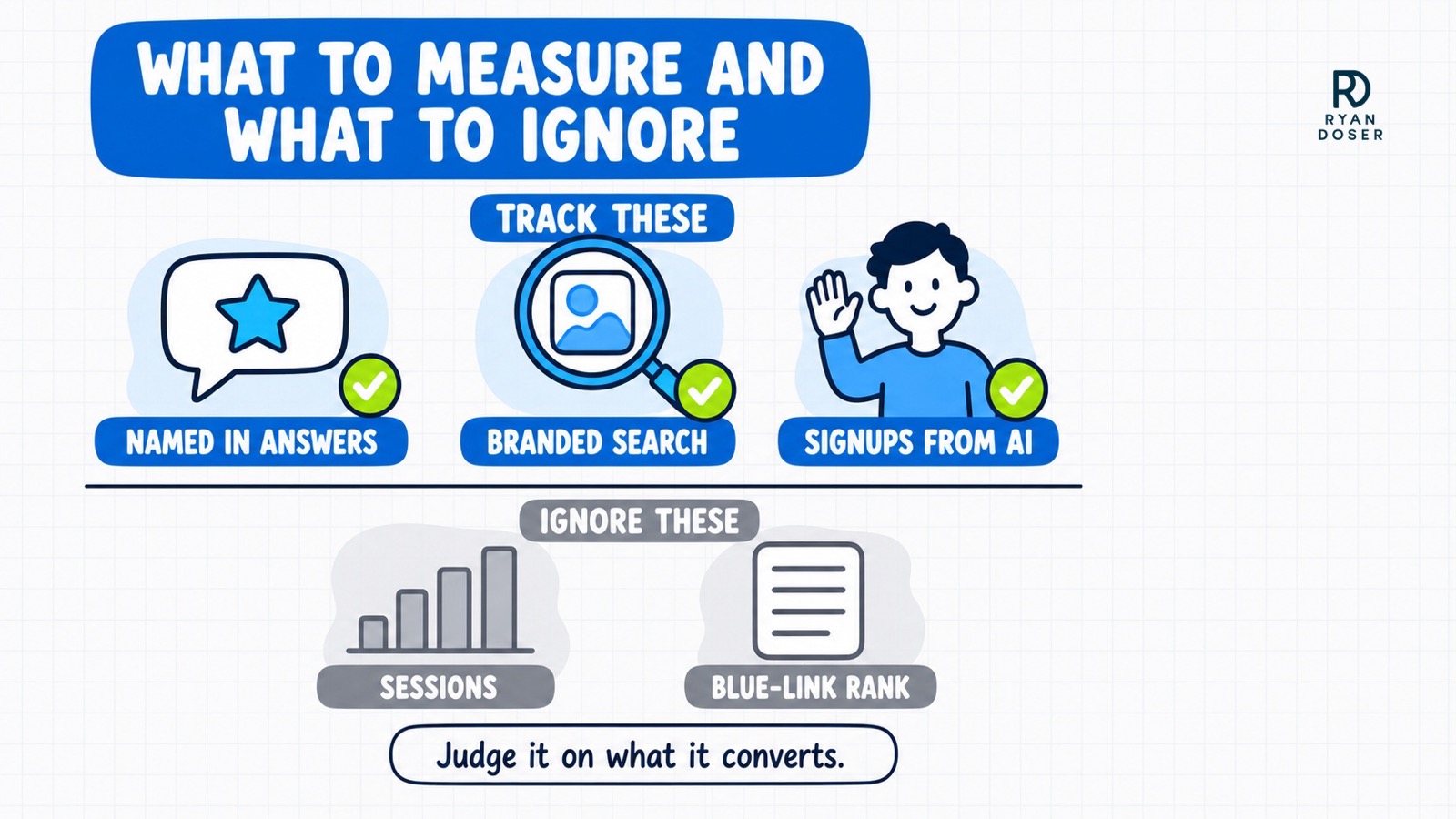
Three checks are enough to start:
Ask the models yourself, monthly. Write down ten questions a buyer would really ask. Run them in ChatGPT, Claude, Perplexity, and Google in a fresh incognito window. Log whether your brand got named. That spreadsheet is your scoreboard, and it takes about twenty minutes. Paid trackers automate this, and it is worth knowing how thinly they sample before you buy one, which I worked out in my Searchable review.
Watch branded search in Google Search Console. When AI recommends you without a click, people go look you up. Rising branded impressions is often the first visible sign that citations are working.
Measure signups, not sessions. AI referral traffic shows up small in volume, so a session-count dashboard makes it look like nothing is happening. Ahrefs found AI search accounted for 0.5% of its traffic while producing 12.1% of its signups, a conversion rate roughly 23 times higher than regular organic. Judge this channel on what it converts, or you will kill something that is working.
That gap is the practical answer to the zero-click worry. Fewer visitors arriving pre-sold by an AI recommendation can be worth more than a larger number who wandered in from a listicle, and only conversion tracking will show you that.
Turn the Repeatable Parts Into a Skill
Part of this automates well and part of it does not. Positioning, earning a podcast seat, and convincing a writer to add you are judgment and relationships, and no script does them for you. The page-level work is different, because it is a checklist that has to run identically every time.
That part I run through Claude Code skills, which are markdown instruction files that execute the same job the same way on every post: check live pricing before writing, search the target question, note which articles get cited, pull real strengths and weaknesses from reviews, build the comparison table. Quotable formatting is exactly the kind of rule a human drops on deadline and a file never does. I broke down the specific ones I use in my guide to Claude Skills for SEO, and the full set lives in my Claude Code Skills Stack.
If you want the publishing side of this rather than the strategy, my AI SEO system covers how I ship daily content without producing slop, and my roundup of the best AI SEO tools covers the tracking software. If you would rather run this whole strategy on your own site than read about it, I packaged the audit and the fix list into a system your AI tool can run.
Ryan's Final Thoughts
AI SEO is not a new discipline that replaces SEO. It is SEO judged on a much shorter list, where a handful of brands get named with no page two behind them, and where most of the evidence deciding that list sits on websites you do not own. I put that claim to the test on a local query and logged every source ChatGPT actually cited.
If you take one thing from this, make it the mention-versus-citation split. A link under the answer is worth far less than being the brand the answer names first, and 74% of people in Indig's research picked that first-ranked item. Optimize to be talked about, not merely footnoted.
Pick the one thing you want to be known for, repeat it everywhere a crawler can reach, build the comparison pages buyers actually ask for, and check monthly whether the models say your name. Skip the five-figure retainer for a rename.
Think first about who you want to be cited as. Then go make that easy for a machine to repeat.
The Rest of the AI SEO Work
The five moves are the strategy. What follows is the work that sits underneath it, kept separate because tool prices rot and strategy should not.
Start with the argument itself if you are not sold. An 18-year SEO reads Google's published AI search guidance as misdirection and names what he thinks actually wins instead. And if publishing more is still the plan, volume stopped being a moat argues that anyone can ship a hundred posts this afternoon, so the separation has to come from somewhere else.
On execution, the full SEO workflow I run on this site is the closest thing to a walkthrough of the moves above, including the ranking results with zero backlinks pointing at it, and keyword research inside Claude Code is where every one of those posts starts. Turning the same workflow into $5K-a-month local retainers is SEOmaxxing.
On data, the decision is mostly about what you pay per lookup. DataForSEO is what I run daily, priced per request rather than per seat. Against the incumbents, DataForSEO vs Ahrefs covers where the data quality actually loses and why both shipping MCP servers killed the old developer-versus-marketer split, and DataForSEO vs Semrush is a bundle against a single slice at $0.0006 a request. If neither fits, seven alternatives priced off each live rate card. If you are buying API access directly, the headline price is not the price. Ahrefs API access starts at $129 a month, not the $1,499 Google's AI Overview quotes, and Semrush names two plans that each start you at zero API units without saying what a unit costs.
On the tools promising to do this for you, I reviewed them because the category is full of $99 auto-publishers making the same claim. Rankability now runs $99 a month with the free trial gone, and the review covers who should buy it over Surfer or Ahrefs. Adaptify at $499 a month is the agency-priced end, read against its own pricing page and 86 Trustpilot reviews. BabyLoveGrowth and Outrank both cost $99 a month to auto-publish thirty articles, and both run a backlink exchange. Trading links with strangers is the part that carries the risk, so both reviews go through the refund terms and the review data before you hand over a card. If you are comparing the wider category, I ranked seven of these auto-publishers on real monthly pricing.
If you would rather not assemble all of that yourself, it is packaged as my AI SEO System, and a consulting call is the version where I look at your site directly. I argued above that most AEO retainers are ordinary SEO with a new label. That applies to mine too. Run the five moves yourself first, and only pay someone, me included, if you genuinely will not.
AI SEO Strategy FAQs
What should an AI SEO strategy prioritize first?
Positioning, before any tactic. Every later move compounds off one short claim about what you are and who you serve, and if your site, socials, and podcast bios describe you differently, the model has no confident answer and names someone else. After positioning, the order is consistency across crawlable sources, then quotable page formats, then earned mentions on sites you do not own.
How is an AI SEO strategy different from a regular SEO strategy?
The technical foundation is identical, since AI engines pull from live search results and a site that cannot rank generally does not get cited either. What changes is allocation. A regular strategy spends most of its effort on your own pages; an AI SEO strategy shifts significant effort to third-party sources, quotable formatting, and brand consistency, because Semrush measured ChatGPT naming 4.72 brands per query in business services and just 1.22 in consumer electronics, with no page two behind them.
Should I optimize for citations or for brand mentions?
Mentions, if you have to choose. Semrush found only 21% of the most-cited domains in a category were also the most-mentioned brand, and the two correlate slightly negatively. Kevin Indig's research found 74% of participants picked the item ranked first in the AI's answer. A link under the answer is worth far less than being the brand the answer talks about first.
How do I know if AI is recommending my brand?
Ask it directly. Write ten questions your buyers would actually ask, run them monthly in ChatGPT, Claude, Perplexity, and Google using a fresh incognito window, and record whether your brand is named. Pair that with branded search impressions in Google Search Console and tracked signups, since AI referral traffic converts at a much higher rate than it shows in raw session counts. Watching the open web where those answers get sourced is a separate job, and I broke down one tool for it in my Alertmouse review.
How long does AI SEO take to work?
Fixing crawler access and page formatting can change citations within weeks, because those affect whether you are eligible to be quoted at all. Building the third-party mentions that most influence what a model believes about your brand takes months, since it depends on podcasts, press, and other people's articles. Positioning consistency should come first because everything else compounds off it.
Do I need to pay for an AEO service?
Usually not. Published agency rates run from about $1,500 a month for small business up to $10,000 for mid-market and $10,000 to $30,000 and up for enterprise, and much of that covers schema, content structure, digital PR, and technical crawlability, which are standard SEO deliverables. Before signing, ask the provider what they do beyond those four things. If the answer is a visibility dashboard, you can get the same result from a monthly spreadsheet and the workflow above.