
How to Manipulate AI Search (With Data from SEO Expert)
This guide shows you how to manipulate AI search using real experiment data from SEO expert Kasra Dash, one of the people worth following on AI search. No theory, just what moved the needle across ChatGPT, Claude, Perplexity, Grok, and Google AI.
How to Manipulate AI Search in 2026
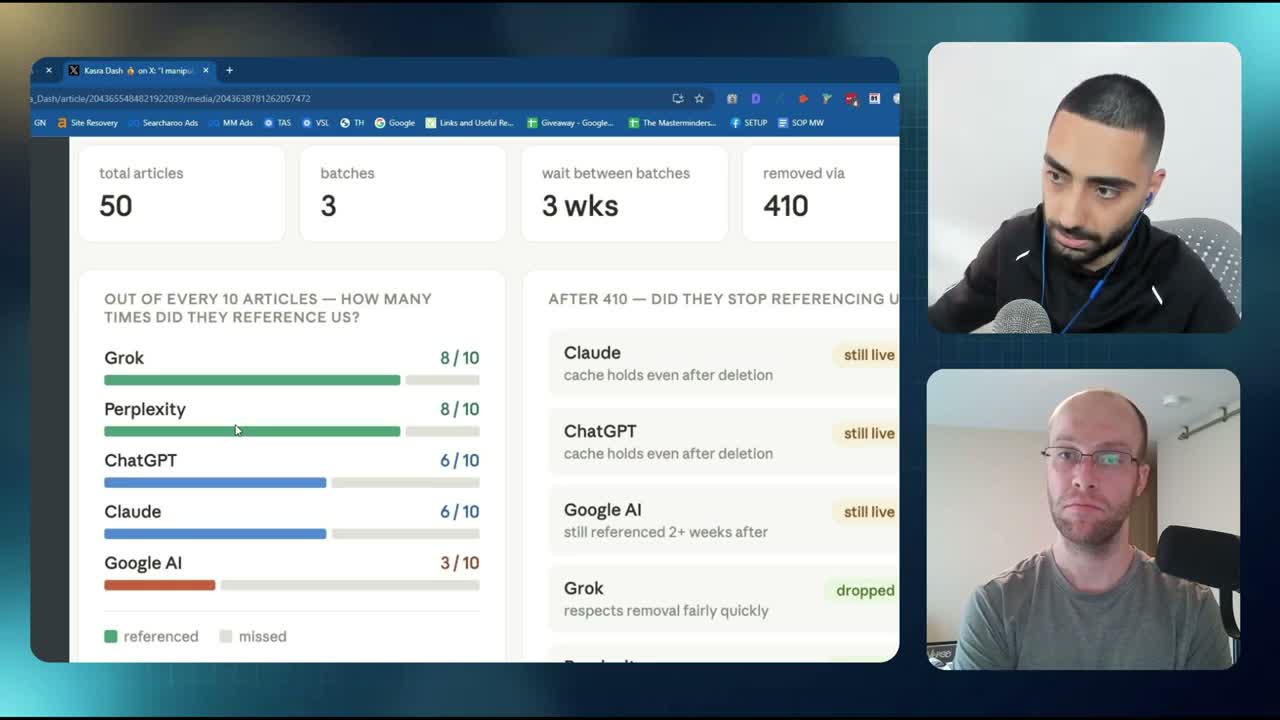
Most AI SEO advice on X is pure theory. Kasra ran a real test. He published 50 self-referencing listicles on a mid-age domain and tracked the citations.
The results were wild. Grok and Perplexity picked up the brand 8 out of 10 times. ChatGPT and Claude hit 6 out of 10. Google AI was the toughest, landing only 3 out of 10.
Kasra's full AI search manipulation data is public on X. The takeaway is simple. LLMs are easy to game right now, but each engine has a different weak spot.
Why Grok and Perplexity Are the Easiest to Manipulate
Both tools get gamed because they lean on live web search for almost every query. They crawl the SERP and summarize the top results. Rank on page one, and your citation is almost guaranteed.
ChatGPT works differently. It runs three bots in parallel. A cache bot checks its own pre-trained library. A SERP bot scans meta titles and descriptions. A page-fetch bot visits specific URLs when the first two are not clear. Claude sits in the middle, with web fetch spinning up sub-agents in real time.
A brand new entity can show up inside the live-search tools within days. Getting into the ChatGPT cache takes three to six months, since the refresh cycle only runs a few times a year.
What Happened When Pages Were Deleted
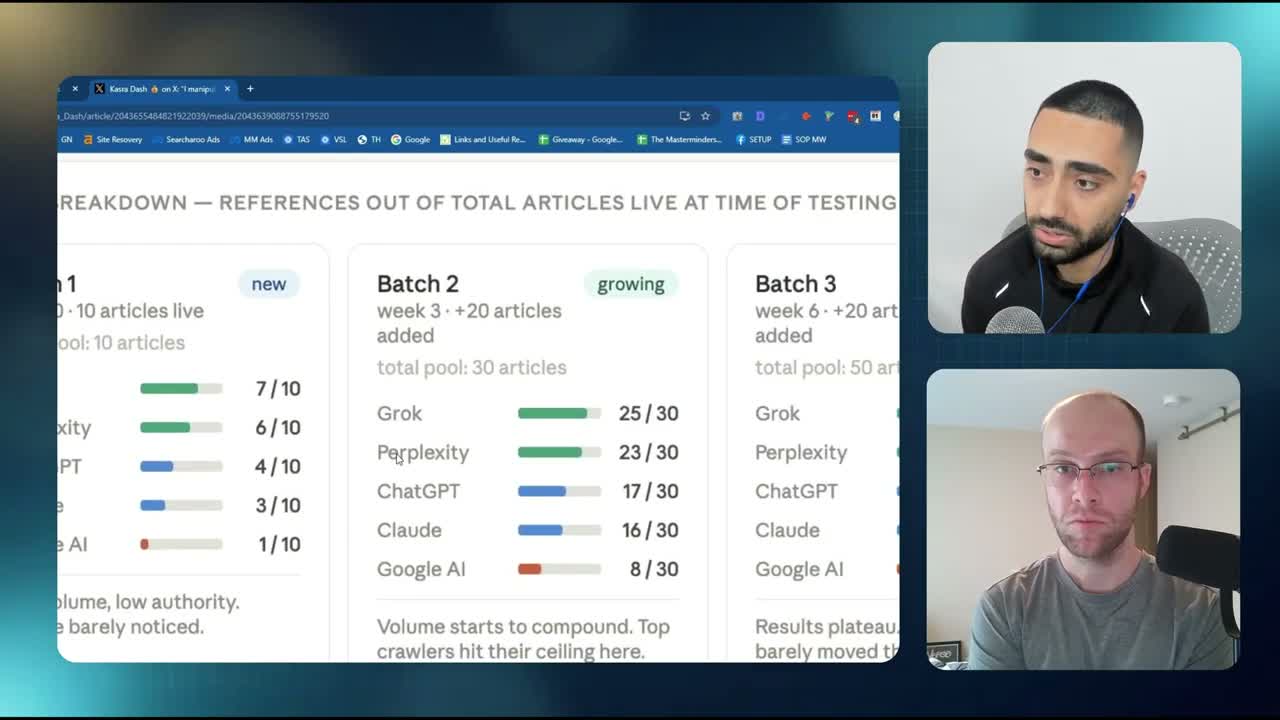
Kasra also 410'd the pages to see what would happen. The live-search tools dropped citations almost instantly. Claude, ChatGPT, and Google AI kept referencing the deleted URLs for weeks.
That gap matters. The bigger players hold onto stale data far longer than expected.
Self-Referencing Listicles, Comparisons, and Alternative Pages
Kasra tested three page formats in the experiment. Each one targets a different buyer intent.
- Self-referencing listicles like "Best SEO Tools in 2026" with his brand listed at the top
- Comparison pages like "Ahrefs vs Semrush" with his brand included as an option
- Alternative pages like "Semrush alternatives" for users who churned from a competitor
All three formats pulled citations, but the listicles hit hardest. Comparisons worked best when the content stayed balanced. A 50/50 tone gets picked up. A biased page does not.
One catch. If a competitor already owns the entity in the SERPs, listicles alone will not topple them. User signals inside the LLM tools push the rankings too. When people search your brand inside ChatGPT or Claude, your position jumps in general queries. YouTube, Reddit, and newsletters compound the effect.
See my guide on Claude Code for SEO for the workflow I run on my own site.
Why Your Vibe Coded Website Is Tanking Your SEO
Kasra pulled 6,500 sites built on Lovable. The results were brutal. Most do not rank, and plenty never even get indexed.
The problem is how the browser renders the page. Everything loads through JavaScript. Right-click, view page source, and there is almost no content in the HTML. Google and the LLMs crawl the code first, not the rendered view. No content in the source means no content to cite.
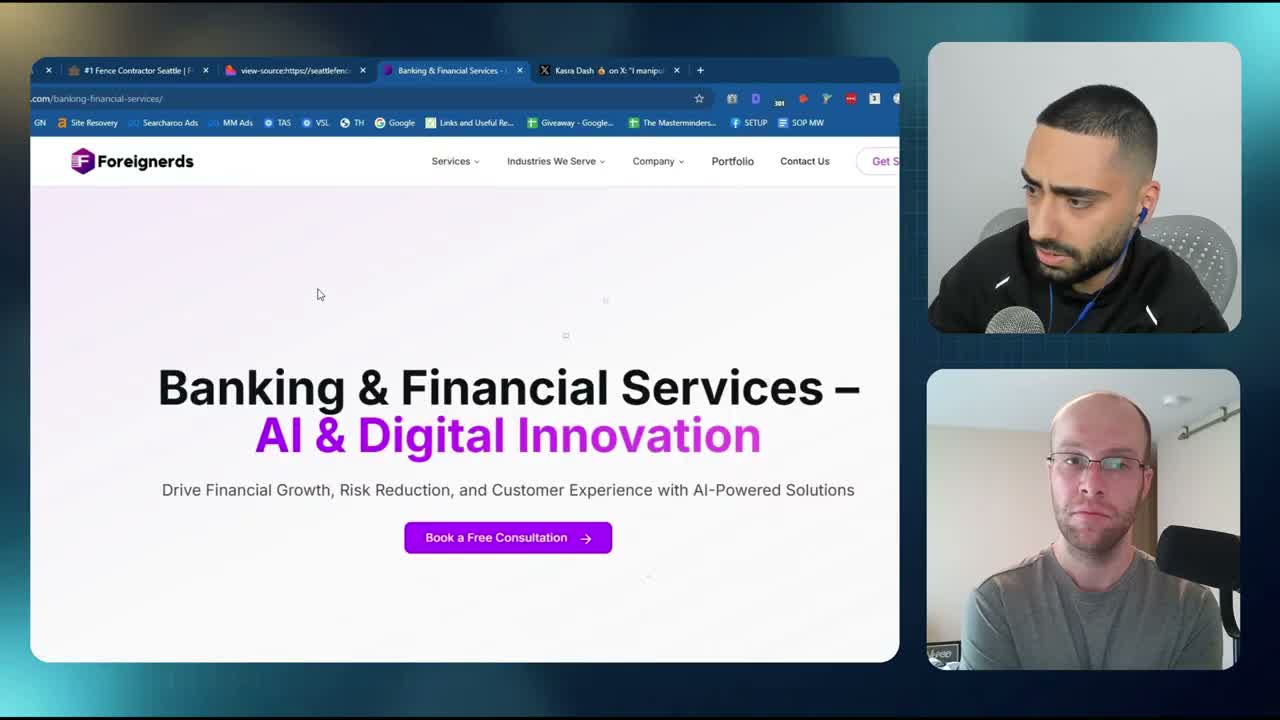
I pulled up Foreignerds, an AI consulting firm running on Lovable, and the source was a wall of JavaScript. A fencing company in Seattle had the same issue. Both were chasing money keywords, and both were invisible to the crawler.
Kasra's Lovable website SEO data confirms the pattern across the board.
Not every vibe-coded site fails. Claude Code for landing pages outputs clean server-side HTML with real on-page SEO baked in. Lovable works for one-page brochures and paid media landers. It does not work for anything that needs to rank.
Grounding, Citation, and Mention Are Three Different Things
Most people chasing AI visibility are measuring the wrong thing, and this distinction is the fix. It also explains why the trackers disagree with each other, which I get into in my Searchable review. Some of that gap is simpler than it looks, since two tools quoting similar prices can be watching different sets of engines, a split I picked apart in this Otterly AI review.
Dan Petrovic of DEJAN AI laid this out on the Ahrefs Podcast, and it reframed how I read my own tracking data. He splits AI visibility into three separate outcomes that people constantly blur together.
Grounding means your page got handed to the model as candidate context. The model saw it. That is all.
Citation means the model used your page to support a specific claim.
Mention means your brand name actually appears in the answer the reader sees.
Those are not steps on one ladder. You can be grounded and never cited. You can be cited as a source while the sentence built from you recommends a competitor.
Petrovic's ranking of what matters is blunt. The linked mention is the prize, and he says stop obsessing over citations.
Getting quoted is not the same as getting recommended, and only one of those sends you a customer. For a local business the gap shows up plainly in which pages an AI answer is built from.
The Reddit Shortcut Is Weaker Than It Looks
Here is the finding that surprised me most. In Petrovic's API testing, Reddit was rejected as a grounding source over 90 percent of the time.
His explanation for why it still shows up: Reddit ranks, so it gets pulled into the grounding set, and then the model declines to use it.
That is his data from his own testing rather than a published study, so weigh it accordingly. But it cuts against the "just get mentioned on Reddit" advice that has been sold hard for two years.
The practical read is not that Reddit is worthless. It is that a Reddit mention is a lottery ticket, not a placement, and pricing it like a placement is how people waste budget.
Write So Every Sentence Survives Being Lifted Out Alone
One more mechanic worth knowing, because it changes how much of your page survives.
Petrovic describes Google as grounding one-to-many. A single sentence in an AI Overview can carry three or four sources behind it. Google grounds nearly everything, because running its own search costs it nothing.
OpenAI he describes as one-to-one. One URL grounds one sentence.
The consequence is about compression. Google does extractive summarization, meaning it lifts verbatim fragments from your page and stitches them together. Your full page never reaches the model, and you do not control where it cuts.
So the unit that travels is the chunk, not the article. If your qualifying condition sits in a different sentence from your claim, the two can get separated, and the version that survives is the one that speaks for you.
That is the single most actionable idea in this whole post. Write so that any individual sentence still tells the truth when it is lifted out alone.
If you want the layer underneath this, which index each assistant is actually reading when it grounds an answer, I dug into what search engine each AI uses separately.
GEO vs SEO: You Cannot Skip the Fundamentals
The biggest mistake people make in AI SEO right now is thinking GEO or AEO is a separate game. It is not, and a lot of what gets sold under those labels is four tactics that do nothing at all. I walk through why those acronyms describe the same work, and where the real differences show up, in my guide to getting cited in AI answers.
Every site I have seen win in AI citations also won in traditional search first. Google Search Console. Bing Webmaster. Yandex. Proper H1, H2, H3 hierarchy. Internal linking. Schema. These foundations drive the entire citation stack.
Short version. You cannot rank in ChatGPT, Claude, or Perplexity without HTML content, indexing, and backlinks. The AI era did not kill SEO. It raised the floor. See my post on Claude Code for keyword research for how I handle the fundamentals now.
Kasra is speaking at The Masterminders SEO Conference in June. Follow his work at kasradash.com.
Final Thoughts from Ryan
AI search manipulation is in its 2011 SEO phase. Easy, wide open, and closing fast. The winners are stacking mentions across owned and offsite content and keeping the core SEO fundamentals tight, using the best AI SEO tools to track visibility and earn the trust signals that get them cited. If you want to win over the next year, start testing now.
How to Manipulate AI Search FAQs
What is AI search manipulation?
The practice of shaping your content, entity mentions, and site signals so that ChatGPT, Claude, Perplexity, Grok, and Google AI cite your brand inside their answers. It covers self-referencing listicles, comparison pages, alternative pages, and user signal nudges inside the LLM tools themselves.
Which AI search engine is easiest to rank in?
Grok and Perplexity. Both engines rely on live web search for nearly every query, which means strong SERP rankings translate directly into citations. Kasra's test pulled 8 out of 10 references on both tools from a brand new site with 50 articles.
Do self-referencing listicles still work in 2026?
Yes, but only when the content is written well. Balanced tone, correct entities, and factual comparisons all matter. Biased or thin content gets filtered. Stack 30 to 50 pages across listicles, comparisons, and alternatives rather than publishing a single piece.
Why are Lovable and vibe coded websites bad for SEO?
Most vibe coding tools render content through JavaScript inside the browser. When Google or an LLM crawls the page source, there is almost no HTML to index. The site does not rank in traditional search and does not get cited in AI search. Claude Code and WordPress output clean HTML and avoid this problem.
Can you rank in AI search without ranking in Google?
Rarely. Every case study so far shows sites winning in AI citations also have strong traditional SEO foundations. Search Console, Bing Webmaster, Yandex, on-page structure, and backlinks still drive the citations. Skipping SEO basics to chase GEO or AEO is the most overrated tactic in the industry right now.