
13 Best AI SEO Tools in 2026 (Ranked by an SEO Expert)
The best AI SEO tools now decide two things at once: whether Google ranks you, and whether ChatGPT even says your name.
Why "AI SEO Tools" Means Something New in 2026
Search split into two games. People still Google things, but a growing share read an AI answer and never click. That changes what a good SEO tool has to do for you.
The old scorecard was keyword density and backlinks. The new one adds a harder question: does an AI engine trust you enough to cite you? If that framing is new to you, start with my breakdown of what AI SEO actually means and come back for the tools.
Most tools that call themselves "AI SEO" are old suites with a writing assistant bolted on. A few were built for this moment.
I did not pull this list from the top of Google. I have generated millions of dollars through SEO and AI search, and I currently run SEO for seven-figure clients across SaaS, cybersecurity, and affiliate sites. These are the tools I actually reach for on client work, ranked by what moves rankings and revenue, not what a vendor pays to promote.
I cross-checked the community chatter on Reddit and X against my own results, so you get the honest version, including where a popular tool quietly frustrates the people paying for it.
I also cover a shift most roundups skip: why link building and trust signals suddenly matter more for AI search than another on-page tweak. The tool I use for that side of it is covered separately in my Backlinker AI review.
The Best AI SEO Tools in 2026
I ranked these for how I actually deploy them across client accounts, from the data layer up to the content and visibility tools. Prices run from free to agency-tier, so read the honest notes before you buy.
| Tool | Best for | Starting price |
|---|---|---|
| DataForSEO | The data layer under everything else | Pay-as-you-go, no monthly seat fee |
| Ahrefs (Letaido) | Backlinks and competitive research | Ahrefs from $129/mo. Letaido, its agent product, $99/mo plus AI usage |
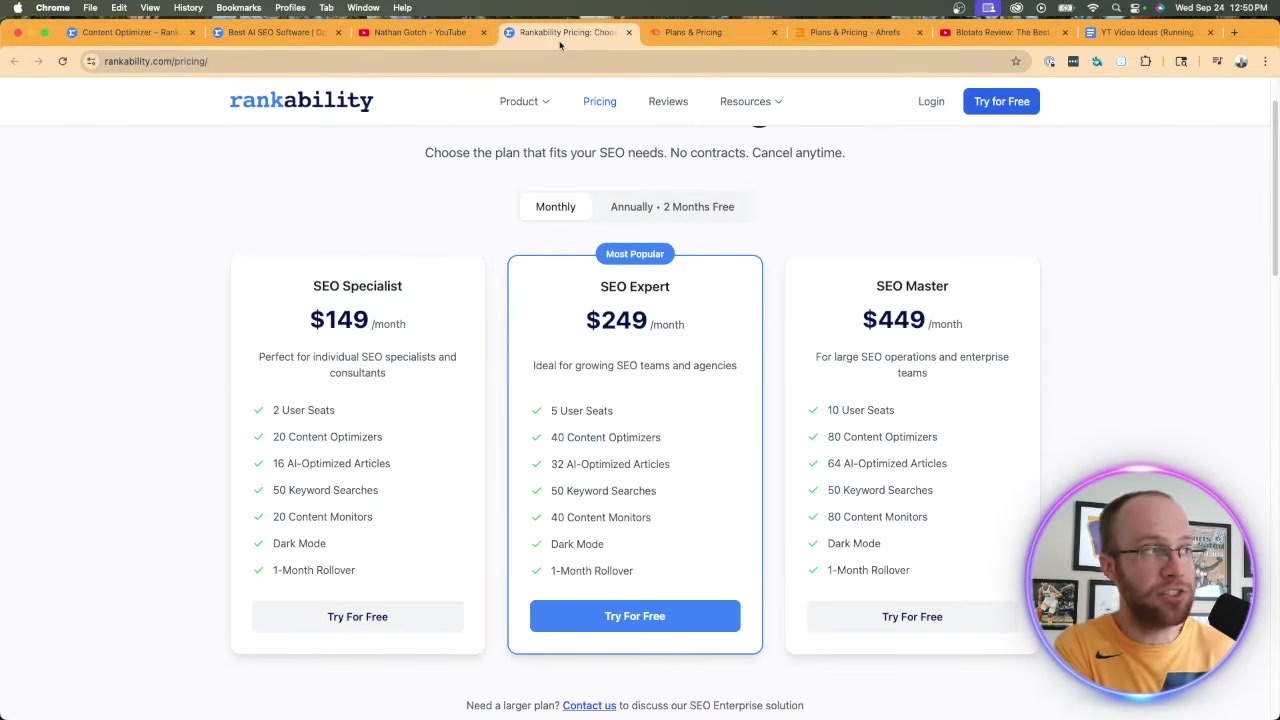
| Rankability | Agencies running client work | $97/mo Starter, self-serve |
| Semrush | All-in-one suite with AI visibility | $139/mo SEO plan, API on Advanced at $549/mo |
| Claude Code for SEO | Builders who want to automate their own workflows | $20/mo Claude Pro |
| Surfer SEO | Guardrails for writers optimizing drafts | $49/mo Discovery (billed yearly) |
| Search Atlas (OTTO) | Automated on-page fixes, with supervision | $79/mo billed annually, OTTO included on one project |
| ChatGPT and Claude | Ideation layer | $20/mo each, usable free tiers |
| Perplexity | Research and real-time queries | Free tier, Pro at $20/mo |
| Arvow | Hands-off autopilot publishing | $39/mo Solo (promo, regularly $69), up to $249/mo Ultimate |
| Peec AI | Tracking brand mentions in AI answers | See the AI-visibility section below |
| Clearscope | Premium content grading | $129/mo Essentials, no free tier |
| Frase | Solo creators on a budget | $39/mo Starter (billed yearly), 7-day free trial |
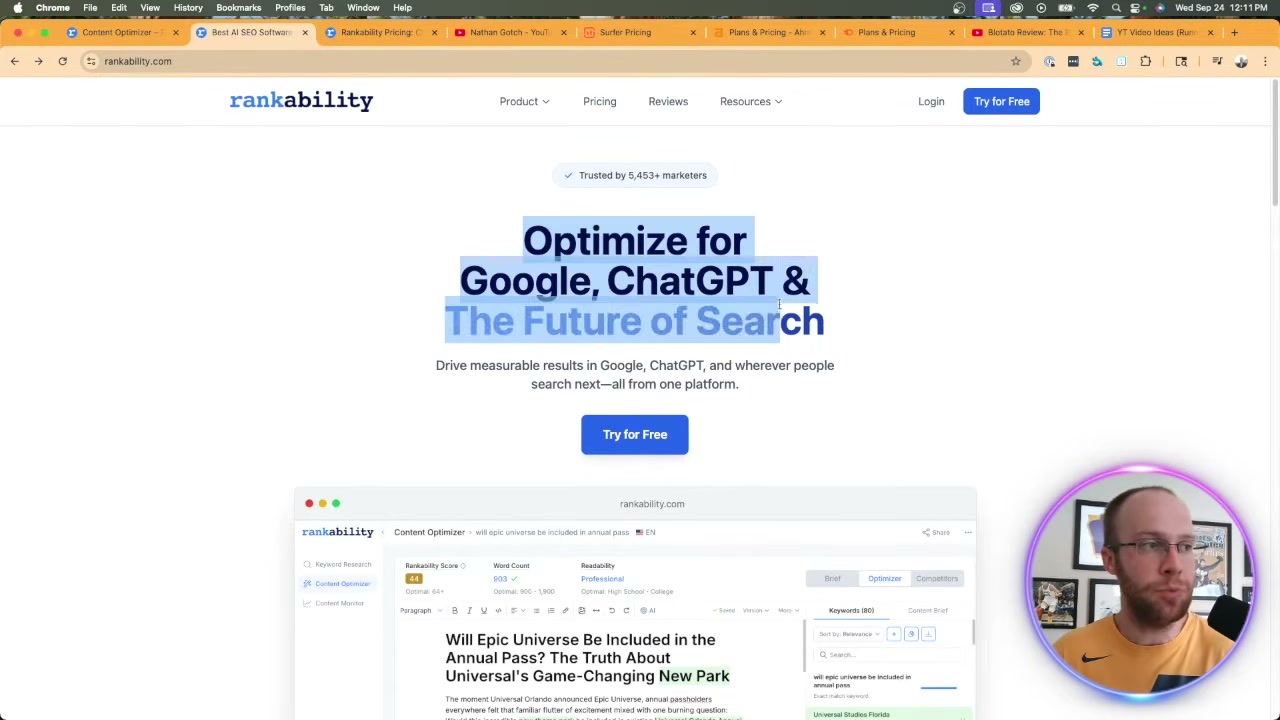
My Rankability walkthrough below shows what stress-testing one of these tools looks like firsthand, and I went deeper on its 2026 repricing in my full Rankability review.
1. DataForSEO
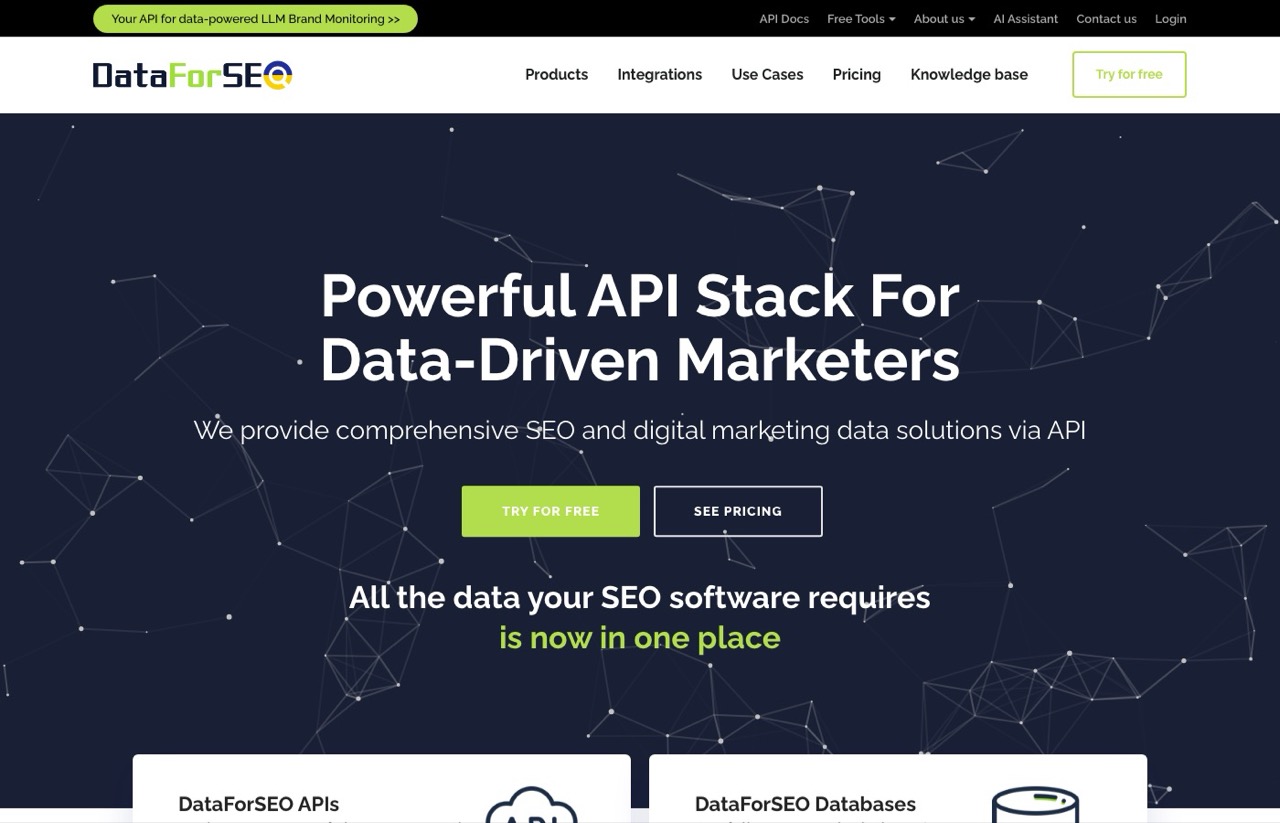
DataForSEO is my number one for a reason most roundups will never tell you: it is the data layer under everything else.
It is not a dashboard. Think of it as an SEO data API covering SERPs, keywords, backlinks, and on-page data, and it ships an official MCP server that plugs straight into Claude and Claude Code.
On my client accounts, I have Claude pull live ranking data through it instead of paying for five seat-based dashboards.
Pricing is pay-as-you-go with no monthly seat fee, and while Ahrefs still wins on data depth, the keyword and SERP data is decent at a fraction of the cost. I broke down the full rate card and the new v3 MCP server in my full DataForSEO review.
The tradeoff is that it returns raw JSON, so there is a real setup curve and no pretty interface. For a builder who lives in Claude, that raw access is exactly the point.
I lean on this approach in my Claude Code keyword research workflow.
2. Ahrefs (Letaido, formerly Agent A)
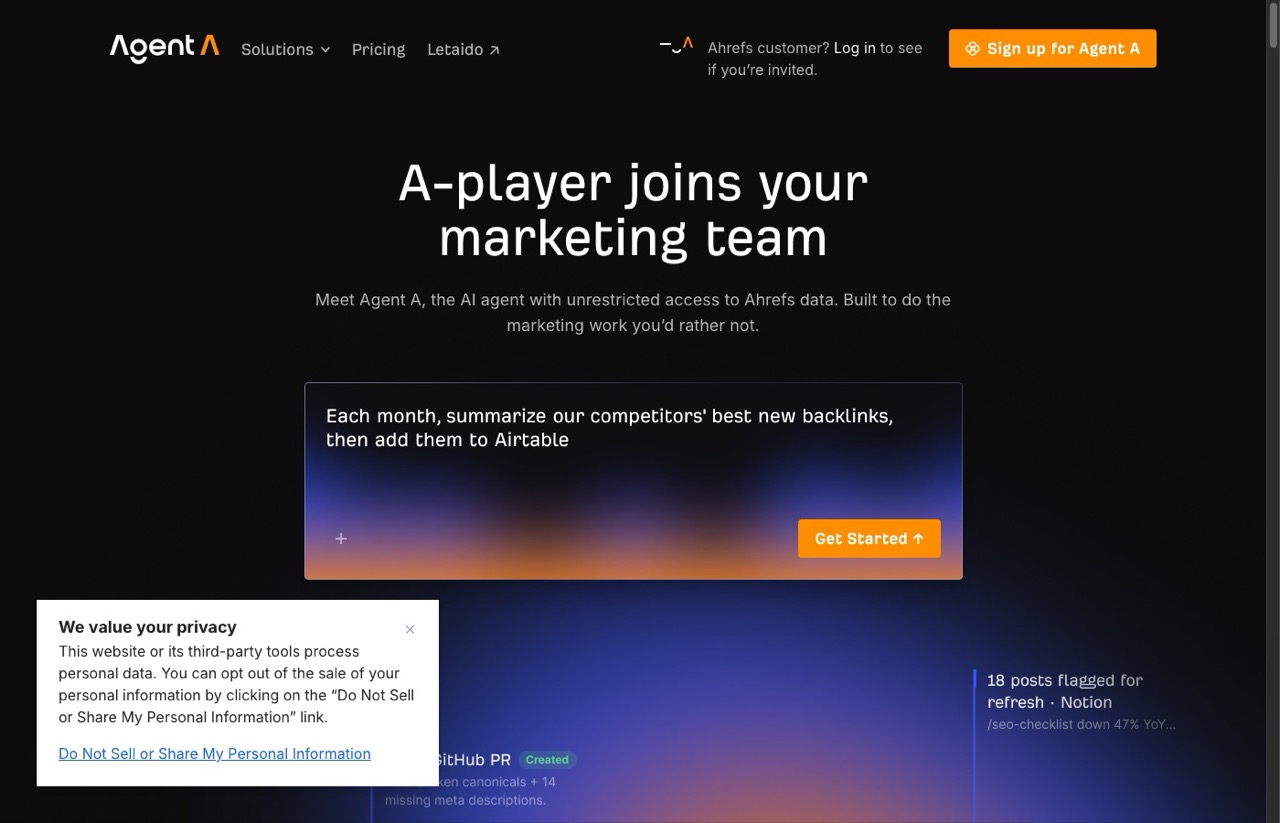
Ahrefs is still the first tool I open for any link-heavy client, and its agent product, launched as Agent A and since rebranded Letaido, is a real agent, not a chat wrapper. It gets full access to Ahrefs data and runs keyword research, competitor analysis, audits, and scheduled monitoring on its own. On a cybersecurity account I manage, I use it to catch competitor backlink moves before they show up in rankings.
I compare it head to head with the cheaper pay-as-you-go option in DataForSEO vs Ahrefs, and worked out which parts of a Semrush plan a per-request API can actually replace separately. For the cheaper end of the market, here is where the hidden cost multipliers actually bite.
Letaido is sold as one $99-a-month plan, with AI usage billed on top. Ahrefs' own page contradicts itself on whether you also need an Ahrefs subscription: a feature bullet says one is required, while the FAQ says Letaido works on its own. Here is my honest warning, and it comes with receipts: one January 2026 accuracy test found Ahrefs Brand Radar reporting 3 ChatGPT mentions where the true count was 123. The backlink data is elite, and it is what I pay for. The AI-visibility layer is not there yet, so I do not trust it for client reporting.
3. Rankability
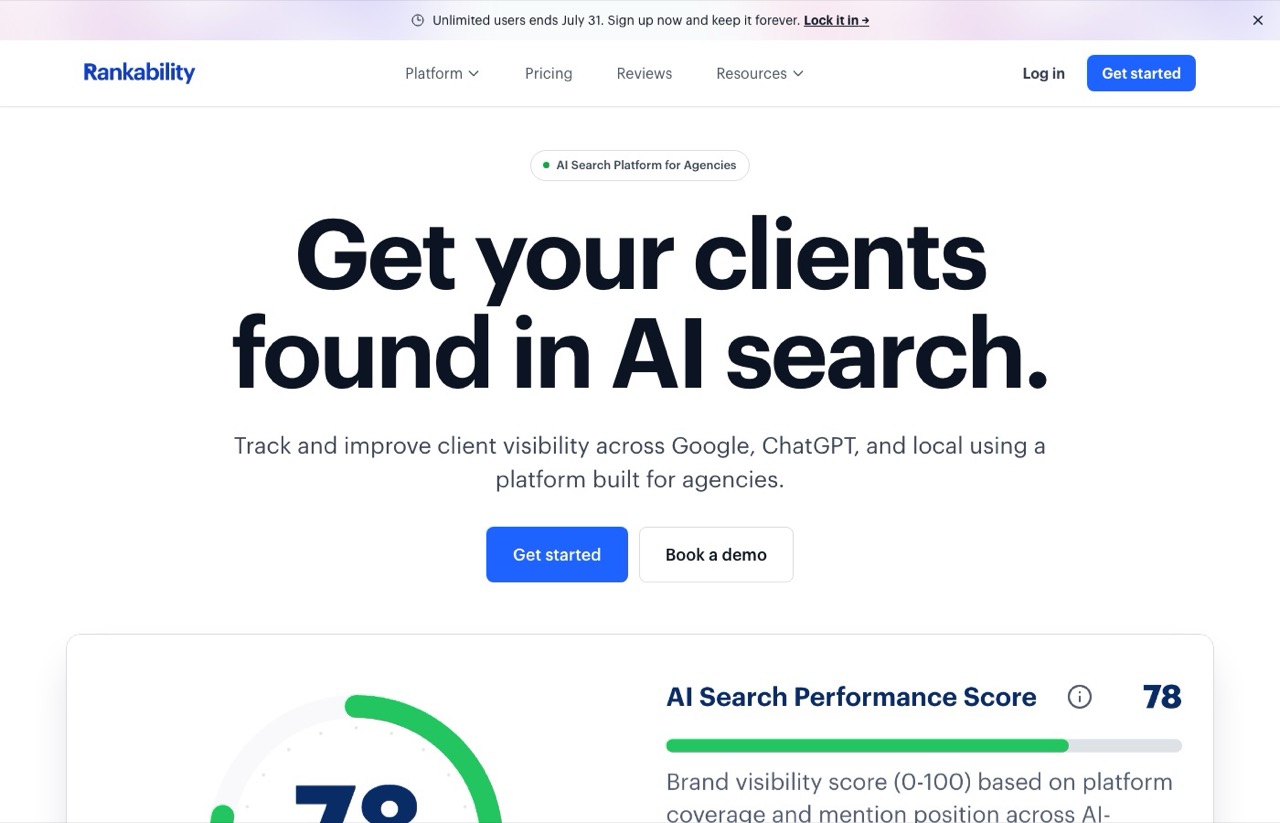
Rankability is built for agencies like the way I run client work, not for hobbyists. It pairs content optimization with ranking diagnosis and AI-visibility tracking across 11 AI platforms, including ChatGPT, Perplexity and Google AI Overviews, in one workspace.
Its Serena agent reads a client's real data and tells you what to change to get recommended by AI, which is exactly the report a seven-figure client wants to see.
Update, October 9, 2026: Rankability changed its pricing on October 7 and now sells three self-serve plans. Starter is $97 a month, Agency $297 and Agency Pro $497, or $970, $2,970 and $4,970 paid yearly. Monthly plans need no annual commitment.
Every plan includes unlimited client workspaces and team members, API and MCP access, agency-branded reports and 11 AI platforms. Content projects run 20, 80 or 160 a month and tracked AI queries 100, 300 or 500, shared across clients.
There is still no free trial. That no-trial wall is the objection I hear most, since you cannot test before you pay, though one month of Starter is now a cheap way in. If you manage a roster of clients, the branded reporting earns its keep the first month.
4. Semrush
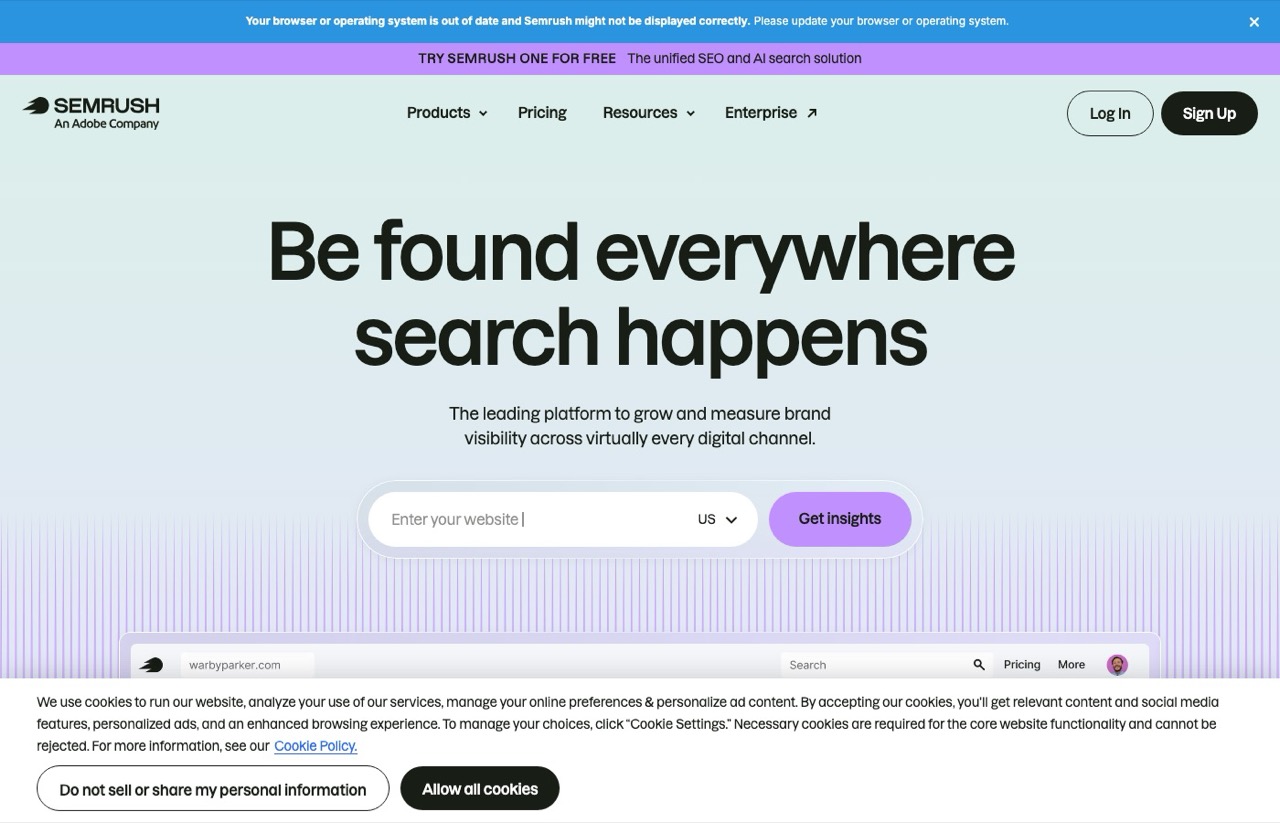
Semrush is the all-in-one default when you want SEO, PPC, content, and AI search under one login, and it is the tool I hand junior team members first. Its free Copilot assistant reads your reports and suggests next moves, and the AI Visibility Toolkit tracks your brand across ChatGPT, Perplexity, Gemini, Copilot, and Google AI Mode.
Core pricing starts at $139 per month on the SEO plan, with API access reserved for Advanced at $549, which I broke down in Semrush API pricing.
One honest caveat applies here, same as Ahrefs: first-party AI-mention trackers are still shaky. I have watched these dashboards undercount real citations on my own brands, so I treat the numbers as directional, not gospel.
The arithmetic behind that is in my Searchable review, which works out how few times a day these tools actually sample each prompt. My AIclicks review covers a different failure mode in the same category, where a vendor's own pages disagree with each other on price and plan limits.
5. Claude Code for SEO
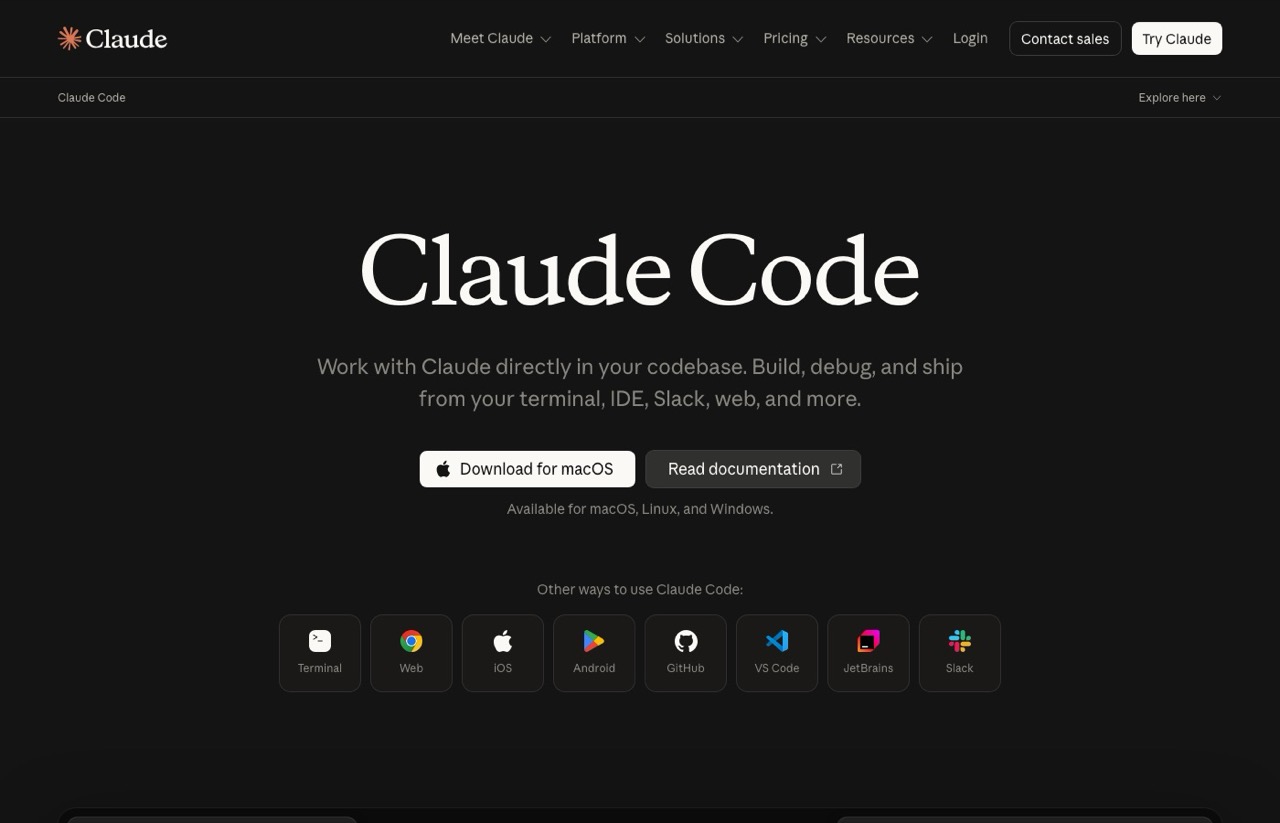
Claude Code is the unconventional entry, and it is the single biggest edge in my stack. It is not a fixed SaaS product. Instead you get a programmable agent you run from your terminal, and I have shaped it into a full SEO stack: keyword research, drafting, on-page edits, technical audits, and publishing straight to WordPress. I run real client work through it every week.
It needs a paid Claude plan from $20 per month on Pro, and it has a real learning curve. You build your own workflow instead of clicking someone else's buttons, which is the whole appeal. I walk through the exact setup in my Claude Code SEO workflow guide (my AI Skills Stack packages those SEO skills if you want them ready to run, free ones included).
6. Surfer SEO
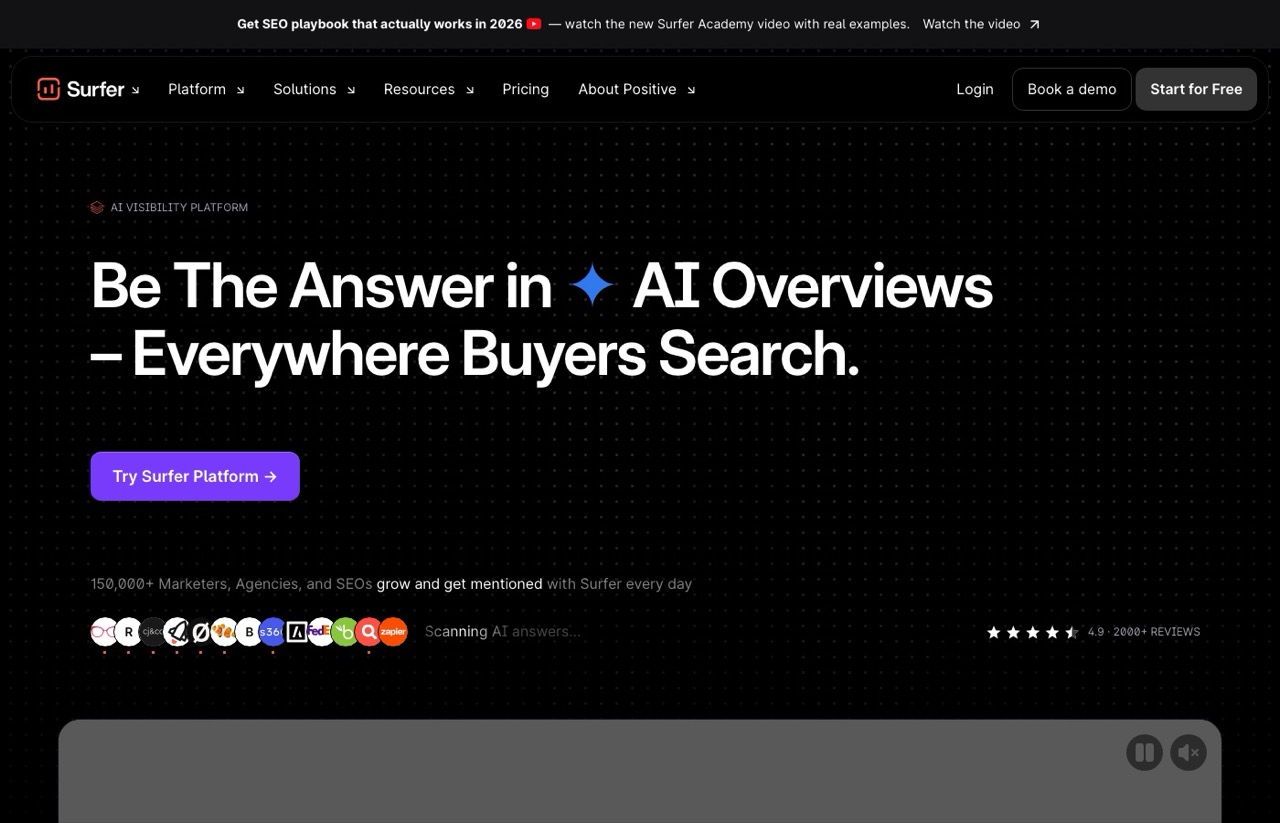
Surfer is the AI content editor I lean on when a writer needs guardrails. You paste a draft, it scores your page against whatever is already ranking, then tells you the terms and questions you missed.
It also added AI-visibility tracking across ChatGPT, Perplexity, Gemini, and Google AI Overviews, though basic tracking starts on the Standard plan ($99 per month) and the full AI Tracker lives on Pro ($182 per month), not the entry tier.
Pricing starts at $49 per month on Discovery when billed yearly, which covers the core editor. One knock I have seen firsthand on client teams: chasing the content score can push writers toward keyword stuffing and mechanical prose. Use it as a checklist, not a boss, and edit for a human after.
7. Search Atlas (OTTO)
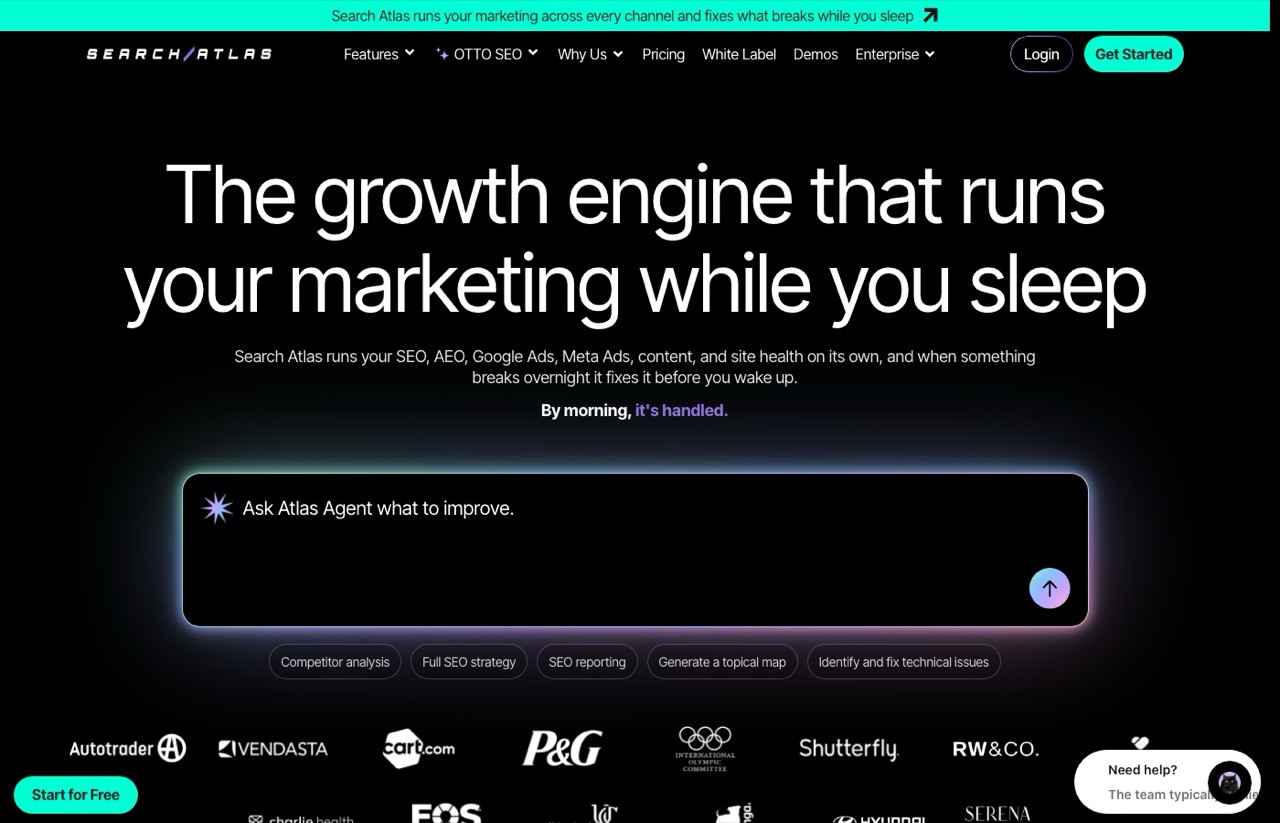
Search Atlas bundles SEO, ads, content, and AI visibility, and its OTTO agent is the headline: it does not just suggest fixes, it deploys them automatically and monitors your site around the clock. On paper that is the dream for anyone drowning in technical debt.
Pricing starts at $79 per month billed annually, about $99 month to month, with a 7-day trial, and OTTO is now included on the Starter plan's one project.
Now the warning I give every client considering it: do not let OTTO run unsupervised. It ships many changes through a JavaScript pixel, which means AI crawlers may never see them, an odd gap for a tool sold on AI visibility. I have seen reports of broken renders and thin output. Use its suggestions, then push changes into your CMS yourself.
I dug into the review pools, the real pricing, and what its own pages commit to in my full Search Atlas review.
8. ChatGPT and Claude (for ideation)
Every AI-first marketer already pays for one of these, so treat them as your ideation layer. I use them daily for topic clusters, briefs, outlines, meta descriptions, and pressure-testing search intent before I write a word. Neither ChatGPT nor Claude is an actual SEO tool, and both will confidently invent stats, so I verify everything before it touches a client site.
Both cost $20 per month on their paid tiers, and both have usable free versions. I lean on Claude for longer strategic thinking and ChatGPT for fast first drafts. Either one speeds up the work without replacing it. A model hands you a starting draft, not a ranked page.
9. Perplexity
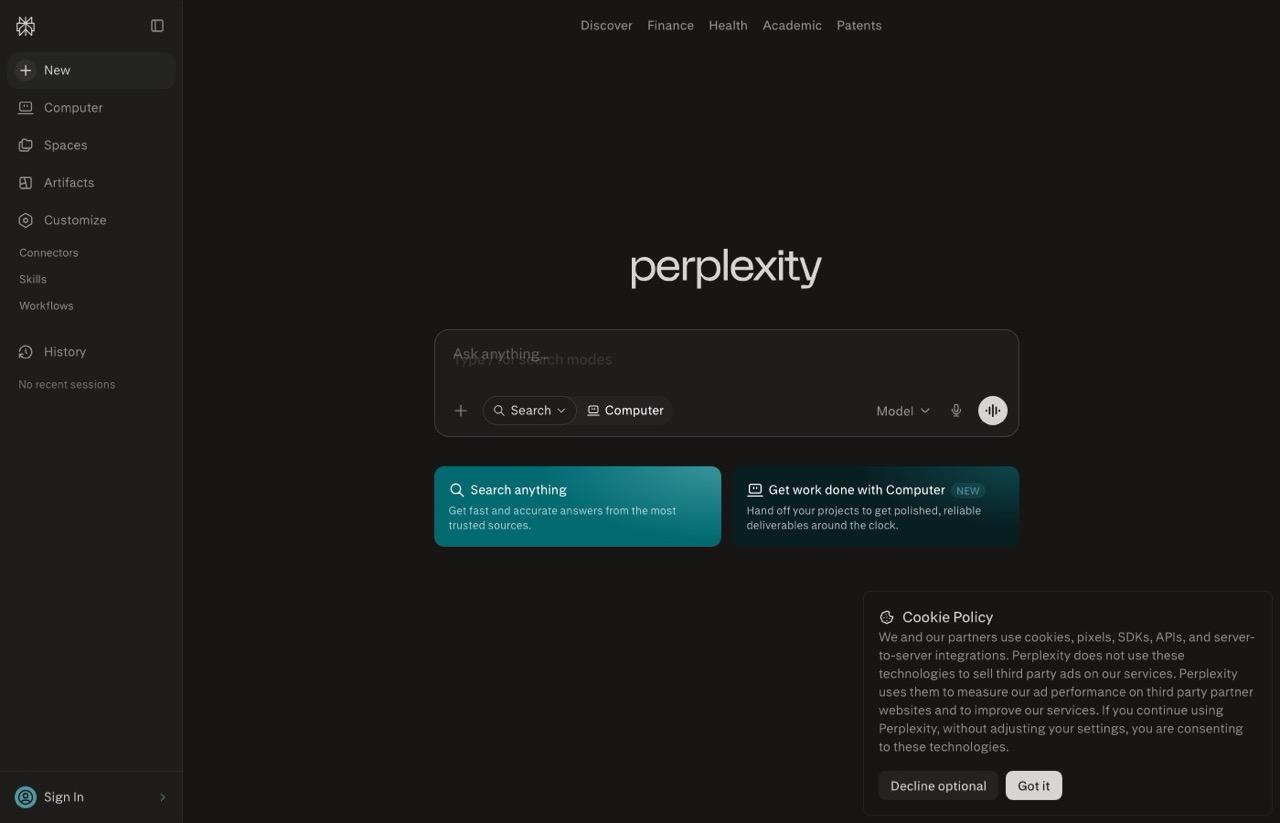
Perplexity is not a dedicated SEO tool, and it belongs here anyway. As an answer engine, it shows me how AI responds to a client's target queries, which sources it cites, and how competitors get pulled into answers. For AEO research, that beats staring at a keyword report.
It runs a genuinely useful free tier, with Pro at $20 per month. I use it to reverse-engineer the AI answers I want a client to appear in, then build content that earns the citation. Cheap, fast, and honest about its sources.
10. Arvow
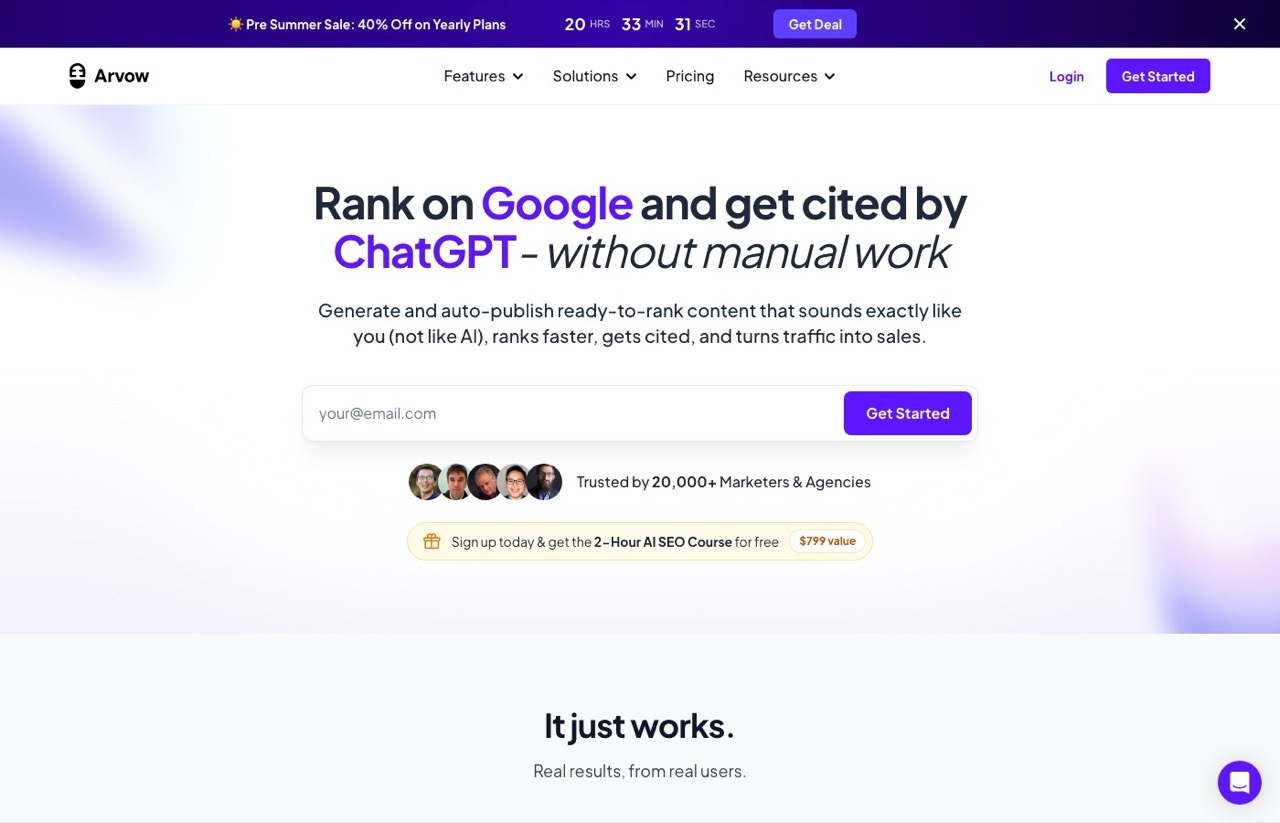
Arvow is the autopilot pick, and I am careful about where I point it. Formerly Journalist AI, it runs the full loop: keyword research, article generation in your brand voice, images and links, then auto-publishes straight to WordPress, Shopify, Ghost, or Webflow. It also has an AI agent that fixes on-page issues like schema and internal links.
For a high-volume affiliate site, that hands-off content engine is genuinely useful.
Pricing starts at $39 per month on Solo (promo, regularly $69), up to $249 on Ultimate, with no free trial. Two honest cautions from what I have seen.
First, autoblogging at volume needs a human editor or it drifts into thin content that AI search ignores. Second, reported user complaints center on billing and refunds, so read the terms before you commit annually. Powerful, but supervise it.
If you are weighing the agency-priced end of this category, I took apart what $499 a month buys in my Adaptify SEO review.
At the cheaper end of autopilot publishing, both Outrank and BabyLoveGrowth run $99 a month and pair auto-published articles with a backlink exchange, which is the specific combination I would read Google's link spam policy about before switching on. I priced the whole field of $99 auto-publishers against each other separately.
11. Peec AI
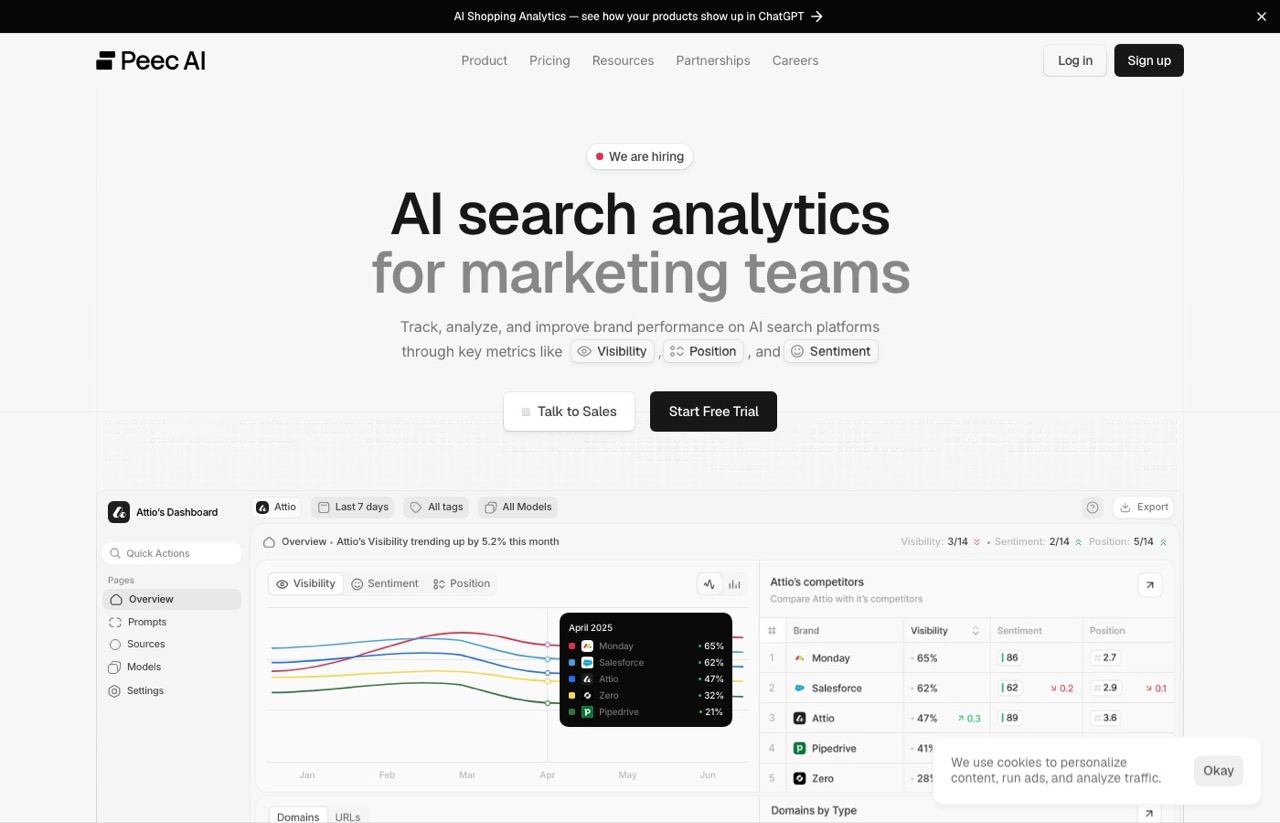
Peec AI is the community favorite that generic roundups bury under enterprise names, and it is the AEO tracker I recommend to clients who are not ready for a big contract. It is a focused AI-visibility tracker that shows how your brand appears across AI search platforms, scoring visibility, position, and sentiment against competitors. The price-to-value is what earns it a spot.
If you want the enterprise benchmarks instead, Profound is the category leader most pros cite, and AthenaHQ is the YC-backed challenger with strong citation-growth case studies. For most of my smaller clients, Peec answers "are we showing up in AI" without an enterprise invoice. Start here before you spend big.
12. Clearscope
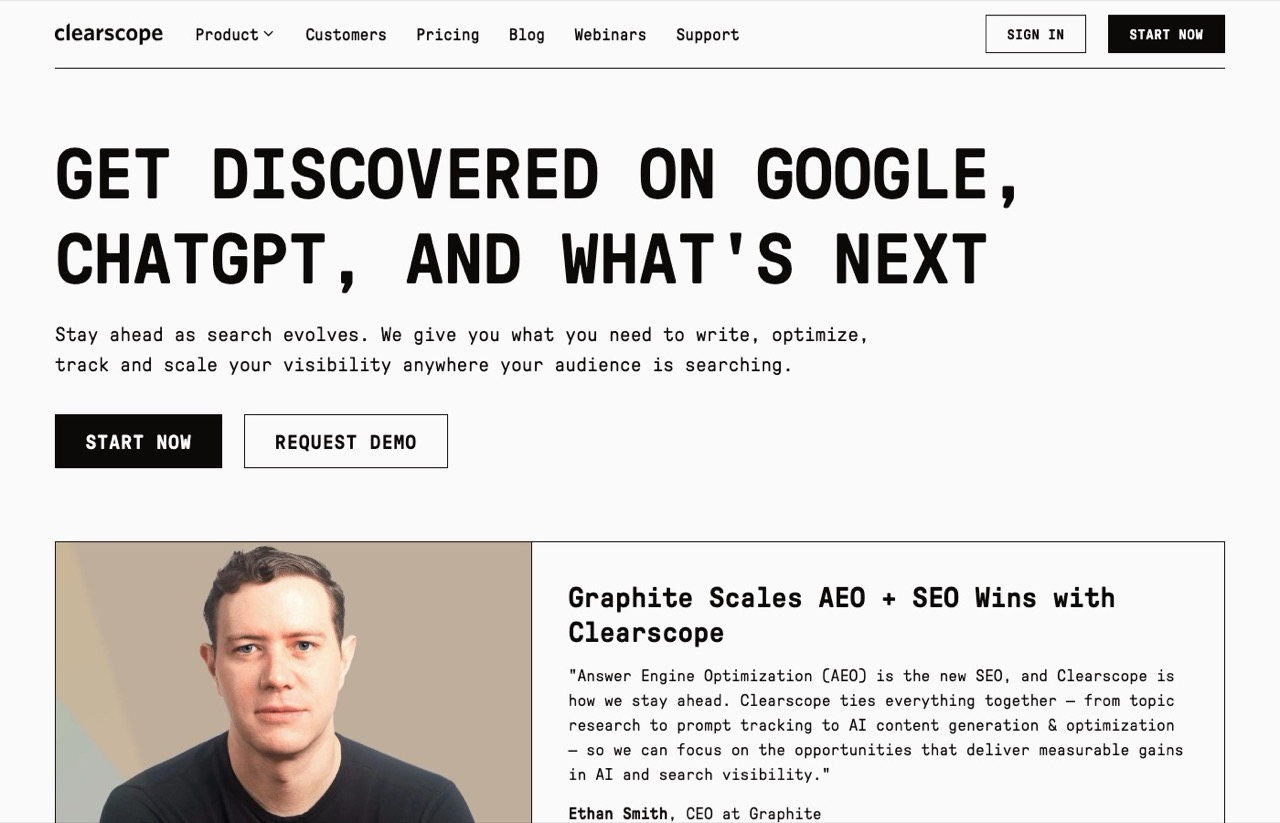
Clearscope is the accuracy gold standard I reach for when a single page has to rank and nothing less will do. Its Content Grade tracks closer to real SERP performance than most rivals, and it now watches brand mentions inside ChatGPT and Gemini. On the client work where quality outranks budget, it is worth every dollar.
The catch is cost and scope. Pricing starts at $129 per month on Essentials, with no free trial and no free tier, and it only does optimization. For a hobby blog that is overkill. On a SaaS account where one ranked page pays for the year, nobody notices the bill.
13. Frase
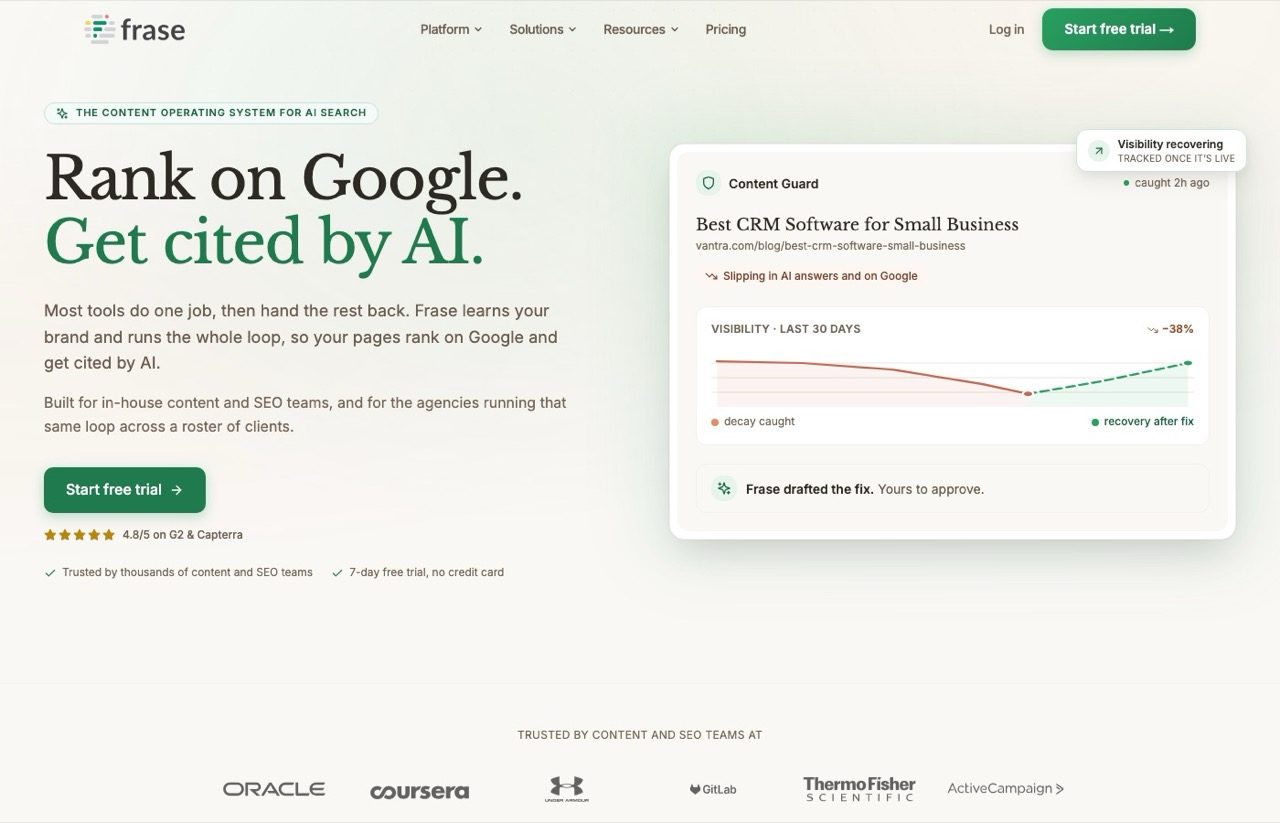
Frase is the value pick I send solo operators to when they cannot buy five tools. Research a topic, build a brief, draft in your voice, publish to your CMS, then watch for content decay, all in one tab. It pulls real People Also Ask, Reddit, and Quora questions, and it does not meter your AI words the way rivals do.
Plans open at $39 per month on Starter, billed yearly, with a 7-day free trial and no credit card. The tradeoff I have noticed is that its optimization scoring is a notch weaker than Surfer or Clearscope. For a solo founder starting out, that tradeoff is easy to accept.
The Part Most SEO Tool Lists Skip: Link Building and Trust Signals
Here is the shift that matters more than any dashboard, and the one I spend the most client budget on. AI search does not just read your page. It reads your reputation across the whole web, and it decides who to cite based on trust signals your site cannot fake on its own.
The data backs up what I see in client accounts. Ahrefs studied roughly 75,000 brands and found web mentions correlate with AI citations far more strongly than raw backlinks do.
Other 2025 analyses point the same way: brand search volume and third-party mentions on Reddit, YouTube, and earned press correlate with getting cited more than on-page tweaks. These are correlations, not proof of cause, but the direction matches what actually wins for my clients.
Translation for your strategy: earning mentions is the new link building. That is why these platforms belong in a 2026 SEO roundup. I dig deeper into the mechanics in my guide to AI search.
Link-Building Marketplaces (Presswhizz)
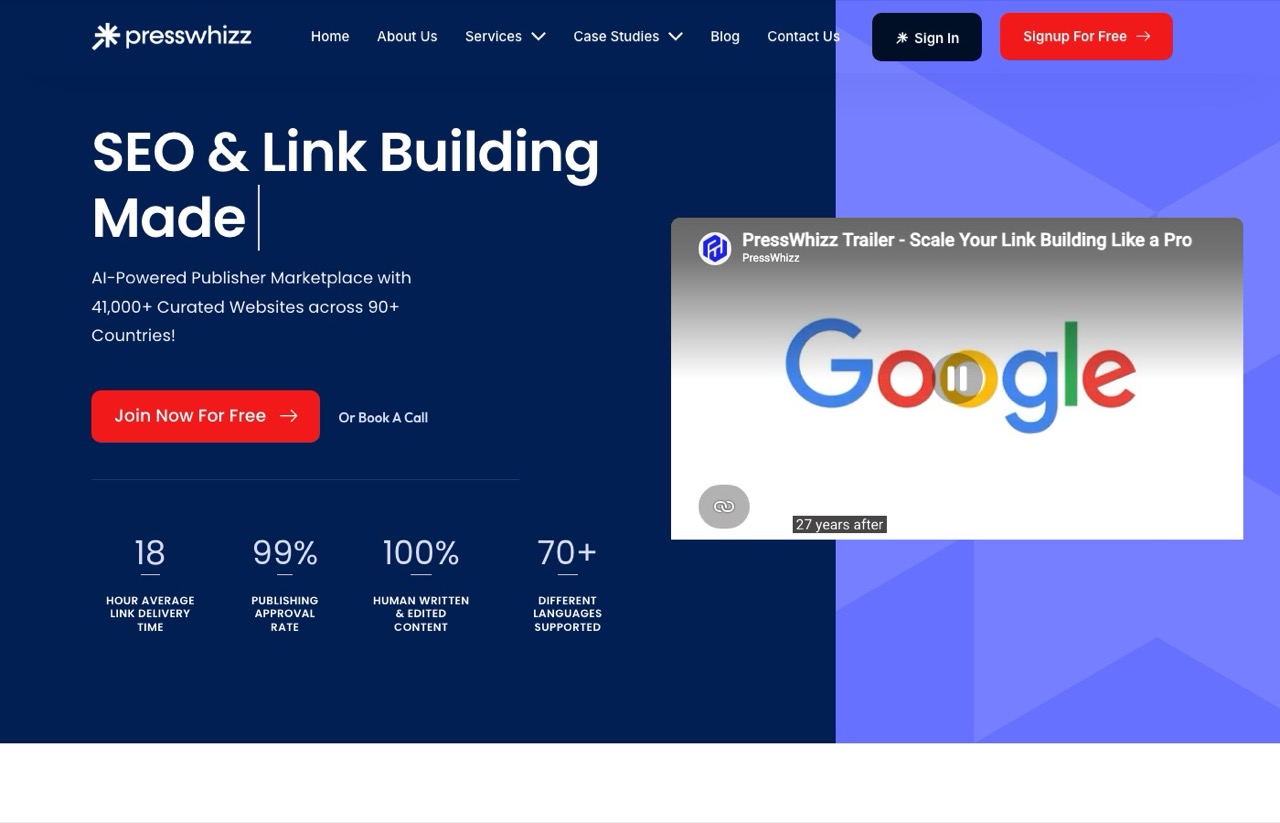
Presswhizz is a link-building marketplace connecting you with publishers for guest posts and niche edits across a claimed 41,000-plus sites, with metrics like DR and traffic shown before you buy. It is fast and transparent, and most orders reportedly land within 24 hours.
One honest caveat before you spend. Independent proof is thin, with only a handful of public reviews, and accepting thousands of sites means quality varies. On client work I vet each placement on its own metrics rather than trusting the marketplace wholesale. Convenient, but not autopilot.
Digital PR You Run Yourself (Featured and Qwoted)
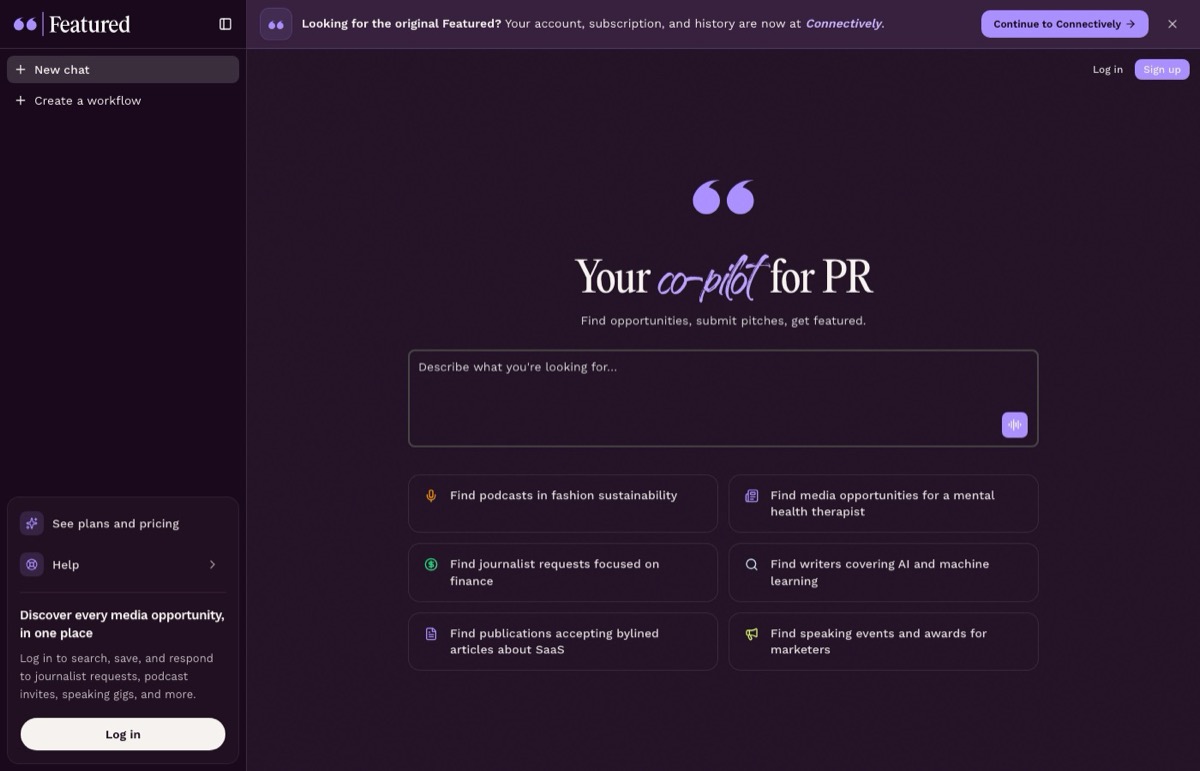
The self-serve route is a HARO-style platform where journalists post what they need and you pitch expert quotes.
If you would rather hand this to someone, I ranked the AI SEO specialists actually publishing work in this space.
Featured relaunched the free HARO model after the paid version collapsed, curating journalist requests to your niche so you skip the spammy email blast. It runs a free plan with 3 answers a month, and paid tiers start at $50 per month for more.
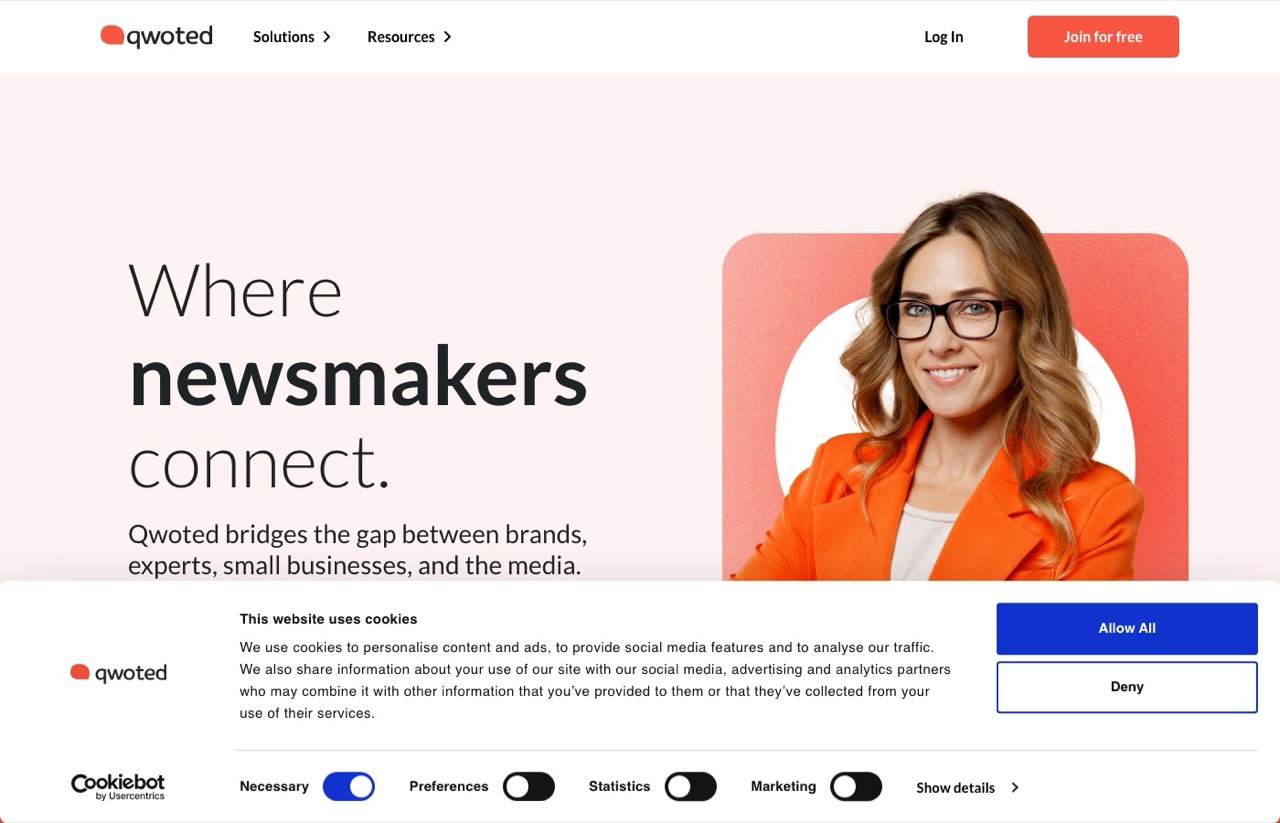
Qwoted is the other credible pick, trusted by outlets like Forbes and Reuters, and built to keep junk pitches out. Its free tier gives you a couple of pitches a month, while Pro at $149 per month opens 35 pitches plus AI that flags low-competition requests. Between the two, I have landed real press mentions for clients without hiring an agency.
Digital PR Agencies (Linkifi and Search Intelligence)
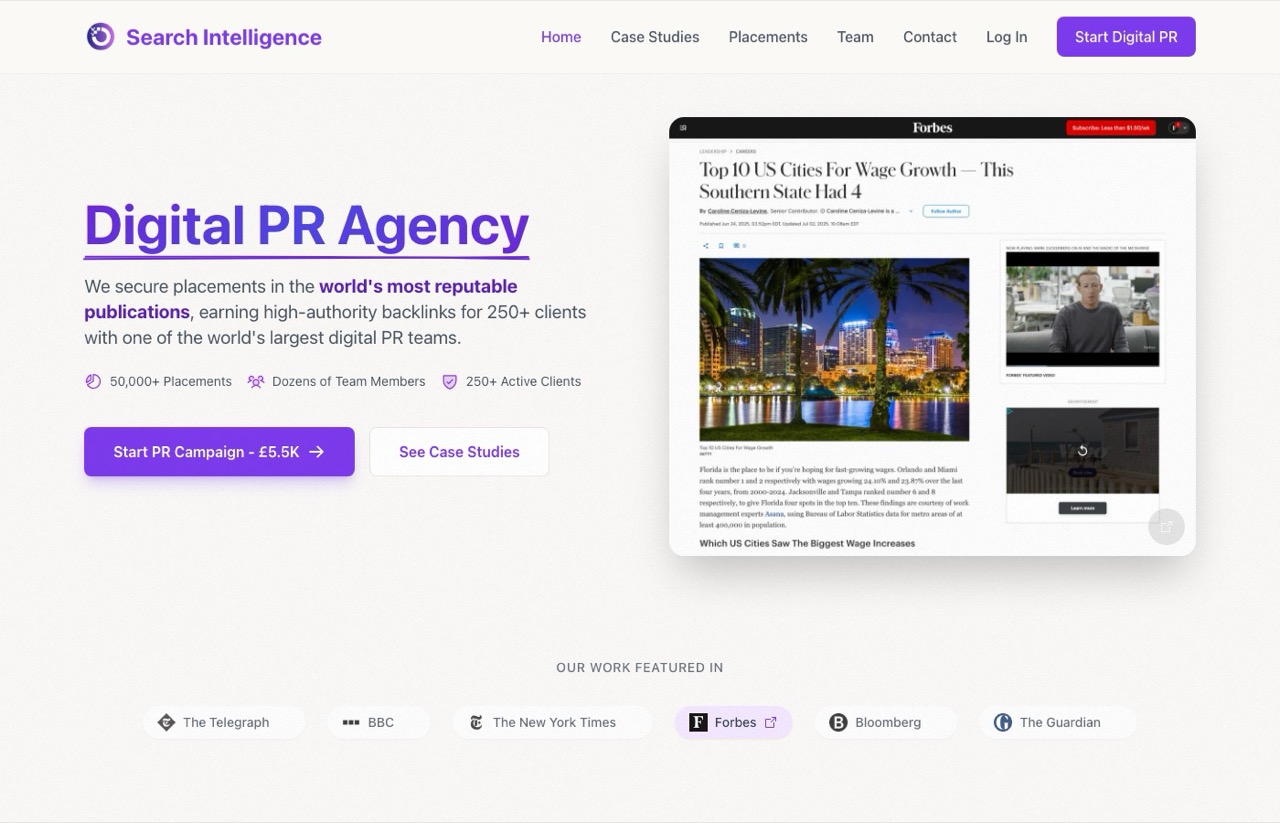
If you would rather outsource, two agencies come up repeatedly, though I will be straight that this is an editorial nod, not community consensus. Search Intelligence runs data-led PR campaigns at scale, with per-campaign pricing that starts around 5,500 pounds and a guarantee to keep working until the promised links land.
Linkifi takes an inbound-journalist approach focused on high-authority placements, with pricing available by consultation only.
Co-founder Chris Panteli walked through Linkifi's own research on ChatGPT's sources on my podcast episode about ChatGPT recommendations for local businesses.
Both target the same outcome: earned mentions in publications that AI engines and Google both respect. For a brand that can fund it, outsourced digital PR is the fastest path to the trust signals that get you cited.
Ryan's Final Thoughts
If you want these connected to Claude rather than opened in a browser tab, I ranked the MCP servers that pipe SEO data straight into your assistant.
Pick by your stage, not by hype. When I onboard a new client, I start with the data layer in DataForSEO or Ahrefs, then layer content tools on top.
Solo creators should start with Frase or Perplexity, a $20 model, and free pitches on Featured or Qwoted. Teams that live or die by ranked pages should look at Clearscope, Surfer, or Rankability. Agencies juggling many clients will get the most from Ahrefs plus Rankability's white-label reporting.
The technical crowd that would rather build than rent already knows where DataForSEO and Claude Code fit. Whatever you choose, spend as much effort earning mentions as optimizing pages, because in AI search that is what gets you named.
Best AI SEO Tools FAQs
What is the best free AI SEO tool?
There is no single free tool that does everything, but you can assemble a workable free stack. Perplexity has a genuinely useful free tier for research and real-time queries. ChatGPT and Claude both have usable free versions for ideation.
Frase offers a 7-day free trial with no credit card required, and Featured runs a free plan with 3 answers a month for pitching.
What you cannot get free is the data layer, which is why DataForSEO's pay-as-you-go pricing with no monthly seat fee is the cheapest honest entry point for real keyword and SERP data.
Can AI SEO tools replace an SEO specialist?
No, and the tools that market themselves that way are the ones to watch most carefully. Search Atlas ships many of its automated changes through a JavaScript pixel, which means AI crawlers may never see them.
That is an odd gap for a tool sold on AI visibility, and it is exactly the kind of thing a tool will not catch on its own. These tools compress the work a specialist does.
They do not replace the judgment about which work is worth doing.
Are AI visibility trackers accurate?
Treat them as directional, not gospel. One January 2026 accuracy test found Ahrefs Brand Radar reporting 3 ChatGPT mentions where the true count was 123.
The category is young and the underlying sampling is genuinely hard, so use trackers to watch a trend line over repeated checks rather than to trust any single absolute number. Before you pay for one, it is worth knowing which AI search metrics hold up and which do not.
How much should I budget for an AI SEO stack?
It depends entirely on stage, and the spread is wide. A solo creator can run on Frase at $39 per month plus a $20 model subscription and free pitching tiers.
A team that lives on ranked pages is looking at Clearscope from $129 per month or Surfer from $49 per month on Discovery billed yearly. An agency adding Ahrefs' Letaido agents pays $99 per month plus AI usage, and Rankability starts at $97 per month on Starter, with Agency at $297 for bigger client rosters.
Start at the data layer and add tools only when a specific job demands one.
Do backlinks still matter for AI search?
Mentions matter more. Ahrefs studied roughly 75,000 brands and found that web mentions correlate with AI citations far more strongly than raw backlinks do. That is the practical shift: a publication naming your brand in text can be worth more than a linked citation buried in a resource page, which is why the digital PR and HARO-style options belong in an AI SEO stack at all.