
How I Post on Social Media Consistently (I Record on Walks)
Disclosure: some links in this post are affiliate links. If you buy through them I may earn a commission at no extra cost to you. I only recommend tools I actually use. Full disclosure.
The reason I post on social media consistently now has nothing to do with a content calendar. I record my takes on a walk and let the publishing happen without me.Why I Stopped Planning Content to Post Consistently
Most advice about posting consistently starts with a content calendar. This workflow starts somewhere else entirely.
The same logic applies on the blog side, where I argue the planning half of a content strategy has become the cheap part.
The bottleneck was never ideas. I have opinions about AI marketing constantly.
The bottleneck is everything that sits between having the thought and getting it published.
So the order flips. I record at the moment I actually have something to say.
Then the workflow removes the steps between that moment and the post going live.
That is the whole system. The habit replaces the planning.
If you want to go deeper on the systems behind this, my Claude Code Skills Stack has 40+ skills I use daily to automate marketing and content creation. If you only want the repurposing half of it, the AI Content Engine does that one job: one recording in, a week of content out, in your voice.
The Daily Walk Is the Content System
You have probably been told to find your best creative hours. Mine turned out to be the ones where I was not at a desk at all.
I go on daily walks. At some point during one, a thought about AI marketing surfaces that I actually believe.
I pull out my phone, hit record, and dump the raw take. No script, no outline, no lighting setup.
The output is genuinely unpolished. One clip I posted was me explaining that I am done with WordPress, filmed on my phone mid-walk.
That is the format. Raw thoughts, delivered once, unedited.
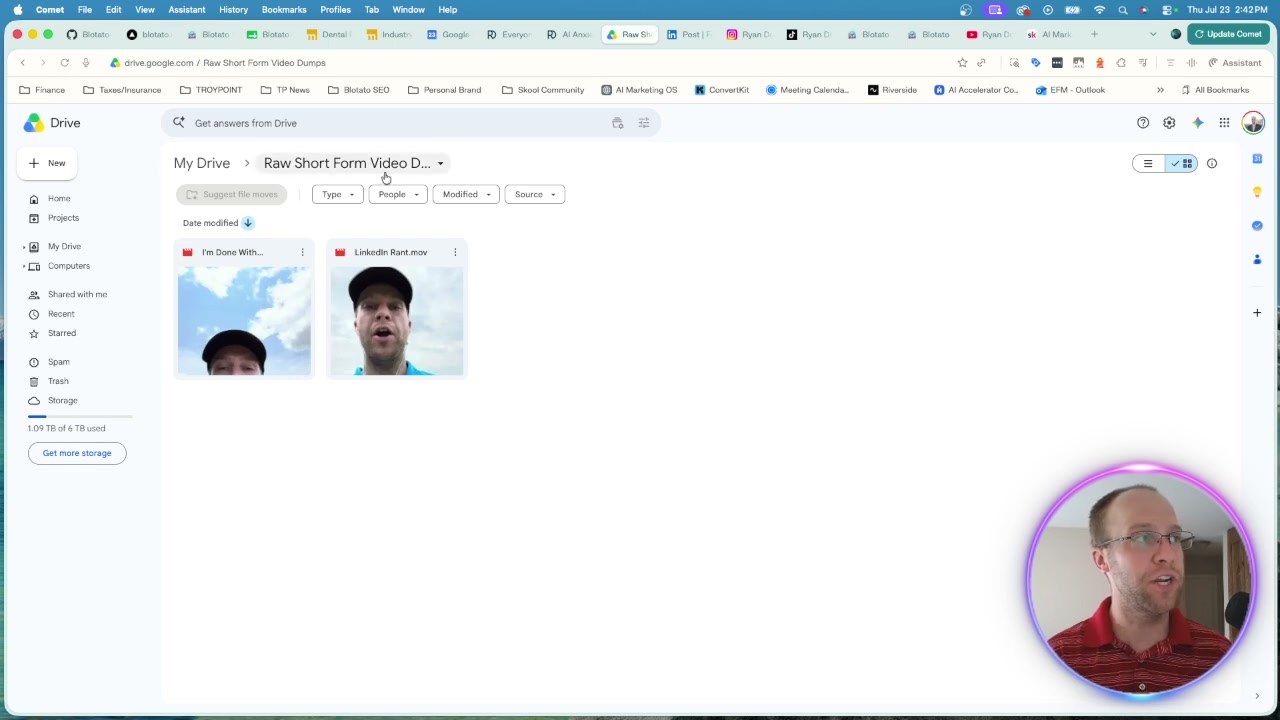
The clips save straight into a Google Drive folder from my phone, because the Drive app is already there. I named mine raw short-form video dump.
Nothing about that step requires me to be at my computer, which matters more than it sounds like it does.
Why Unpolished Beats Planned
Polish is where consistency goes to die. Every production step you add is another reason a clip never gets recorded.
There is a second benefit, and I might be biased here. A take captured at the moment of the thought tends to sound like someone who means it.
A take produced to fill a slot tends to sound like an assignment.
That is my instinct, not a measured result. Your own audience data should outrank it.
Removing Every Step After the Recording
A habit only survives if the friction after it is close to zero. That is what the rest of this workflow handles.
This is not the build guide. If you want the full assembly instructions, I documented that in my guide to managing social media with Claude Code.
What follows is only enough to show you the friction is genuinely gone.
Publishing one clip normally means uploading the file, writing a caption, then repeating that for every account you run.
Bringing AI into it does not save much. You are still copying captions out of a chat app and pasting them into each platform by hand. If that copy-paste loop is the specific thing you want gone, I broke down how to publish everywhere at once without hurting your reach. That is the gap the automation tools I actually run are there to close.
When I get back to my desk, I open Claude Code and run a slash command I built called short-video-dump. I give it the Google Drive link to the clip and plain instructions about when I want it out.
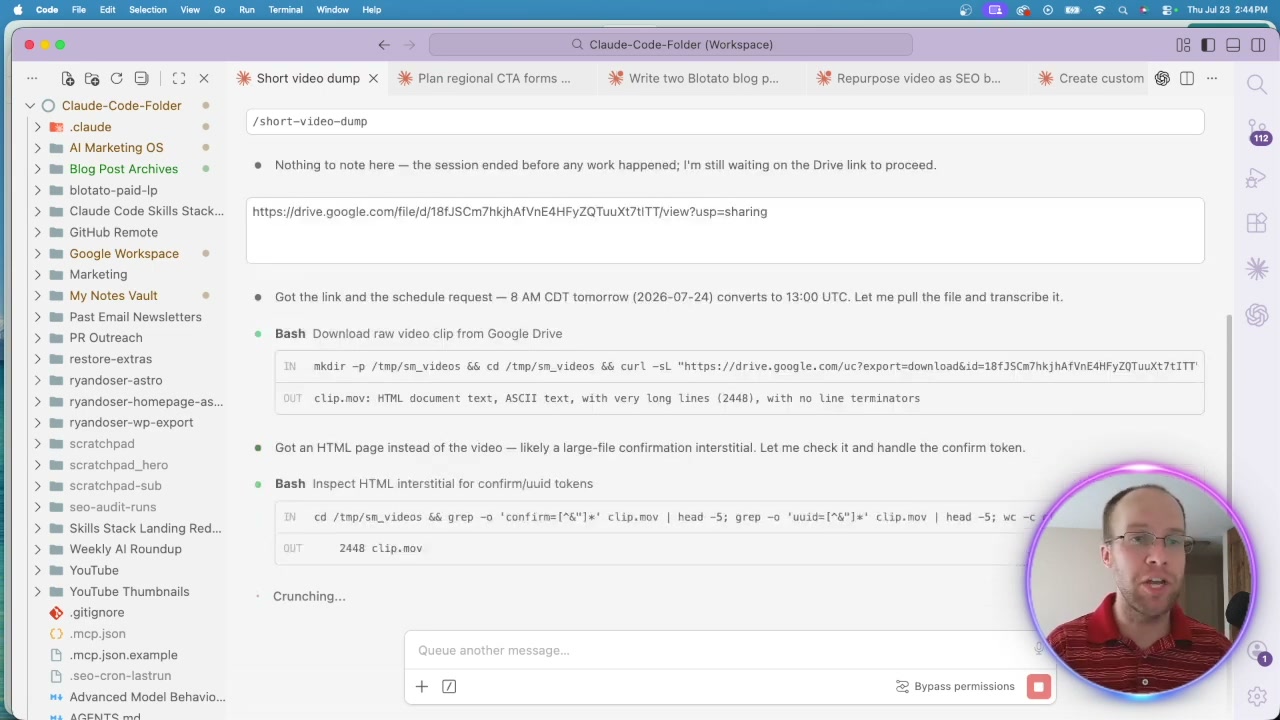
Claude Code downloads the raw clip from Drive, inspects it, and transcribes the audio.
The transcript feeds a skill file that writes the caption against rules I defined once. That is why the copy sounds like me rather than like a tool. Writing those rules down is the whole trick, and I broke down what actually goes in a voice file if you want to build one.
It shows me the drafted caption and waits for approval. As I get more comfortable with the output quality, that review step can be bypassed completely.
This is not a sophisticated task either, so Sonnet 5 handles it fine.
Where the Clip Ends Up
Approving the caption is the last thing I do. Everything after it is machine work.
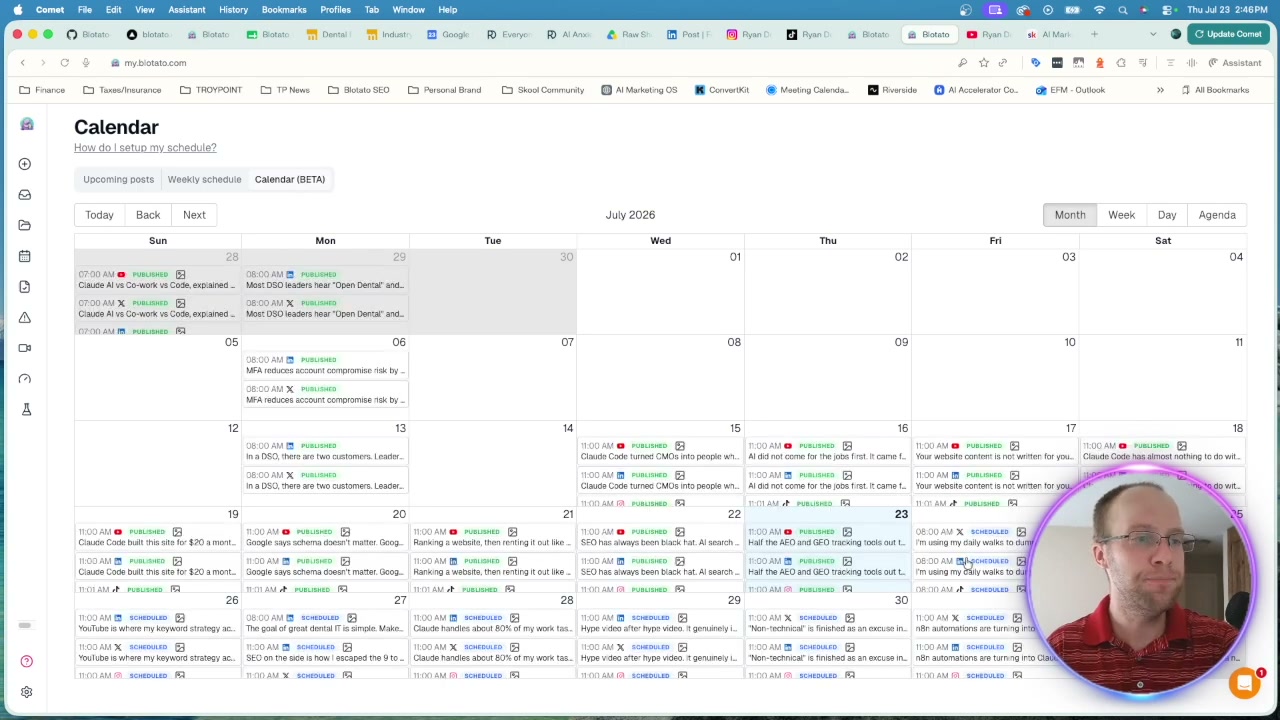
Claude Code calls Blotato through an MCP connection, uploads the video, attaches the caption, and schedules it across whatever accounts you have connected. Blotato supports nine platforms, so the reach of that one approval depends entirely on what you linked during setup.
I check the Blotato calendar rather than trusting the terminal. The clip lands where I asked.
Swapping the instruction from schedule to post right now publishes it immediately instead.
What This Does Not Solve
Removing friction is not the same as having something worth saying.
This system distributes whatever you record. If the take is boring, you now distribute a boring take everywhere, faster than before.
The walk habit works because I genuinely have opinions about this industry, not because the pipeline is clever.
The cost is real too. Claude Code sits behind a paid Claude plan, and Blotato gates API access behind a subscription.
A trial exists, but the publishing connection this depends on is not included in it. Google Drive and a working MCP connection round out the stack.
There is a ceiling on the format too, in my opinion. A short unscripted take complements long-form work instead of replacing it.
I use it to fill the space between bigger pieces, not as the strategy itself.
Ryan's Final Thoughts
Consistency is a friction problem disguised as a discipline problem. I did not become more disciplined about posting.
I moved recording to the moment I actually have something to say, then deleted every step between that moment and publishing.
Start by recording one unscripted clip on your next walk, before you build any automation at all. If the habit holds for two weeks, then go remove the friction behind it.
Post on Social Media Consistently FAQs
How do I post on social media consistently without a content calendar?
Record content at the moment you have the idea rather than at a scheduled time, then automate everything after the recording. A calendar tries to schedule creativity. Capturing thoughts as they occur and removing the publishing friction behind them produces more consistent output, because the only step requiring willpower is hitting record.
Do I need polished video to post consistently?
No. Polish adds production steps, and every added step is a reason a clip never gets recorded. Lower production requirements make consistent posting far easier to sustain. Whether unpolished clips outperform produced ones for your audience is a separate question, and one your own analytics should answer rather than anyone else's preference.
What does this posting workflow cost to run?
You need a paid Claude plan for Claude Code and a paid Blotato plan for API access. Blotato offers a free trial, but the API connection this workflow depends on is not included in it. I cover that gap and what it costs to work around in my honest review of Blotato. Google Drive storage is the only other requirement, and the free tier is usually enough for short clips.
Can AI write social captions that sound like me?
Only if you give it rules. A skill file holding your voice guidelines, banned phrases, and platform formatting produces captions much closer to your writing than a bare prompt does. I review each draft before it publishes and edit the skill file whenever a caption misses the mark.
How long should these walk-recorded clips be?
Long enough to make one argument, short enough to record without a script. A single take on a single opinion is the target. If a thought needs a structured explanation to land, it is probably a long-form video rather than a short-form clip.