
AI Content Repurposing: One Idea, a Week of Content (In Your Voice)
I publish a blog post, a newsletter, and a week of social content off one idea, and I do it as a one-person business. The reason is not discipline. It is that AI content repurposing is the one part of that I stopped doing by hand.
Most creators lose the same way. You have the idea. You record the video or write the long post. Then the multiplication, the part that turns one piece into ten, is four more hours you never find. So the idea gets published once and dies there.
Here is the whole workflow running end to end, if you would rather watch it than read about it.
Why Repurposing Is the Step That Never Gets Done
Repurposing is unglamorous. Nobody feels creative reformatting the same thought for the fifth platform, and it is the first task that falls off the list in a busy week.
So people reach for ChatGPT, paste in a transcript, and ask for ten LinkedIn posts. What comes back is technically ten posts and unmistakably not yours. It has the cadence, the throat-clearing openers, and the tidy summary endings that readers now scroll past on sight. I wrote a whole guide on how to avoid AI slop, and repurposed content is where it shows up worst, because the model is furthest from your actual thinking.
That leaves two bad options: hours you do not have, or output that sounds like everyone else's feed. The interesting question is what has to be true for a system to give you the speed without the second problem.
The Four Things an AI Repurposing System Needs
Building this for my own brand, the parts that actually matter narrowed down to four. Miss any one and you are back to slop.
1. A Voice File the Writers Have to Obey
This is the whole game and almost nobody does it. A prompt starts from zero every time, which is exactly why the output is generic: the model has no information about you, so it produces the statistical average of everyone.
The fix is a written voice file built from your real writing, not a longer prompt. Your vocabulary, your sentence rhythm, the opinions you actually hold, and the words you would never use. Every draft then gets checked against that file rather than against nothing. It is the difference between asking a stranger to imitate you and handing a writer your last twenty pieces first.
The practical detail people miss: it has to be a file you own and can edit. When something reads wrong, you fix the guide once instead of re-explaining yourself every week. A prompt has no memory of that correction.
2. Per-Platform Rules, Not One Draft Reformatted
A LinkedIn post and an X post are different pieces of writing, not the same paragraph at two lengths. Line breaks, opener structure, how much context a reader needs before the first idea lands, what a link does to reach on each network. Guessing at this is how repurposed content underperforms the original.
Each platform needs its own rules written down once. Then the multiplication step is applying known rules instead of improvising each week. If you want the manual version of this before automating any of it, my breakdown of how to post consistently with AI covers the cadence side.
3. A Quality Gate That Runs Before You See the Draft
Reviewing AI output is the hidden cost nobody prices in. If every draft arrives needing a heavy edit, you have moved the work rather than removed it.
So the check belongs upstream of you. Score each draft against a slop checklist and the voice file, and rewrite anything that fails before it reaches your review. You should only ever read drafts that already passed. That single change is what turns this from a toy into something you use on a Tuesday.
4. A Way In When You Have Nothing to Repurpose
Every repurposing tool assumes you already have a content library. Most small business owners do not. They have twenty years of answers to customer questions and zero published content, which is a supply problem no repurposing tool solves.
The way around it is an interview. Answer six to eight sharp questions about something you already know, and the transcript of that becomes the seed. Ten minutes of talking is enough raw material for a week, and it is a better seed than most blog posts because it is genuinely what you think.
This is the assumption I got most wrong, and it nearly sank the whole premise. I have a YouTube channel, so I always have a seed, and I built the first version around that without noticing I had assumed it. The person who most needs this has twenty years of expertise and nothing published, and handing them a repurposing tool is handing them a machine with no input. Watching that happen is what put the interview in, and it turned out to be the piece that makes the whole thing make sense for the people I built it for.
What One Run Should Actually Produce
Concretely, here is the output I expect from one seed, whether that seed is a video, a webinar, a long post, or an interview transcript.
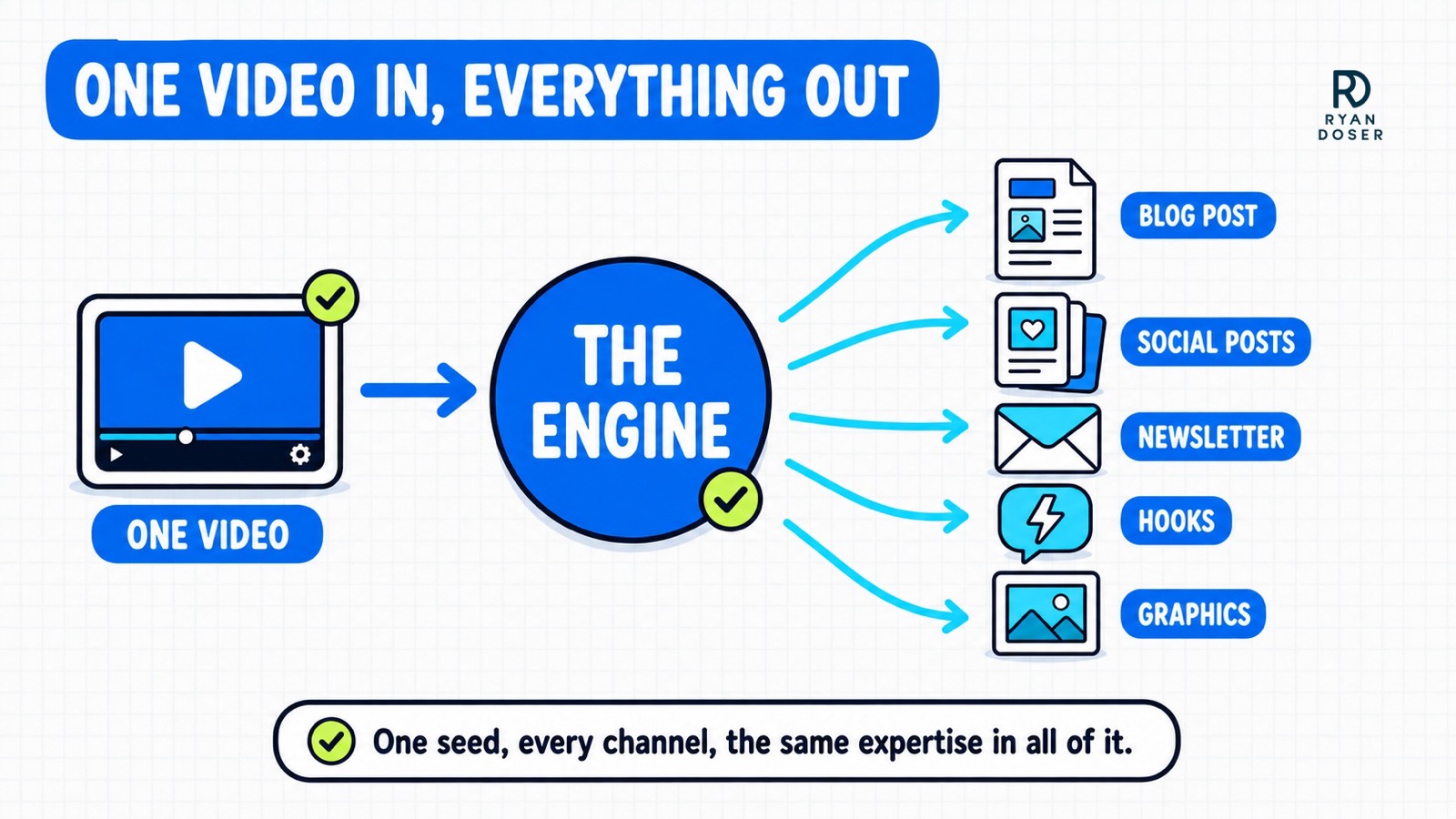
- A blog post of 1,200+ words, with title options rather than one take-it-or-leave-it headline
- Social posts per platform, several each for the platforms you actually use, formatted to each one's rules
- A newsletter email, with subject line options
- 10 to 20 short-form hooks, mined from the strongest moments in the seed
- Graphics, an infographic from the seed's best idea plus quote and hook cards, in your brand colors
One note on the graphics, because it is the part that surprises people. AI image generators still mangle text, so a card with a quote on it comes back with warped or invented letters often enough that you cannot ship it unchecked. Rendering the graphic as a small designed page and snapshotting it sidesteps that entirely. The text is text, so it is always crisp, and it is the same reasoning behind how I automate infographics rather than generating them as images.
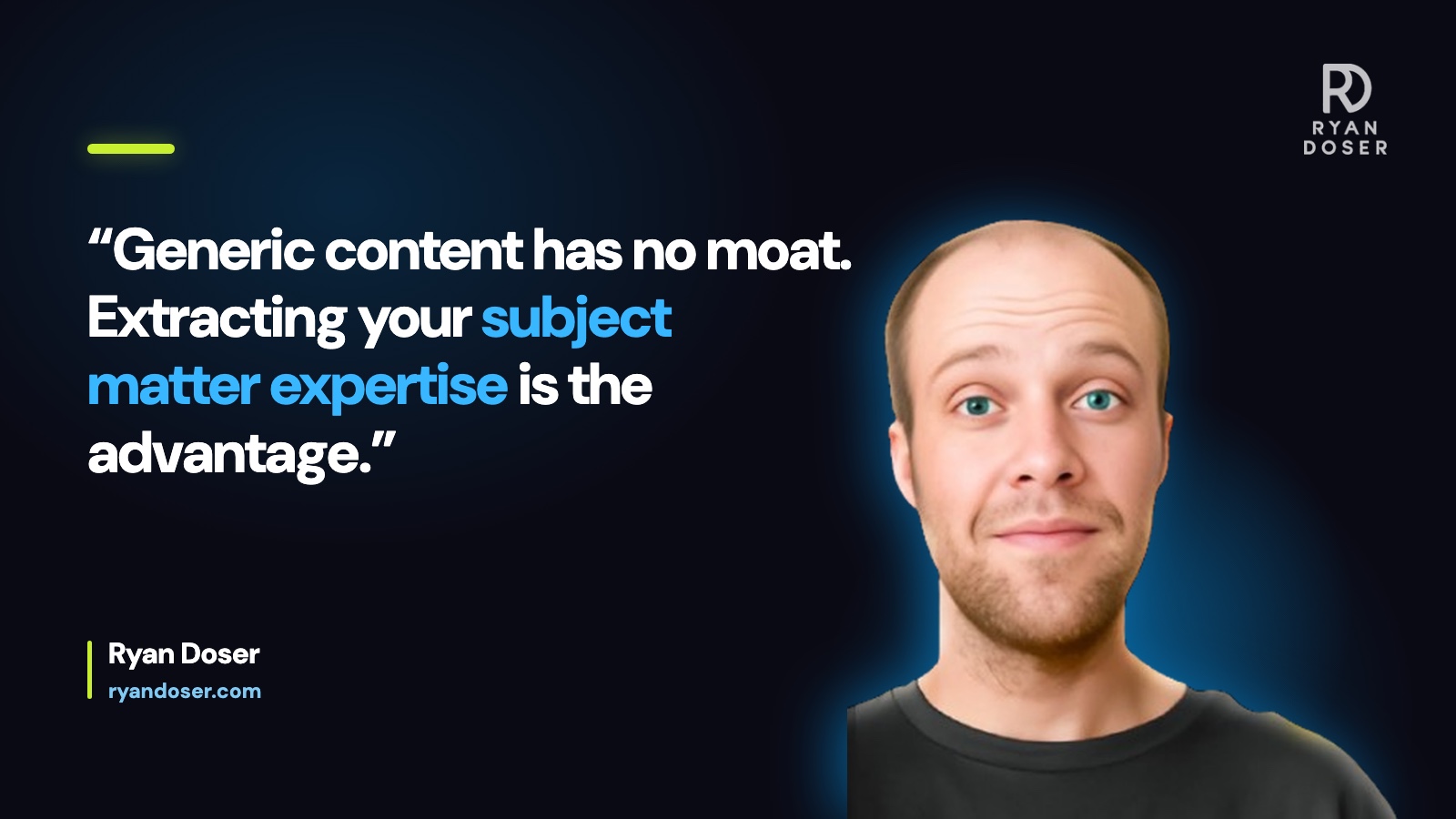
The card below is a real one, rendered from this very post using the template that ships in the download. It was built as a page and snapshotted rather than generated as an image, which is why every letter in it is sharp.
Where the Human Still Has to Stay
Two things this does not do, and being straight about them is the difference between a system you keep using and one you abandon in three weeks.
It does not publish for you. Every run produces drafts. Nothing posts, schedules, or sends itself, and I would not want it to. The review pass is short when the quality gate has done its job, but it is not optional, and auto-publishing unreviewed content at volume is the exact pattern Google's spam policies call scaled content abuse. That is the same line I hold in my AI SEO system.
It also does not manufacture ideas. The multiplication is free now. Having something worth multiplying is not. If a video had no real thesis, the blog post inherits that, and no amount of processing invents one. Tighter seeds make tighter output, every time.
The Version I Packaged
I built this for myself first, because I run a YouTube channel, a blog, a weekly newsletter, LinkedIn, and X with no team. Packaging it into something another person could run is what forced the four parts above to be written down instead of living in my head.
That is the AI Content Engine, $47 one time. It is a folder of files you hand to an AI assistant, and it turns that assistant into your content team: the Brand Guide Builder, the writers for each format, per-platform rules, the graphic designer, and the anti-slop quality gate. No subscription, and updates are included.
It is plain files, so it is not locked to one app. It runs in Claude, ChatGPT's Codex, Cursor, Google Antigravity, and any other assistant that reads files. On Claude Code it installs as a plugin with its own slash commands, and everywhere else you drag in a folder. The honest cost note: it needs a paid plan on one of those assistants, which is separate from the $47, and a $20 Claude Pro plan is plenty.
I priced it as the thing you buy without a meeting about it. It is less than most freelancers charge for a single blog post, and one run produces considerably more than one blog post. My other products sit further up: the AI SEO System at $199 does a completely different job, which is getting you cited in AI search rather than writing your content. Neither requires the other, and I would rather say that plainly than sell you the wrong one.
If you would rather build your own version, everything above is the blueprint and I mean that. The four parts are the four parts whether you buy them or write them. My walkthrough of how I repurpose YouTube videos with Claude Code is the hands-on version of the same pipeline.
Who Should Not Buy This
The limitations above are how the system works. These are the situations where it is the wrong purchase for you specifically, and they matter more than usual here because digital sales are final, so the time to decide is before you buy rather than after.
You do not want a paid AI assistant. The Engine is a system your AI tool runs, not a standalone app, so the $20-a-month plan is a real prerequisite rather than an upsell. If you were not going to have one anyway, the $47 buys you nothing.
You are looking for done-for-you. This produces drafts you edit and publish. If what you actually want is someone else running your content, hire that, and I would rather tell you so than sell you a system you will not open twice.
You publish to one place, occasionally. The whole economic case here is multiplication across formats. If you post to LinkedIn once a month and that is the plan, the setup cost is not worth it.
Your work is not something you can talk about for ten minutes. Interview mode helps you get an idea out of your head, but it cannot put one there.
Where the Real Leverage Is
Generic content has no moat. Competent-sounding prose is the thing that got commoditized, and what is left that a model cannot produce from nothing is what you specifically know. Extracting your subject matter expertise is the advantage. The mistake is treating AI repurposing as a volume play, because volume without a voice file is just a faster way to publish things nobody remembers.
Build the voice layer first, then the speed. One idea a week, multiplied properly, beats five ideas published once each and forgotten. For the strategy layer underneath all of this, my comparison of nine content creation agents and what each one can publish covers how I think about the workflow itself, and the AI tools I actually use as a content creator covers what runs alongside it.
AI Content Repurposing FAQs
What is AI content repurposing?
AI content repurposing is turning one piece of content, like a video, podcast, webinar, or long post, into every other format you publish: a blog post, platform-specific social posts, a newsletter, short-form hooks, and graphics. The useful versions check every draft against a written record of your voice, so the output does not read as generic AI content.
How do you make AI content sound like you?
Give it a voice file built from your actual writing rather than a prompt. It should capture your vocabulary, sentence rhythm, opinions, and the words you avoid, and every draft should be scored against it before you read it. A prompt starts from zero each time, which is why prompt-only repurposing produces the same generic voice for everyone.
Can you repurpose content if you do not have a YouTube channel or podcast?
Yes. The seed does not have to be published content. A voice memo transcript, a webinar recording, a post you already wrote, or a ten-minute interview where an AI asks you questions about your work all give you enough raw material for a week of content.
How long does AI content repurposing take?
With the voice file and the format rules already written down, one seed to a full week of drafts is a single focused work session, plus your review. The setup is the slow part and you only do it once. Doing the same multiplication by hand is most of a workday every week.
Is repurposed AI content bad for SEO?
Not inherently. Google penalizes unhelpful, scaled, low-quality content regardless of how it was made, not repurposing itself. What gets sites in trouble is publishing unreviewed near-duplicate pages at volume. Repurposing one genuine idea across formats, with an editor approving each piece, is normal content marketing.
Do you need to know how to code to use an AI repurposing system?
No. The system is a folder of plain text files you hand to an AI assistant, and you drive it by typing sentences like "turn this into my week of content." If you can describe your business and copy-paste a link, that is the skill bar. The one requirement is a paid plan on an assistant that can read files.