
How to Avoid AI Slop in 2026 (Advice from AI Content Expert)
Learning to avoid AI slop is the difference between content that builds trust and content that quietly kills your brand.
How to Avoid AI Slop: What the Best Creators Actually Do
You've seen it. A LinkedIn post with a hook that reads "not X, not Y, but THIS." A blog post that uses the same five AI buzzwords in every paragraph. A YouTube script with no opinion, no edge, and no reason to exist.
That's AI slop. And it's everywhere in 2026.
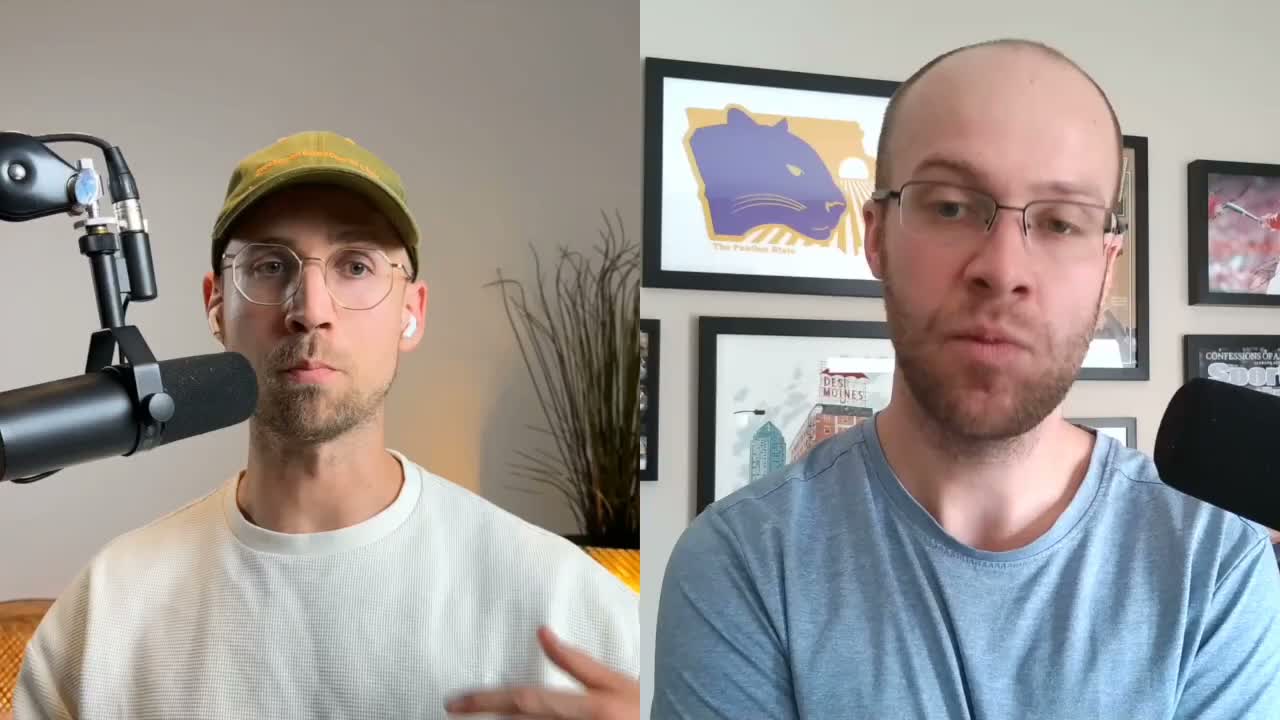
I recently sat down with Ole Lehmann, creator of the AI Solopreneur, 160,000 followers, seven-figure business built on content. His take on AI slop cut straight to it: the worst kind starts before AI writes a word. It starts when someone asks AI what to write about.
No point of view. No original thought. Just automated mediocrity posted at scale.
What Is AI Slop and Why It Hurts Your Brand
Most people think AI slop is just bad writing. It's not that simple.
AI slop was named the 2025 Word of the Year by the American Dialect Society and flagged by Merriam-Webster as one of the defining terms of the era. That tells you how mainstream the problem has gotten.
Here's how Ole defined it: AI slop tries to agree with everyone. There's no spice. Nothing interesting. It's not bad enough to call out, but it's not good enough to remember. And because the floor of minimum quality has risen, average is now invisible.
Video has the same problem. On my podcast, Aaron Makelky called a bare "edit my video, make it good" prompt the new version of AI slop, and I show why AI video edits drift into slop without direction.
Two types worth knowing:
- Full automation slop: Someone runs a 100-post automation and hits publish without reading a word. Maybe one goes viral. None of them convert.
- Checklist mentality slop: A real person uses AI but treats content like a task to cross off. Facebook done. Instagram done. No originality, no editing, no thought.
Both kill your brand. One just does it faster.

AI Content Creation Strategy That Actually Works
Here's the reality: AI is not the problem. How people use it is.
Ole's workflow is deceptively simple. He uses voice-to-text tools like Whisper Flow to capture raw ideas throughout his day, thoughts, observations, people he met, products he tested. He rarely types. He just talks. Then AI handles the production. Not the thinking.
My own background is in SEO, and I told Ole the same thing applies there. I could spin up an automation that cranks out 100 SEO blog posts a day. Someone is now selling that automation as a product, and I went through what you actually get for $99 a month. That won't move the needle. Someone who actually understands H2 and H3 hierarchy, internal linking strategy, and search intent? They use AI to produce something that ranks and converts. The skill comes first. AI amplifies it.
Three things that separate AI content that works from slop:
- Ideas come from you. Your POV, your experience, your observations. Feed AI your raw voice, not a topic prompt.
- You know what good looks like. Ole built a list of 13 "slopification markers" to watch for before posting anything AI-assisted.
- You edit with intent. Read it like a skeptic. If you would scroll past it, start over.
If you want a deeper look at how I build AI-powered content systems that don't produce slop, check out my ranking of which AI agents can actually publish a finished post and how I approach Claude Code for marketing workflows. Repurposing is where slop shows up worst, so that is also where keeping drafts in your own voice matters most.
How to Humanize AI Content Before It Goes Live
You have probably read something recently that felt off. Something in your brain flagged it without you being able to say why.
Ole can tell when a YouTube script was written by Claude or ChatGPT. He can spot the AI voice clone. Most audiences are developing that same instinct, whether they realize it or not. When someone detects slop, two things happen fast: they lose trust in the creator, and they feel cheated for giving it their attention. That's not something you recover from with a better hook next time.
What actually humanizing AI content looks like:
- Start with your voice. Record yourself talking through the idea. Use that audio as source material. AI cleans the structure. Your personality stays in.
- Cut the tells. Patterns like "not X, not Y, but THIS" and reflexive triple-item lists are instant slop signals. Learn to spot them and cut them before publishing.
- Add something AI can't. A result from your own testing. A quote from a real conversation. A contrarian take you've thought through. These are what make content worth reading.
The rise of AI-powered search means Google is getting better at surfacing content built on real expertise. Slop gets filtered out faster than ever. First-hand experience in the content is not just good for readers. It's good for rankings.
Why Trust Is the Real AI Content Strategy
Ole called it the "trust recession." That framing is accurate.
When everything can be automated, text, images, voices, video scripts, the one thing that cannot be faked at scale is a track record of being real. Long-form content and live video are growing right now partly because of AI. People are hungry for something a prompt could not generate.
A 10-minute YouTube video builds more trust than a hundred tweets. Ole pointed out something most people miss: YouTube is the second-largest search engine, and its transcripts feed directly into AI models like Google Gemini. According to research on AI content trends, creators who publish consistent long-form video are building equity that compounds. A LinkedIn post from last Tuesday is already dead. A YouTube video from two years ago can still send you leads today.
The creators who win in the AI era are not running the biggest automations. They're the ones who stayed real when real became rare.
For more on building content systems that actually work, see how I handle AI replacing marketing agencies and my take on using AI to grow a YouTube channel. The quality gate I built to catch this in my own content ships inside my AI Content Engine: every draft is checked against slop markers before it reaches you.

Ryan's Final Thoughts
Avoid AI slop by keeping the one thing AI cannot replicate: your actual point of view.
Use AI to produce. Use your brain to think. Feed the machine your raw voice and real experience, then edit with the same standard you'd apply to anything going out under your name.
Ole built a seven-figure business on content. His edge was not a smarter tool. It was understanding the craft well enough to know what good looks like, and caring enough to hit that bar every time. That's still the whole game.
Avoid AI Slop FAQs
What is AI slop?
AI slop is low-quality content generated by AI without meaningful human input, editing, or original perspective. It reads as generic and agreeable to everyone, devoid of any specific insight. The American Dialect Society named "slop" the 2025 Word of the Year because of how widespread AI-generated filler content has become online.
How do I know if my content is AI slop?
Read it out loud and ask: would I scroll past this? Common tells include overused structural patterns like "not X, not Y, but THIS," reflexive triple-item lists, and a complete absence of first-hand examples or opinions. If you can't point to one thing in the piece that came from your own experience, it's likely slop.
Can AI-generated content rank on Google in 2026?
Yes, but generic AI content is increasingly filtered out. Google's E-E-A-T framework rewards content showing real Experience, Expertise, Authoritativeness, and Trustworthiness. Content built around first-hand testing, specific results, and genuine expertise will outrank AI slop in search every time.
What's the best way to humanize AI content?
Start with your voice before touching AI. Record yourself talking through the idea, use that as your source material, then let AI clean up the structure. After AI produces a draft, read it out loud, cut the structural clichés, and add at least one specific detail, result, or opinion that only you could write.
Is all AI content bad?
No. AI is a production tool, not a replacement for thinking. The problem is not using AI. It's skipping the thinking part and letting AI do everything. Creators like Ole Lehmann use AI heavily and build seven-figure businesses. The difference is they bring the ideas, the point of view, and the editorial judgment. AI handles speed and formatting.