
Is AI Replacing Marketing Agencies? Why Most are Behind
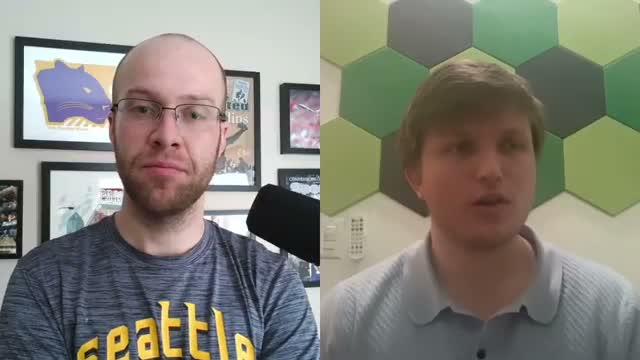
AI replacing marketing agencies is the question every agency owner is quietly Googling right now. I sat down with Josh Geribo, on the founding team of LEO (an AI marketing startup), to get an honest answer from someone actually building in this space.
Is AI Replacing Marketing Agencies Right Now?
Short answer: not yet. But the gap is widening fast.
Josh put it plainly. Most agencies haven't integrated AI in any meaningful way. They're buried in client work, worried about churn, and don't have a dedicated team to figure out where to start. That's the honest reality from someone actively selling to these agencies every day.
According to a 2026 industry analysis, agencies face triple pressure from AI, the rise of in-house teams, and industry consolidation. The Omnicom-IPG merger eliminated an estimated 4,000 positions worldwide. This isn't a warning. It already happened.
The "Button Clicker" Problem in Marketing Agencies
I've said this for years: there are a lot of button clickers out there. People who log into the ads manager, check a few search terms, make surface-level tweaks, and call it strategy. No real insight. No creative thinking behind the numbers.
That job is going away.
Josh agreed without hesitation. The manual media buyer who just moves knobs in a platform is being replaced. What survives is the ability to understand your customer and bring real creative instinct to the work. A Harvard Business Review analysis from 2026 found that AI is eroding the middle layers of marketing fastest, hitting execution-heavy roles like media planners and junior analysts first.
The agencies that pull ahead will look more like orchestrators. A senior strategist who understands the full funnel, deploys AI to handle the manual work, and makes decisions based on data no human analyst could pull manually. That's the model Josh is building toward with LEO. I ranked nine AI agents on whether they can publish unattended in a previous post if you want to see what this looks like in practice.
Why Context Separates Good AI from Garbage AI
Here's where most marketers fail. They open ChatGPT or Claude, write a sophisticated prompt, and wonder why the output is generic slop. If you're weighing those two options, I compared switching from ChatGPT to Claude in a separate breakdown.
The answer is always context.
Josh described how LEO handles onboarding: they scrape a client's website and use it as foundational context for every piece of content the AI produces. That single step closes most "it's not on brand" complaints agencies throw at AI tools.
I do the same. Before AI does real work for any client, it needs transcripts, writing samples, a style guide, and documented strategy. Skipping that step means you're amplifying noise, not intelligence. As Josh put it: "You can have a 100-node automation setup, but if you don't understand what good looks like for an email or a blog post, none of that matters."
This is also why AI agents get a bad reputation. It's rarely the model's fault. It's a missing context problem. The marketers winning with AI agents in 2026 are the ones who invested time upfront in proper context and workflow design.
I wrote a full walkthrough on using Claude Code for marketing if you want the hands-on version of what I run on my own accounts.
What AI Still Cannot Do in Marketing
Josh didn't sugarcoat it. AI video is still bad. LEO chose to focus only on static ad creatives because reliability matters more than novelty. When you're managing ad spend for clients, "sometimes it works" is not good enough.
Beyond video, the deeper issue is emotion. Every piece of content that genuinely breaks through has emotion tied to it. An emotional hook. An image that stops the scroll. A moment of real human connection. AI can assist with everything around that last 10%, but it cannot manufacture the authentic thing.
By 2028, Josh predicts that data analyst roles inside ad platforms will be fully automated. eMarketer's agency research backs this up, pointing to AI disruption as one of the forces reshaping the entire agency model. What won't be automated is distribution strategy and genuine community. You can have the most technically advanced AI setup in your niche. If you don't know how to reach people, none of it moves the needle. For a practical starting point, I put together a guide on AI tools that actually work for small businesses.
The Future Marketer Is an Orchestrator
So what does the marketer who survives look like? Josh described it as a CMO-level thinker who understands the full picture and deploys agents to handle the manual work. They're not clicking buttons. They're setting direction, reviewing AI-generated insights, and making the calls that matter.
The agencies building toward this model now will look back in two years and wonder how anyone ran accounts the old way. The ones waiting until AI feels "safe" are already behind. LEO is built specifically for this shift, connecting your marketing stack and automating the workflows that eat agency time.
Ryan's Final Thoughts
Is AI replacing marketing agencies? Not all of them. The ones being replaced are the ones built on execution without strategy. The ones that survive will be the ones that stop treating AI as a threat and start building it into how they work.
If you're a marketer, the skills that protect you are the ones that have always mattered. Know what good looks like. Understand your customer. Bring real creative instinct to the work. Let AI handle the rest.
Talk soon, Ryan
AI Replacing Marketing Agencies FAQs
Will AI fully replace marketing agencies?
No. AI is replacing specific functions, particularly execution-heavy roles like manual media buying, reporting, and basic content production. Agencies built around strategy, creative direction, and customer insight are much harder to automate. The ones at risk charge primarily for execution with no strategic differentiation.
Is AI replacing marketers right now?
Yes, in certain roles. Entry-level and junior positions in sales and marketing saw roughly a 20% reduction in headcount from AI in recent years. Execution roles are most exposed. Senior marketers who own strategy and results are significantly harder to replace.
What marketing jobs are most at risk from AI?
Roles centered on manual data analysis, ad platform management, basic reporting, and templated content production are most at risk. By 2028, most in-platform data analyst work is likely to be automated. Creative strategy, brand positioning, and community building remain human-dependent.
How should marketing agencies adapt to AI?
Start by identifying which internal tasks are manual and repeatable, then find tools that handle those specifically. Invest time building proper context documents before deploying AI on client accounts. The agencies winning now moved from "we should try AI" to "here is our specific workflow for onboarding, reporting, and creative production."
What skills protect marketers from being replaced by AI?
Understanding what good output looks like in your niche. Deep customer insight. Creative instinct. Distribution strategy. Community building. These are the skills AI cannot replicate reliably. Pair those with working knowledge of AI tools and you become very hard to replace.