
6 Best SERP APIs in 2026 (After Google's Poisoned Results)
The SERP API I use every day just got ranked dead last in a viral chart of the best SERP API picks for clean Google data.
A SERP API (search engine results page API) is a service that fetches search results, usually Google's, as structured data so software or an AI agent can read rankings without a person searching. If the page it fetches is fake, the reports built on it go wrong.
On November 16, a founder named Ilias Ism posted on X that about 35% of his recent scrapes had fake page-one rankings, even for his own name. He fixed it by switching providers. His carousel scored five SERP APIs on "clean SERP rate," and DataForSEO came last at 9.7%.
So I traced where that number came from. Then I had Claude Code run DataForSEO four different ways, plus an outside scraper, on the same 120 searches.
Where Did That Viral SERP API Chart Come From?
Quick bias check before I pick at someone else's chart. I earn a commission on DataForSEO, so weigh this section with that in mind.
Ilias's own audit is worth reading. He checked 19,309 stored SERP snapshots. About 0.4% had collapsed before September 20, and 34.7% after.
The provider scores are a different story. Three of the five match cloro's own benchmark to the decimal: Oxylabs 96.8%, cloro 95.8%, DataForSEO 9.7%.
cloro sells a SERP API. So those three numbers come from a vendor testing itself against its competitors.
They also come from one twelve-hour slice of that benchmark, ending October 31, on three test searches. cloro calls its own result there "a best case." And the chart itself labels that bar "DataForSEO Live," the priciest way to pull a DataForSEO search.
The other two numbers, Bright Data at 61.3% and Serper at 20.8%, I couldn't trace to any published benchmark. Maybe they come from Ilias's own database. His post doesn't say.
The chart could still be right about the order. It's just resting on a lot less than a provider ranking usually needs.
Two Problems That Look Exactly the Same
Before you pick the best SERP API for your stack, know that two separate Google changes are hitting every provider at once.
Poisoned SERPs are fake pages. Google serves suspected scrapers a normal-looking page with most of the usual sites swapped out, and it arrives with a success code. Nozzle named the pattern in an October 10 study, and I broke down its data in my analysis of poisoned Google SERPs.
DataForSEO's CTO estimated poisoned pages at 20% to 30% of its scraped results from September 26, in the company's own write-up. Ahrefs put the share at 5% to 20% depending on the provider, then reported its page-one data largely recovered by November 6.
Goto links are the second problem. Google confirmed to Search Engine Roundtable on August 26 that it's sending result links through google.com/goto redirects. An API that doesn't resolve them hands you a google.com link, and a tool reading the domain field sees google.com.
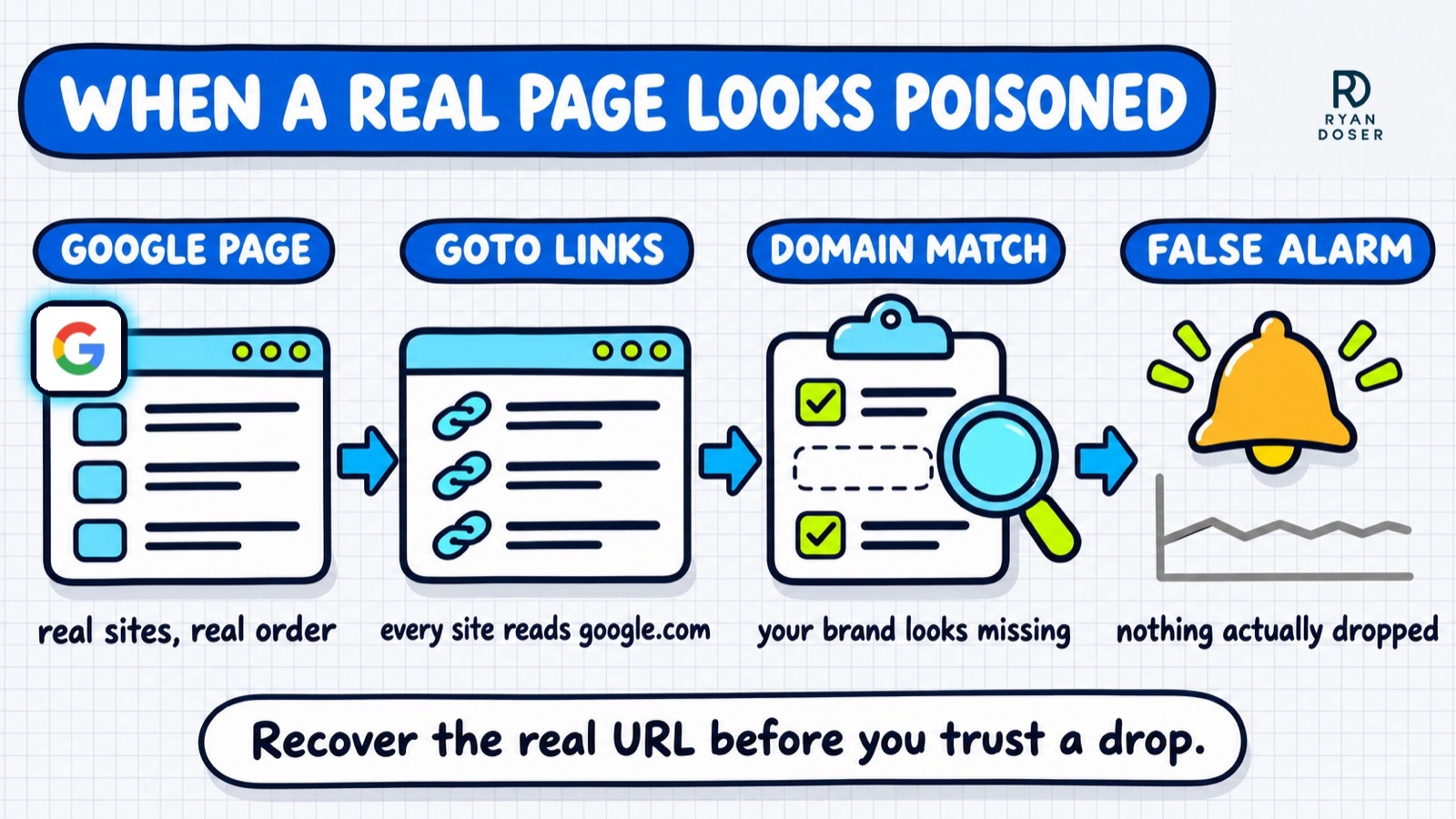
The poisoning checks published so far, from Nozzle, cloro and DataForSEO itself, compare the sites on a page with the sites that usually rank. If a masked page gets read by its domain field, every usual site looks gone. A real page then fails the same test as a fake one.
An independent study from EverGrow compared five providers. On October 31, between 54.8% (Serper) and 84.7% (SerpApi) of organic results came back without a destination URL.
Most providers fixed that fast. On US and German results in EverGrow's November 7 re-check, Serper, SerpApi and DataForSEO's Standard queue were at 0% and Oxylabs at 1.9%, while Bright Data sat at 86.8%. In the October 31 snapshot, the site's domain was still readable in 91% to 99% of masked results, which is what a careful tool should use.
Five Setups, Same 120 Searches
On November 16, DataForSEO shipped a fix called resolve_poisoned_results. It checks each page against Google's Web-mode results and swaps in those listings when it spots poisoning, for the price of one extra results page.
So on November 16, I had Claude Code run the same 120 Google searches through five setups, back to back. Four were DataForSEO settings, and the fifth was Apify's Google scraper as an outside comparison.
The searches were 100 keywords I froze in October, plus 20 brand names like "hubspot" and "canva," where the brand's own site should rank first. The method was written down, timestamped and hashed before any data came in, and the per-search results are public.
| Setup | Price per 1,000 | Results masked as google.com | Searches missing most usual sites | Brand searches with the brand erased |
|---|---|---|---|---|
| DataForSEO Live, default settings | $2.00 | 99.3% | 18 of 20 (90%) | 4 of 20 |
| DataForSEO Live, resolve goto links | $2.00 | 0% | 13 of 20 (65%) | 3 of 20 |
| DataForSEO Standard queue, default | $0.60 | 0% | 18 of 20 (90%) | 6 of 20 |
| DataForSEO Standard queue, poison fix on | $1.20 | 0% | 3 of 20 (15%) | 0 of 20 |
| Apify Google scraper (outside comparison) | $4.50 (free tier) | 0% | 10 of 26 (38%) | 3 of 20 |
One round of 120 US desktop searches per setup, November 16, 2026. "Missing most usual sites" means fewer than half of a keyword's August top-10 sites appeared in the new top 10, counted on keywords with an August snapshot and no map pack. Masked google.com links were matched back to their real site first. Apify returns no map-pack flag, so its sample may include a few local keywords. October's 500 Live pulls (5 rounds of 100 keywords) missed on 56 of 100 judged searches.
With the fix on, far fewer searches failed the August test. The Standard queue with the fix missed most usual sites on 3 of 20 judged searches, against 18 of 20 for both stock Live and the plain Standard queue. I didn't test Live with the fix, which DataForSEO prices at $4.00 per 1,000.
No brand got erased on the Standard queue with the fix on. Apify, on the same 20 keywords judged in every DataForSEO setup, missed on 6 of 20.
The "ahrefs" search shows the gap better than any rate. Stock Live ranked growthsupermarket.co, manytools.com and shopsource.ai at the top. The fixed Standard pull, minutes later, put ahrefs.com first.
The masking surprised me more. Out of the box, Live returned 99.3% of organic results as google.com.
Read naively, that setup erased the brand on 20 of 20 brand searches. Pull the real site from each result's own listing and the true count was 4 of 20.
My check can't show how cloro scored DataForSEO. It does show that on Live, masking alone is enough to make a real page look poisoned to a domain check.
Treat these numbers as a field check. The August baseline means normal ranking churn counts against every setup, and passing it doesn't prove a page matches today's Google exactly. That's why I compare the setups with each other, never with zero.
It's one country, one device and one round. I don't have accounts with Oxylabs, cloro, Serper, Bright Data or SerpApi, so their entries lean on published data and their own rate cards.
Best SERP APIs in 2026
No source tests all six the same way, so this order is a judgment call. I weighted independent or repeatable evidence of real pages first, then what a usable page costs. Prices come from each vendor's live pricing page on November 16, 2026, at the entry tier with monthly billing.
| SERP API | Best for | Google price per 1,000 at entry | Free to start | Poisoning evidence |
|---|---|---|---|---|
| Oxylabs | Teams that need accurate pages without tuning anything | $1.00 (no JS rendering), $1.35 with | $5 credit | 96.8% full pages in cloro's Oct 31 check |
| DataForSEO | SEO tools and agents that also need keyword and AI search data | $1.20 Standard with the poison fix ($0.60 without) | $1 credit, $50 minimum deposit | Failures fell from 90% to 15% with the fix in my field check |
| cloro | One API for Google plus AI answer engines | $2.40 on Lite, $1.20 on Hobby (batch requests) | 500 credits a month | 95.8% in its own benchmark |
| Serper | Fast, cheap Google lookups for apps and agents | $1.00, down to $0.30 at volume | 2,500 queries | Real URLs restored by Nov 1, per EverGrow, but no poisoning test |
| Bright Data | Large volumes where you only pay for delivered results | $1.50 pay as you go | 5,000 requests a month | No published poisoning test I could source |
| SerpApi | Coverage of many search engines plus legal cover | $25 on Starter, $10 on Production | 250 searches a month | Open "poisoned results" incident since Oct 13 |
1. Oxylabs (Best for Accurate Pages Out of the Box)
Oxylabs has the best evidence in this group, and it comes from a competitor. In cloro's benchmark, Oxylabs returned full pages on 96.8% of reads in the twelve hours to October 31. That edged out cloro itself.
After a Google change on October 26 knocked down every provider cloro benchmarks, cloro reported Oxylabs back at 100% by October 29. That's the strongest recovery number I found published.
Pros:
- Top full-page rate in the only multi-provider poisoning benchmark I could find
- Fastest of the four benchmarked providers to recover after October 26
- Entry price sits close to the cheapest options here
- Real URLs back on 98% of results by EverGrow's November 7 re-check
Cons:
- Reads got slower after a Google change on November 6, from 6.8 to 16.3 seconds on average in cloro's tests
- Unused self-service credits expire at the end of each billing cycle
Best for: Teams that want accurate pages first and will pay a little more for them.
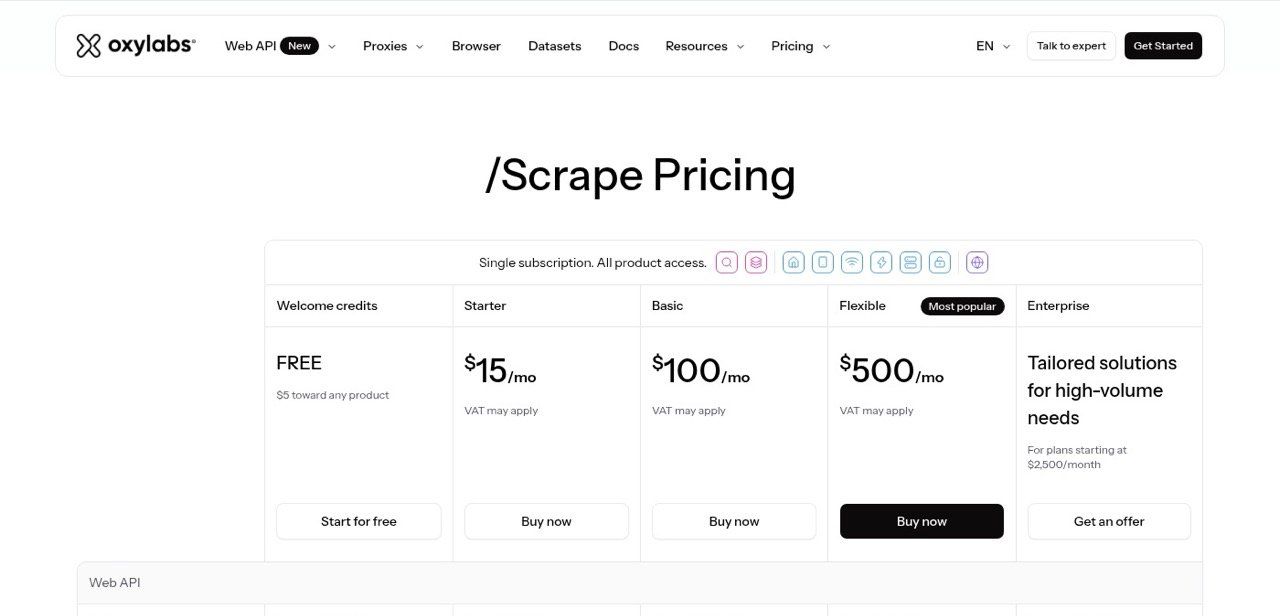
Pricing: $15 a month Starter. Google costs $1.00 per 1,000 results without JS rendering and $1.35 with it, falling to $0.50 and $0.90 at the top tier.
Free trial: Yes, $5 in welcome credits toward any product.
Bottom line: If accuracy is the whole job, this is where the published evidence points.
2. DataForSEO (Best Value, With the Fix Switched On)
This is the one I use through Claude Code for my SEO and AI search work. My full take is in my DataForSEO review. The short version: the default settings and the right settings now behave like two different products.
With default settings, Live returned masked links and failed the August test on most searches in my field check. The Standard queue with resolve_poisoned_results on had the fewest failures of any setup I ran. DataForSEO says the fix also works on Live, for $4.00 per 1,000, though I didn't test that.
Why rank it above cloro? You can check this fix on your own account in an afternoon, while cloro's numbers come from cloro. Weigh my affiliate link against that.
Pros:
- Fewest failures in my field check once the poison fix is on
- Standard queue resolves goto links by default, so you get real URLs
- Same account covers keywords, backlinks and AI search data, plus a Claude MCP server
Cons:
- The fix shipped November 16, so the evidence is days old
- Live leaves goto links masked unless you turn on
resolve_goto_urls, which adds at least 40 seconds a search. DataForSEO warned on November 2 that Live resolved only about half under Google's throttling, though all of them resolved in my run
Best for: SEO tools, agents and marketers who already pull keyword or AI search data from one place.
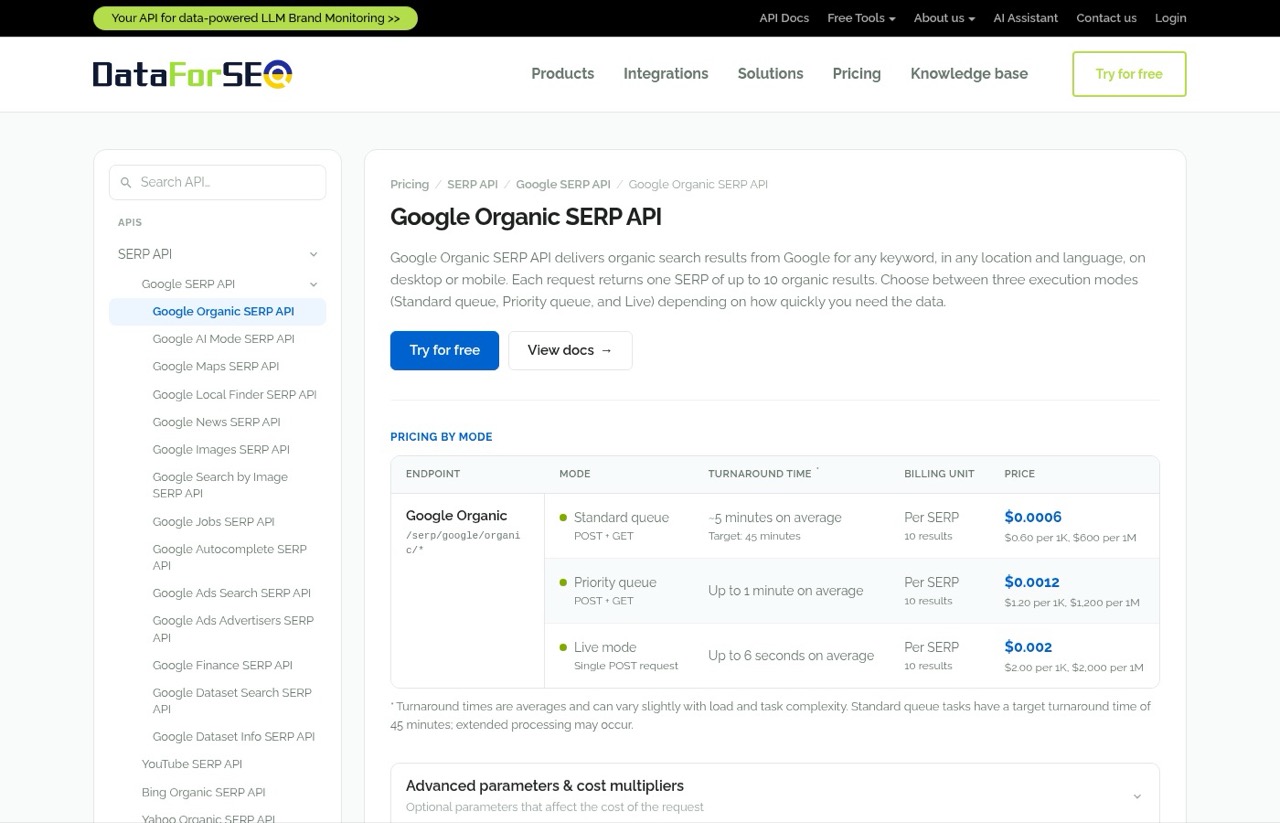
Pricing: Pay as you go. $0.60 per 1,000 on the Standard queue, $1.20 with the poison fix. Live is $2.00, or $4.00 with the fix.
Free trial: Yes, $1 in credit with no card, then a $50 minimum deposit.
Bottom line: Still my pick, but only with the fix on.
3. cloro (Best for Google Plus AI Answer Engines)
cloro published more on this problem than any other provider I found. It shared daily numbers and a fix on October 13 and 14 that cut its poisoned rate from above 60% to about 10%.
But every number showing cloro near the top comes from cloro. Read it as a vendor's claim until someone independent repeats it.
Pros:
- The most open provider on poisoning I found, with dated and revised numbers
- Dedicated goto resolver, free for paying customers
- Covers ChatGPT, Gemini and Google AI Mode in the same API
Cons:
- No independent test of its accuracy that I could find
- Credit math hides the real price, and real-time requests cost more than batch
Best for: AI visibility tools that need Google results and AI answers from one vendor.
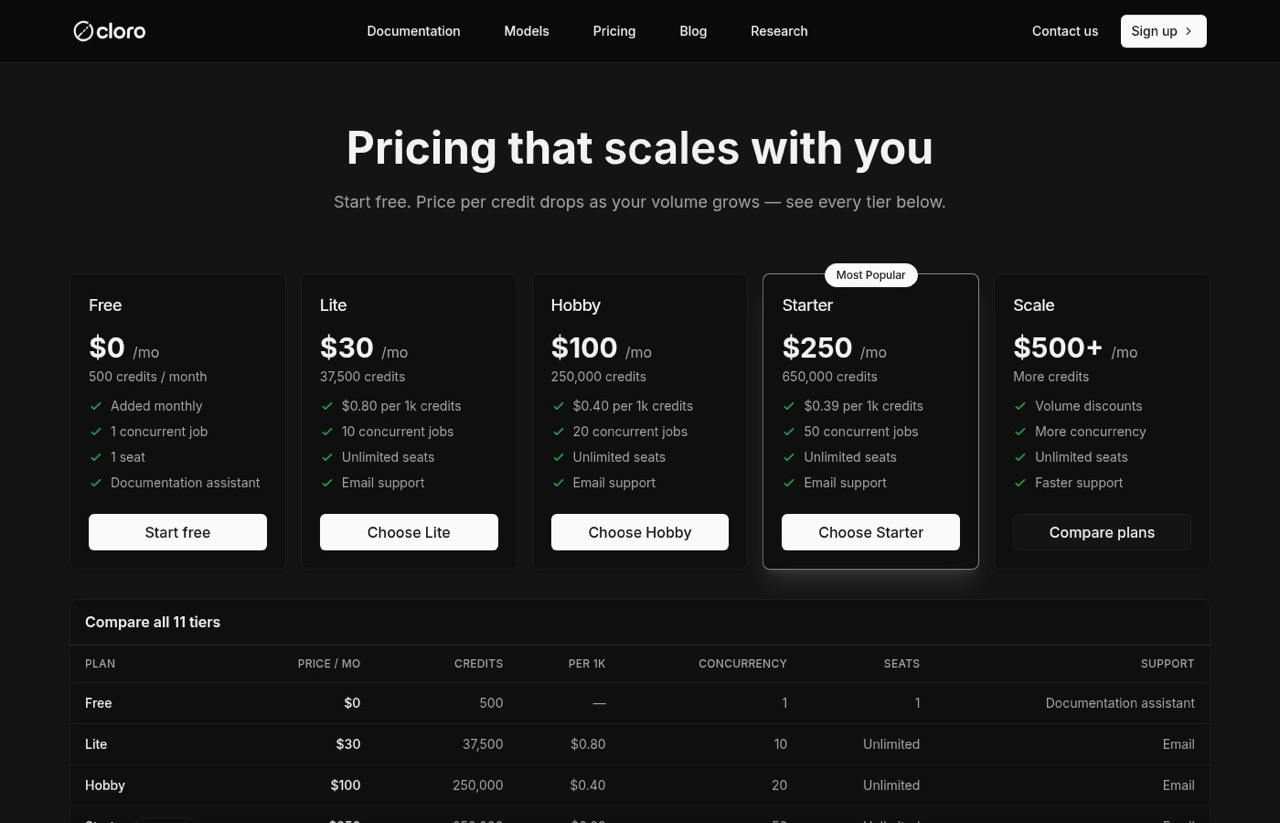
Pricing: $30 a month Lite for 37,500 credits or $100 Hobby for 250,000. A batch Google search costs 3 credits ($2.40 or $1.20 per 1,000), and a real-time sync search costs 5 ($4.00 or $2.00).
Free trial: Yes, 500 credits refreshed each month.
Bottom line: Strong if you trust its own numbers, and it's earned some of that trust by publishing them.
4. Serper (Best for Cheap, Fast Google Lookups)
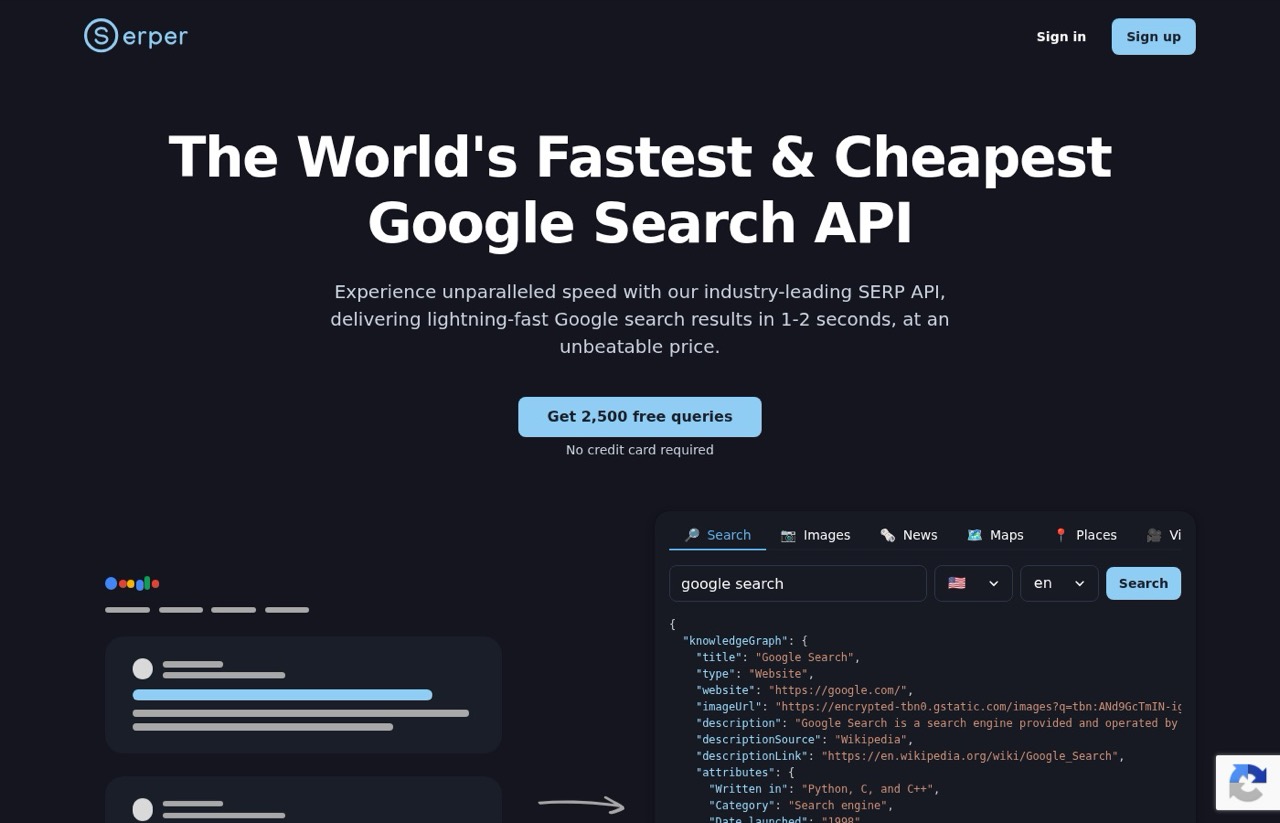
Serper is the API a lot of AI agents use because it's fast and cheap. It had the lowest masked-link share in EverGrow's October 31 snapshot, flagged the goto problem on its status page the day it hit, and was back to real URLs by November 1.
On poisoning itself, I found nothing I could verify.
Pros:
- Lowest price at volume in this group
- 2,500 free queries with no card
Cons:
- No published poisoning test
- Prepaid credits expire after six months
- It called its own goto workaround "likely temporary," per Search Engine Journal
Best for: Agents and apps that need fast, cheap Google results and can check them.
Pricing: $50 for 50,000 queries ($1.00 per 1,000), down to $0.30 per 1,000 on the largest pack.
Free trial: Yes, 2,500 free queries.
Bottom line: Fast and cheap, but untested for accuracy, so spot-check its pages before you build on them.
5. Bright Data (Best for Volume You Only Pay For When It Works)
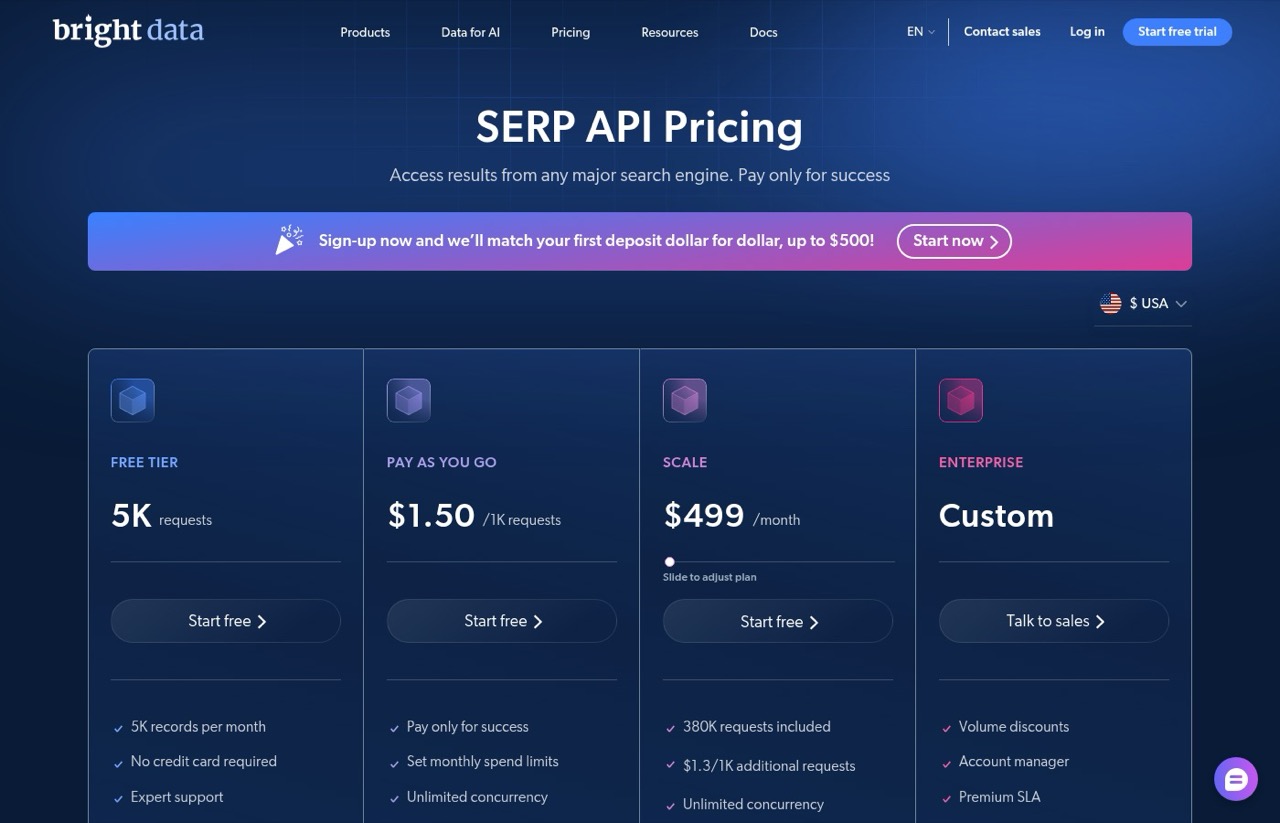
Bright Data started as a proxy network company. Its SERP API bills only for successful requests, which is a fair deal as long as "successful" means real.
A poisoned page arrives as a success, though, and I found no published poisoning test of Bright Data.
Pros:
- Pay only for successful requests
- 5,000 free requests a month with no card
Cons:
- No verifiable poisoning benchmark
- 86.8% of US and German results lacked a destination URL in EverGrow's November 7 re-check, up from 74.1% on October 31
Best for: High-volume pipelines that already check results downstream.
Pricing: $1.50 per 1,000 requests pay as you go, or $499 a month for 380,000 requests.
Free trial: Yes, a free tier of 5,000 requests a month.
Bottom line: Solid infrastructure, but bring your own poisoning check.
6. SerpApi (Best for Many Search Engines and Legal Cover)
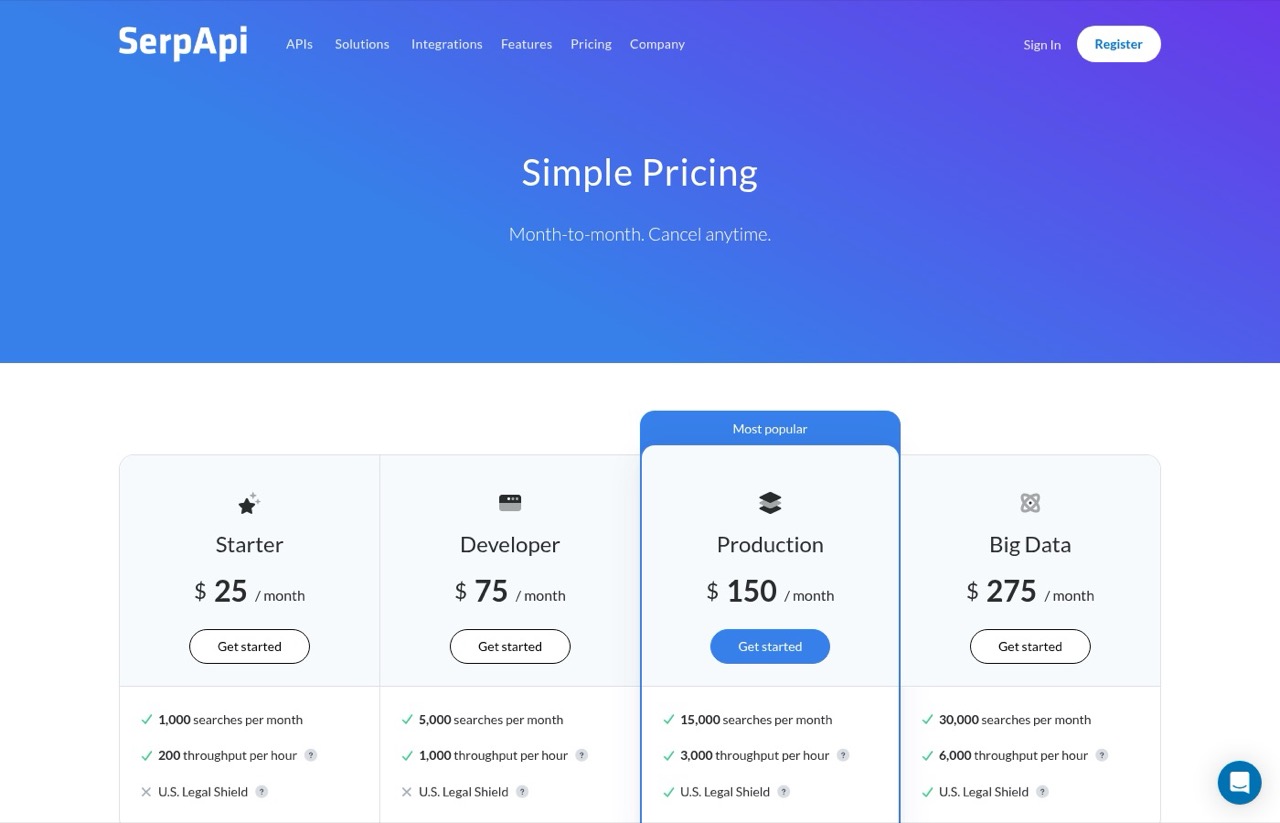
SerpApi has the broadest feature list here. It has dedicated APIs for dozens of search engines and up to $2 million in U.S. Legal Shield coverage on Production plans and above.
Its own status page has listed "Searches returning irrelevant/poisoned results" as open since October 13, with an update on November 16. Its separate goto incidents have been marked resolved, and cloro measured it at 12% full pages on October 31.
Pros:
- Dedicated APIs for dozens of engines beyond Google
- Errored and failed searches don't count against your plan
- Legal Shield on Production and higher plans
Cons:
- Open poisoned-results incident on its own status page
- Most expensive Google search in this group at entry level
Best for: Products that need Bing, YouTube, Amazon and other engines from one vendor.
Pricing: $25 a month for 1,000 searches, or $150 for 15,000 on Production ($10 per 1,000).
Free trial: Yes, 250 searches a month free.
Bottom line: Wait for that incident to close before you trust it for Google rankings.
What About Ahrefs, Semrush and the Rank Trackers?
Those are tools built on top of SERP data, so they inherit everything above. Ahrefs calls it an industry-wide issue and says it filters abnormal results and requests replacements. If you use a rank tracker, ask what it does with a page that's missing most of its usual sites.
I also left out AI search APIs like Exa and Tavily. They run their own indexes instead of scraping Google, which is a different decision, and I covered it in my DataForSEO alternatives breakdown.
How to Choose the Best SERP API After the Poisoning
The questions I'd ask any provider before trusting its rankings:
- Does it return real URLs? Pull ten results and count how many say google.com.
- Does it catch poisoned pages, and is that on by default? At DataForSEO it's an opt-in setting that costs one extra results page.
- Which mode did the benchmark test? Live and Standard behaved very differently in my field check.
- Who ran the benchmark? A vendor testing its own competitors has a stake. Look for someone else's test.
- What does a fake page cost you? "Pay for success" means little when fake pages arrive as successes.
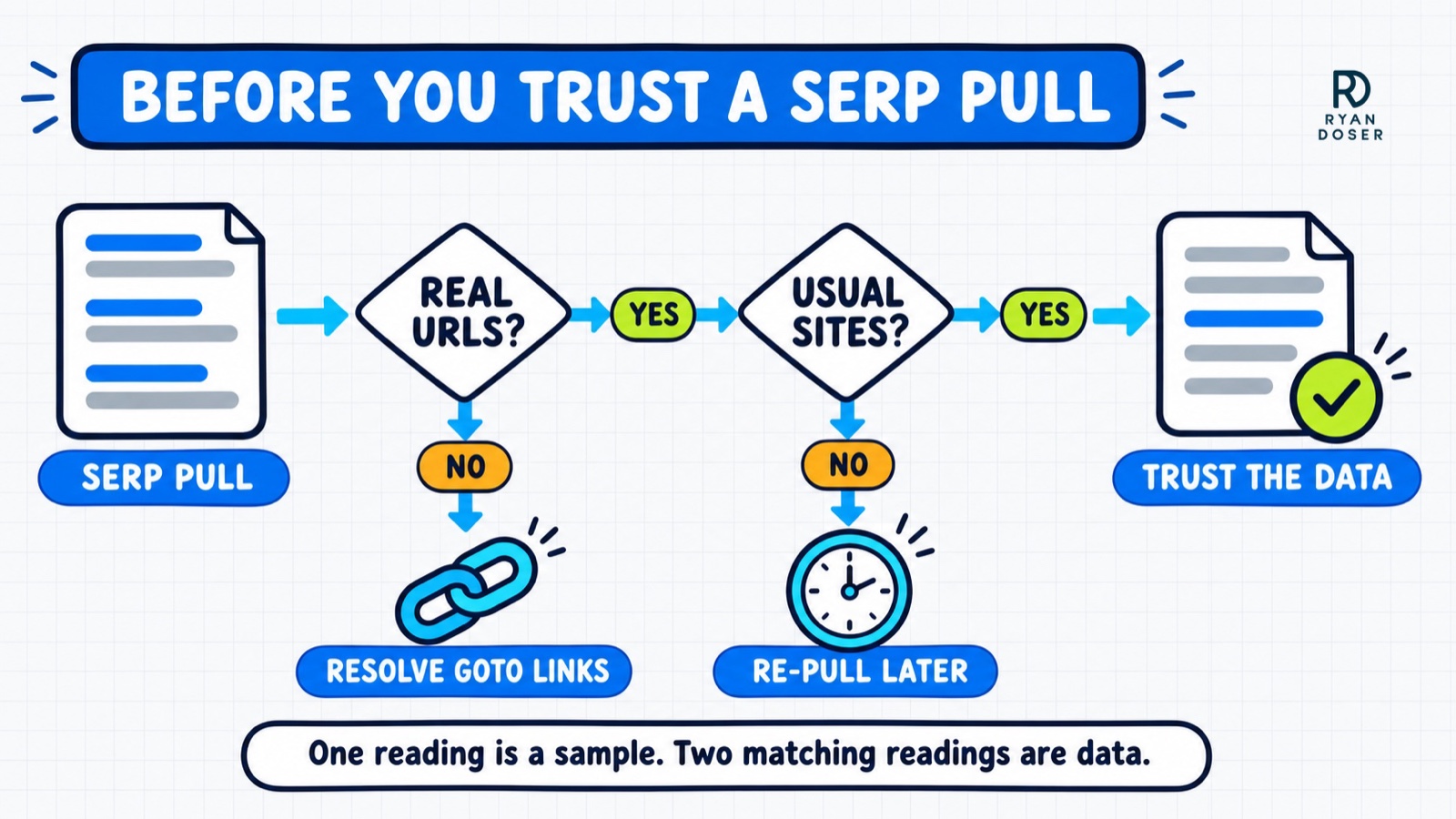
Whatever you pick, never act on a single reading. DataForSEO's own advice is to treat a one-day drop as unconfirmed until a second reading or Search Console agrees.
Where I'd Put My Own Searches
DataForSEO is still what I'd run, on the Standard queue with the poison fix on. Doubling a sixty-cent search is cheap insurance next to one bad client report.
If I were starting from zero and accuracy mattered more than price, I'd test Oxylabs first. Then I'd run my own twenty-brand check on whatever I picked, because a provider's number is still just their number.
Best SERP API FAQs
What is the best SERP API in 2026?
For accurate Google pages with no tuning, Oxylabs has the strongest published evidence, though it comes from a competitor's benchmark. For price, DataForSEO's Standard queue with its new poisoned-results fix had the fewest failures in my field check, at $1.20 per 1,000. I've used DataForSEO and haven't used Oxylabs.
What is a poisoned SERP?
A poisoned SERP is a Google results page that looks normal but swaps most of the usual sites for unrelated ones. Google serves it to suspected scrapers with a success code, so SERP APIs and rank trackers record it as real. Nozzle's study found poisoned pages rose sharply from mid-September 2026.
Why does my SERP API return google.com instead of the real URL?
Google now routes many result links through google.com/goto redirects. An API that doesn't resolve them returns Google's address instead of the site's. DataForSEO's Standard queue resolves them by default, while its Live mode only does it when you turn on resolve_goto_urls.
Is DataForSEO accurate after the poisoned SERPs problem?
It depends on the settings. In my November field check, stock Live and Standard settings each missed most usual sites on 18 of 20 judged searches. With resolve_poisoned_results on the Standard queue, that fell to 3 of 20, and no brand search was erased.
How much does a SERP API cost?
Most SERP APIs charge between $0.30 and $4 per 1,000 Google searches, though SerpApi works out to $25 per 1,000 on Starter and $10 on Production. DataForSEO's Standard queue is $0.60, or $1.20 with its poison fix, and Serper drops to $0.30 on its largest pack. Free tiers include 250 searches a month at SerpApi, 2,500 one-time queries at Serper and 5,000 requests a month at Bright Data.
I use DataForSEO daily and earn a commission if you sign up through my link. I haven't used Oxylabs, cloro, Serper, Bright Data or SerpApi. Their entries rely on published data and their live pricing pages, checked November 16, 2026.