
Claude Opus 5.5 Is the Best Claude Model for Writing (Finally)
After two months of babysitting Opus 5 drafts, the best Claude model for writing is an Opus again, and Claude Opus 5.5 is now my daily driver. I tested it against Opus 5 on my own writing rules before saying that.
Why Opus 5.5 Is the Best Claude Model for Writing Now
How often does a company call out its last model's writing on a launch page? Anthropic released Claude Opus 5.5 on September 22, 2026, and gave writing its own section.
Their words: writing was "one of the most common areas of feedback we heard about Opus 5." They say the new model "puts the most important information up front, is less likely to use jargon or idiosyncratic phrases, and follows the writing rules you give it."
That last clause matters most. A model that ignores your style guide costs you an editing pass on every draft.
Anthropic also ran a research-report test where any invented figure or quote meant failure. 16 of 18 Opus 5.5 reports cleared its quality bar, and neither Fable 5.1 nor Opus 5 cleared it in any attempt.
If you want the writing rules I hand every model before it touches a draft, I packaged them in my Claude Code Skills Stack.
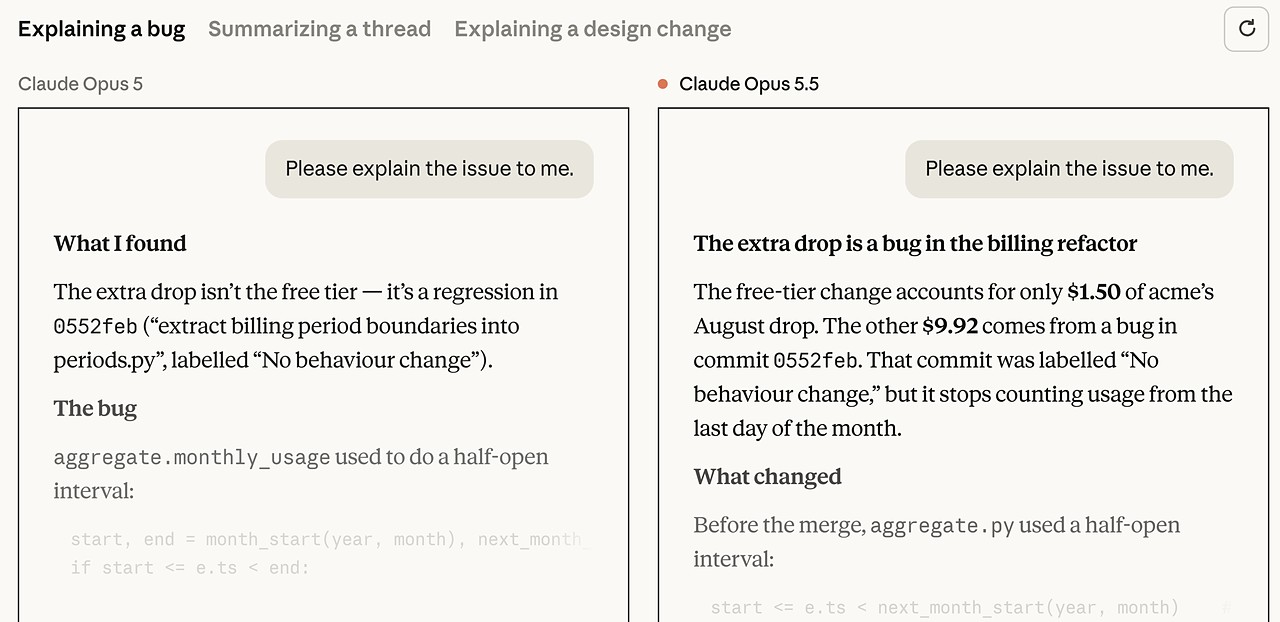
The Opus 5 answer starts with "The extra drop isn't the free tier," then an em dash, then "it's a regression." Opus 5.5 leads with the answer and the dollar amounts instead.
Opus 5 Was a Tragedy for Anyone Who Writes
Opus 5 shipped on July 24, 2026, and its writing is where my summer went sideways.
By mid-August I widened a standing rule so every piece of writing a Claude model produced got a second read from GPT-5.6 Sol in Codex before it shipped.
On my Skool live Q&A call on September 4, I said it plainly: "I'm starting to really hate Opus 5, if I'm being completely honest with you." I also said GPT-5.6 Sol had to "come in and clean up a lot of things."
For most of the summer, the best Claude model for writing in my setup was really a pair: Opus 5 drafting, GPT-5.6 Sol cleaning up behind it. Eighteen days after that call, the upgrade landed.
My Opus 5 vs Opus 5.5 Writing Test
Opus 5 never broke my punctuation or word bans in this test. It kept breaking the paragraph rule, the one that makes a post readable on a phone.
I could not find an independent writing test of Opus 5.5 yet, so I ran a small one on September 23, 2026. Same brief, same rules, five runs per model through Claude Code, scored by a script so the counting did not depend on my judgment.
The brief was a 150 to 200 word LinkedIn post about AI subscription bloat. The rules were mine: no em dashes, no semicolons, no "it's not X, it's Y" swaps, a banned word list, and one or two sentences per paragraph.
| Result (5 runs each) | Opus 5 | Opus 5.5 |
|---|---|---|
| Runs that followed every rule | 0 of 5 | 4 of 5 |
| Em dashes, banned words or swaps | 0 | 0 |
| Paragraphs over two sentences | 10 | 1 |
| Average cost per post in Claude Code | $0.41 | $0.28 |
| Average time per post | 42 seconds | 34 seconds |
Cost per post dropped by about a third on average, including Claude Code's own overhead. One unusually cheap Opus 5.5 run pulls that average down, so call it a quarter to a third.
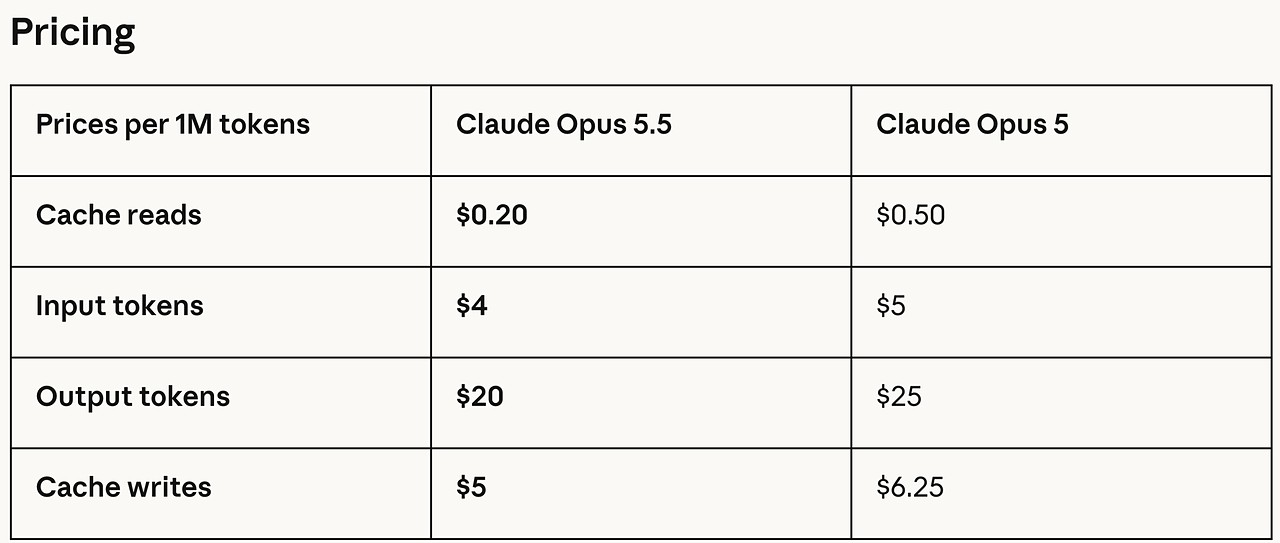
Input and output run $4 and $20 per million tokens on Opus 5.5, against $5 and $25 on Opus 5. Anthropic says it also uses fewer tokens per task, so at default settings it costs 40% less than Opus 5 on typical workloads.
This measures rule-following, speed and cost, not whether the ideas were better, and ten posts on one brief is a spot check. Rule-following is still the part that costs me editing time, so it is how I judge the best Claude model for writing.
Where Opus 5.5 Fits in My Solo Marketing Agency
I run a one-person marketing agency, and most of what I ship is writing. That makes picking the best Claude model for writing a real business decision for me.
Since launch day, Opus 5.5 is my default for audience-facing writing like this:
- Client SEO content, like blog posts for a dental IT client, built from that client's brand docs and my Claude Code SEO workflow.
- My own blog, including posts repurposed from my YouTube videos.
- My weekly newsletter to about 7,000 subscribers, plus LinkedIn and X captions.
- YouTube titles and descriptions, and research on podcast guests before I hit record.
Each job has its own skill file, and every piece of writing gets a GPT-5.6 Sol critic pass in Codex. The rules flag problems, and I decide what ships.
This post is the launch-day example. Opus 5.5 drafted it inside my blog skill, GPT-5.6 Sol critiqued it in Codex, and I sent it back for another round before it went live.
Where Opus 5.5 Still Loses
Being the best Claude model for writing does not make Opus 5.5 the best model for every job.
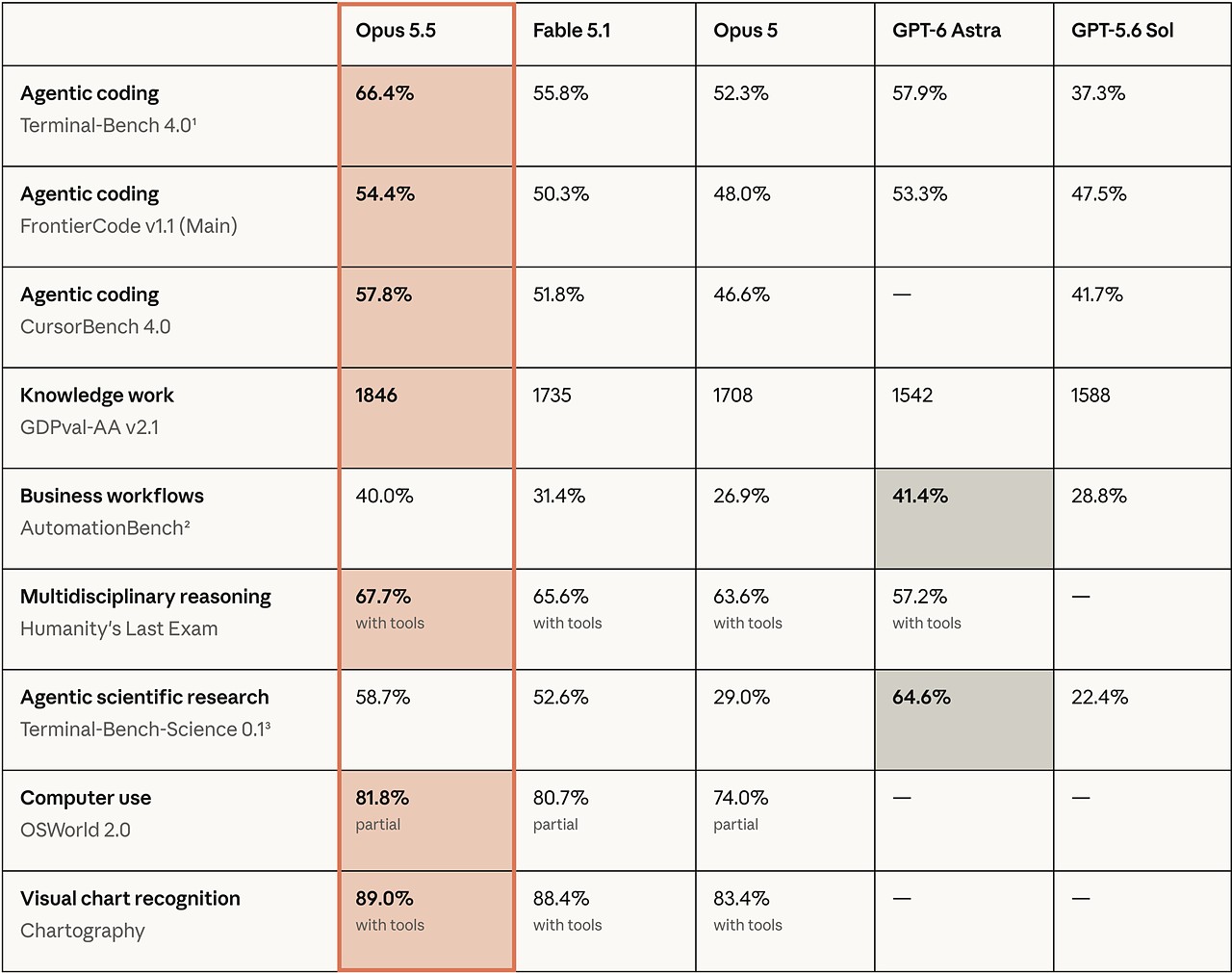
On AutomationBench, the business workflow test built by Zapier, GPT-6 Astra scores 41.4% to Opus 5.5's 40.0%. That is the row closest to marketing ops, and OpenAI's model still edges it.
For volume, Sonnet 5 keeps its spot. At $2 input and $10 output per million tokens, it costs half as much as Opus 5.5 for bulk first drafts, and my test did not cover it.
My split: Opus 5.5 for anything a client or audience will read, Sonnet 5 for bulk drafts a second pass will clean up. Fable 5.1, at $10 input and $50 output, stays reserved for the hardest strategy calls.
Why Switching to Opus 5.5 Took Zero Rebuilding
The next time a new model becomes the best Claude model for writing, my output quality stays put, because everything that makes it good lives outside the model.
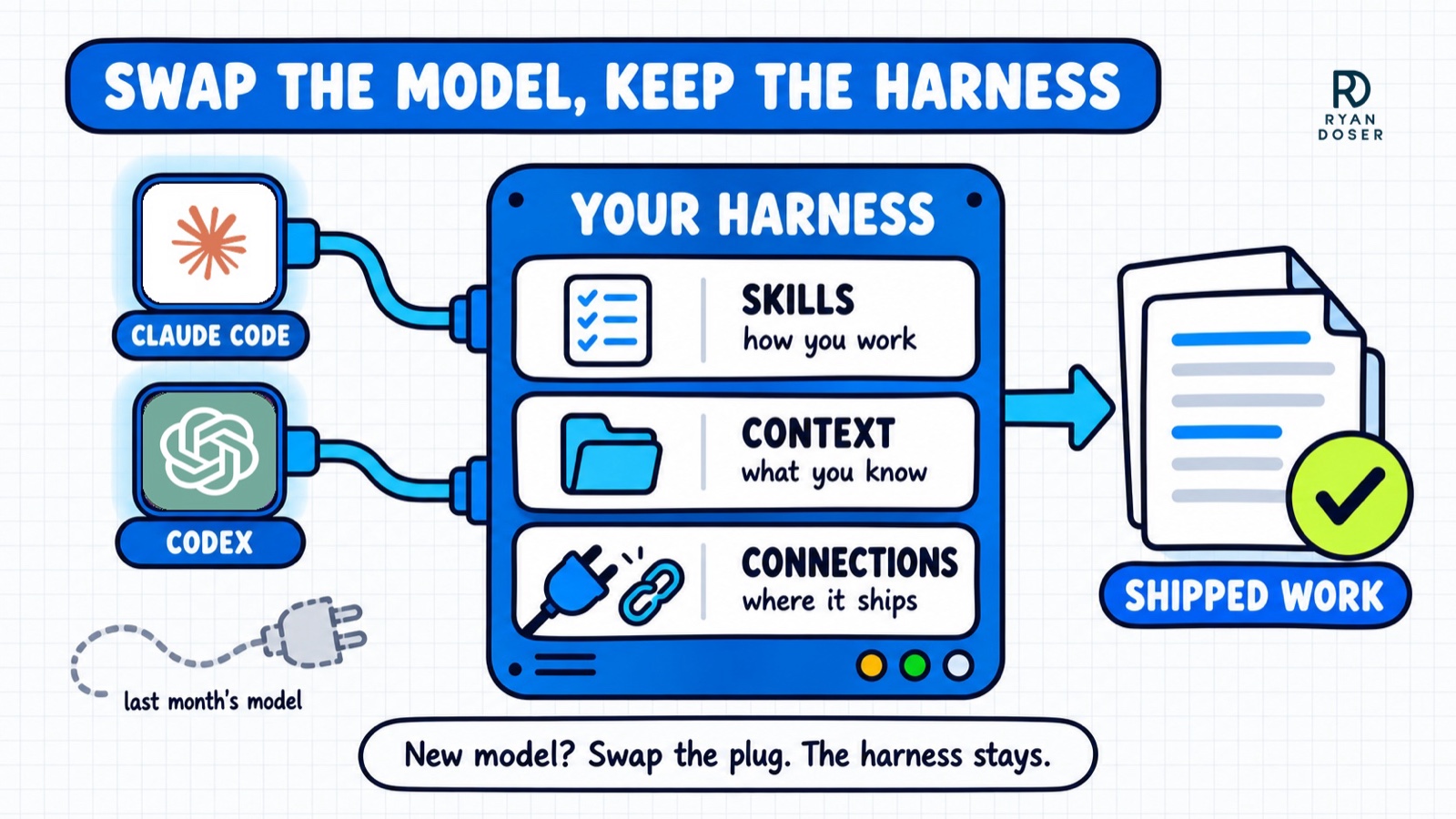
Opus 5 was the stress test. When the model slipped, I bolted a GPT critic onto every draft with one rule change, and every skill file, brand doc and connection kept working untouched.
I call that layer the harness: skills, context and connections. In plain terms, my voice rules and blog checklist as skill files, a folder of brand docs for each client, and connections to my email platform, my SEO data and my website.
When Opus 5.5 arrived, the Claude Code model settings made it the default on Pro, Max, Team and Enterprise plans once Claude Code is on version 2.1.280 or later. Nothing else needed an edit.
Both agents sit in one VS Code window: the Claude Code extension on one side, the Codex IDE extension on the other. I broke down that split in why I run Claude Code and Codex side by side.
A harness will not make a bad model good. It makes a bad model cheap to route around, which is the point of building a model agnostic AI system.
Opus Is Back in the Driver's Seat (For Now)
For now, Opus 5.5 is the best Claude model for writing, and it writes the way Opus should have written all summer. I will still swap it the week something better ships.
For the full routing across Fable, Opus, Sonnet and Haiku, see my guide on which Claude model to use for each job.
Best Claude Model for Writing FAQs
Is Claude Opus 5.5 better than Opus 5 for writing?
For following your writing rules, yes. Opus 5.5 held a two-sentence paragraph rule in four of five runs of my test, while Opus 5 missed it in all five. On Anthropic's research-report test, where one invented figure meant failure, Opus 5.5 cleared the quality bar 16 times out of 18 and Opus 5 never did.
Which Claude model is best for writing marketing content?
Use Opus 5.5 for writing a client or audience will read, at $4 input and $20 output per million tokens on launch day. Sonnet 5, at $2 and $10, costs half as much for bulk first drafts that get a second pass. Fable 5.1, at $10 and $50, is for rare high-stakes strategy work.
Did Claude get worse at writing?
Anthropic called writing "one of the most common areas of feedback we heard about Opus 5" and answered with a new model, Opus 5.5, rather than a patch. If Opus 5 is still pinned in your setup, update Claude Code and switch the model setting. Opus 5.5 needs Claude Code version 2.1.280 or later.