
Why AI Anxiety Is Real (And How I Handle It)
I am about to step away from all of this for a few weeks, and nothing has tested what I believe about AI anxiety more than deciding to disconnect.
Watch: What Stepping Away Exposes About AI Anxiety
My first child arrives shortly, so I am heading into paternity leave. No release-day testing, no checking what shipped while I slept, just gone.
I recorded this one unscripted before leaving, including a walkthrough of the system that makes stepping away possible at all.
Here is what deciding to disconnect already exposed, before I have even left. Almost none of the daily scramble is going to matter across those weeks, and I could not tell you which release from the last month would.
I am a six-figure AI entrepreneur with most of that coming from my marketing agency, and I still feel it every time I open YouTube, X, or LinkedIn. New model out, better go test it.
New tool, better go look. That reflex does not disappear because you have been doing this a decade.
Why AI Anxiety Is a Signal, Not a Problem
Here is what nobody tells you about AI anxiety: it means you are paying attention. The people who should actually worry are the ones who feel nothing when a new model ships.
Feeling nothing means you have stopped tracking a space that is still moving fast enough to change your income.
Anxiety means part of you already suspects something out there could replace an hour of your week, and that instinct is usually right. The failure is not the anxious feeling, it is what most people do with it next.
The Panic-Consumption Loop That Burns You Out
New release drops, and panic sets in.
You go watch three videos about it, bookmark a tool, maybe open it once, and close the tab feeling slightly worse than before you started. Nothing in your actual business moved.
I watched this play out in real time when Fable 5 access was suspended on June 12. US export controls forced it, Anthropic had no way to verify nationality in real time, and the model was gone for 18 days before returning July 1.
The reaction was not people calmly switching to another model. It was panic about losing access to something most of them had been using for days.
The model came back, the work people were "behind" on was still there, and almost none of that scramble produced anything usable.
That is the loop. Consume, panic, dabble, close the tab, repeat with the next release.
It feels like progress because you are "staying current." It is not progress, it is a treadmill dressed up as diligence.
Most of what gets rewarded on that treadmill is not useful either. The demos that go viral are usually someone building a video game or some other impressive-looking novelty.
Almost nobody watching actually needs to build a video game. Being able to do it proves the model is capable, not that the demo has anything to do with your Tuesday.
The One Question That Breaks the Loop
The fix is not another tool, and it is not forcing yourself to try every release the day it ships. It is a single question, asked before you open anything new: what is actually broken in my business right now, and could AI fix it?
It gives you a filter, and a filter is what AI anxiety is really missing.
Most releases will fail that filter immediately, and that is fine. You are not supposed to use everything, just the handful of things that solve a real bottleneck you already have.
If you do not know the answer to something, open Claude or Claude Code and either type out the problem or voice dump it with a tool like Wispr Flow. It will not solve everything on the first pass, but it points you toward an answer faster than another comparison video will.
Start from your actual bottleneck, not from the leaderboard of whatever launched this week.
The Work That Buys You the Right to Disconnect
There is a version of this advice that is just "log off and relax," and it is useless. You cannot walk away from a business that only runs while you are watching it.
What made this leave possible was boring, unglamorous work I did months ago. I moved my existing workflows off scattered web apps and into one place: VS Code on my own machine, with my tools connected through API, MCP, and CLI connections.
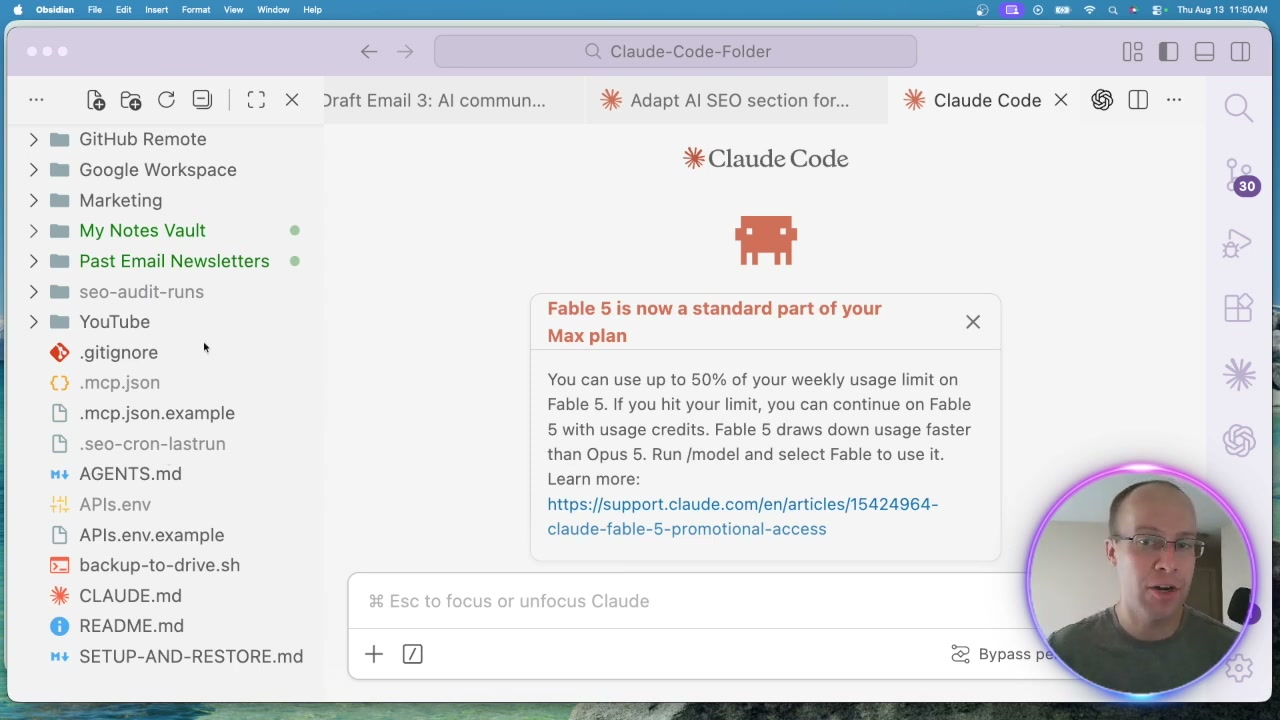
About 95% of my work runs through there now. Before that: cloud projects here, ChatGPT threads there, Gemini somewhere else, and no way to hand any of it off or automate it.
Every task started with remembering where I had left it.
I have written the full breakdown of that setup in why I run Claude Code and Codex together, so I will not repeat it here. The relevant part for anxiety is what the structure changes, not which tools are in it.
When your work lives in folders and files instead of chat histories, a new model release stops being an event. You point the folder at a different model and keep going, with nothing to migrate and nothing lost when a vendor changes its mind.
That is the actual cure for release-day panic, not discipline and not ignoring the news. Structure makes any single release a small decision instead of a threat to everything you have built.
What Actually Separates the People Who Profit
I have gone deeper on the systems side of this, including why the model race matters less than people think, in the reality of AI in 2026. The short version: everyone has the same models, and almost nobody has your context.
That is the moat, not which model you picked this week. Knowing the moat and acting on it are two different skills.
I built the Claude Code Skills Stack out of exactly this filter. I did not chase a trend, I packaged the marketing skills I already had a decade of proof behind.
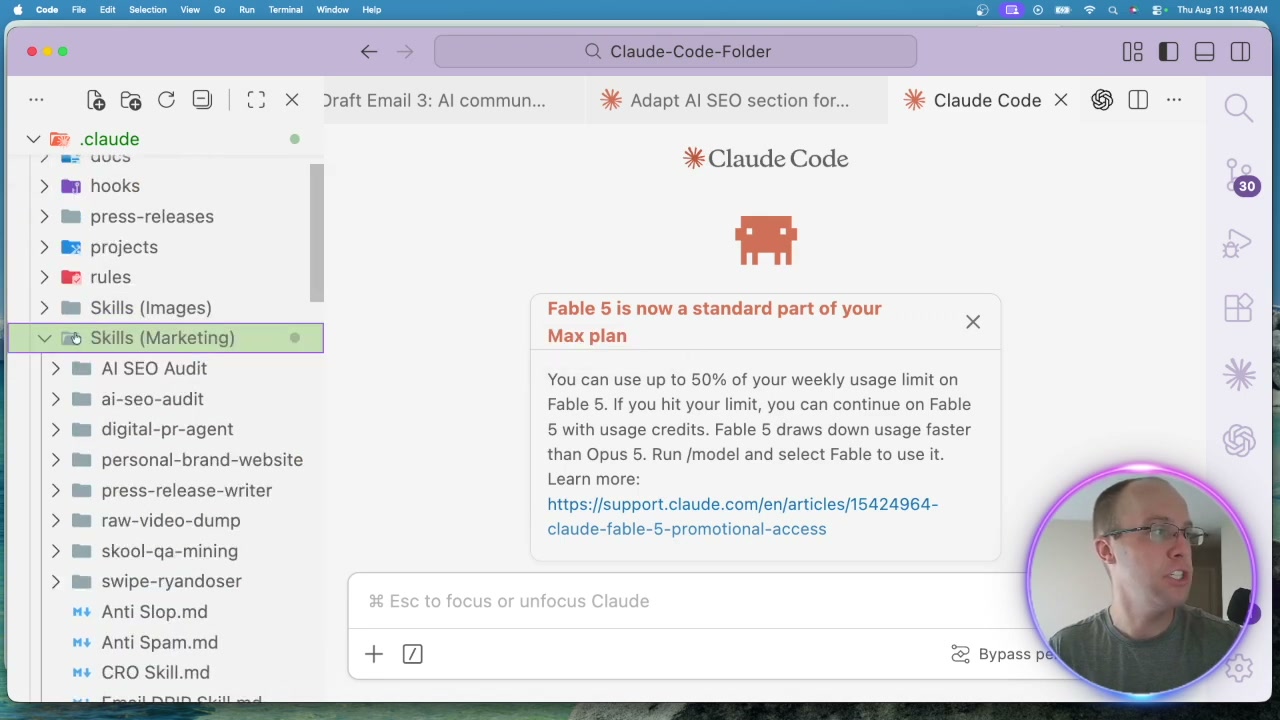
That product has done over $18,000 in revenue precisely because it started from expertise I already owned, not from a tool I panicked into learning. The same logic applies to whatever you are already good at, once you know how to get that expertise into a skill file.
The tool changes. The filter does not.
I get asked constantly by people in my community how to make money with AI, and my answer disappoints people who wanted a shortcut. I tell them to ignore the faceless YouTube channels selling AI ebooks and PDFs, and instead ask what they are already good at.
Once you know that, the question becomes how AI amplifies it, not whether you have found the right tool yet. Reverse that order and you end up with a stack of tools, a case of AI anxiety, and no actual skill behind any of it.
Ryan's Final Thoughts
AI anxiety is not going away, and it should not.
What separates the people who make money from this and the people who stay stuck on the treadmill is whether they stopped consuming long enough to ask what is actually broken in their business, then used AI to go fix that one thing.
I am going to go be a dad for a few weeks. Models will ship while I am gone, and I do not plan to test a single one of them on release day.
That is the whole point. If stepping away for a few weeks would break what you have built, the problem was never the pace of AI releases.
AI Anxiety FAQs
What causes AI anxiety in marketers and business owners?
AI anxiety usually comes from watching new model releases and tool launches faster than anyone can realistically test them. It gets worse when people measure themselves against demos and hype videos instead of against their own actual bottlenecks.
How do I stop the cycle of chasing every new AI release?
Ask one question before opening anything new: what is broken in my business right now, and could this fix it? Most releases fail that filter immediately, and the few that pass earn a real test instead of another bookmark.
Can you take time off without falling behind on AI?
Yes, if your work lives in files and folders rather than in chat histories you have to be present to use. I am taking weeks off for paternity leave and do not plan to test releases while I am out. A release you skip is recoverable in an afternoon. A business that only runs while you watch it is the actual risk.
What should I focus on instead of trying every new AI tool?
Focus on the subject matter expertise you already have and let AI amplify that, rather than treating AI itself as the skill. My deeper breakdown of why the model race matters less than people think covers how to pick where that focus goes.
Does AI anxiety mean I am behind everyone else?
No. Most people chasing every release are not moving their business forward either, they are just further along the same treadmill. Feeling behind because of a demo video is not the same as actually being behind on a problem that matters to your income.