
How to Start an AI Agency: Almost $10K/Month in 4 Months
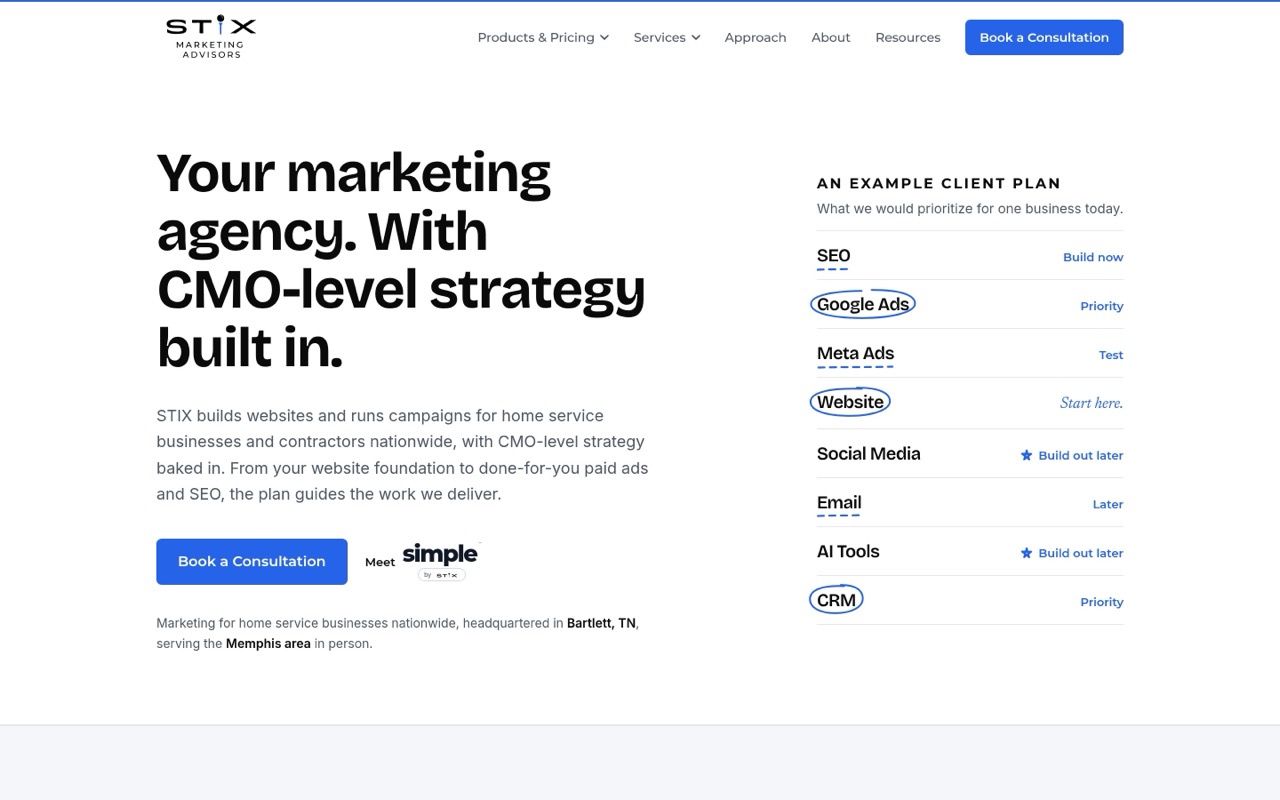
Dalton Speers shows how to start an AI agency as a non-technical founder: he opened STIX Marketing Advisors on August 1, 2026, sales soon stopped being his bottleneck, and a ChatGPT assistant now builds his client automations. By mid-November he was close to $10K a month in recurring revenue.
How to Start an AI Agency in 6 Steps
An AI agency is a service business that uses AI tools to do client work, like websites, automations and marketing, usually for a recurring monthly fee. These are the moves Dalton made, as he described them to me on AI Rabbit Holes.
- Save a runway before you quit. Dalton had a year of savings, and his wife's job carries the family's benefits.
- Pick one niche. His is home service businesses, where he sells websites, missed-call text back automations and a one-click review funnel.
- Commit to one main AI platform. Dalton canceled his $100-a-month Claude plan and kept his ChatGPT plan at the same price, the ChatGPT Pro 100 tier as of November 2026. Paying for both had left him feeling he was losing context.
- Run delivery inside one system your clients never see. Dalton manages his whole business in GoHighLevel, which he calls "an agency in a box."
- Land clients with cold calls and outreach, then keep them on recurring revenue. Dalton is blunt that phone rejection comes with the job.
- Add an AI assistant once client work piles up, then check what it flags. Dalton's ChatGPT Dots assistant, offered on Pro and Business Premium plans, logs into HighLevel to build automations like a new client's missed-call text back. That's the setup he runs at close to $10K a month.
Dalton runs on ChatGPT, while I use Claude Code and Codex for 95% of my daily work. If you want the skill files I run for my own marketing work, my Claude Skills Stack holds them.
How Dalton Thinks About Getting Clients
Dalton says the rejection is hard, like a home service owner asking why on earth you're calling. But once enough outreach lands you a first client, "it's like this crazy feeling of like, wow, I can actually do this."
He expected about one new client a month and got "bombarded with opportunities" instead. He felt "super, super, super overwhelmed at the start."
Referrals are the other channel he talked about. Dalton is in a BNI group where a plumber, a roofer and an HVAC owner, all family owned, are "crushing it" by making the local connections private equity shops skip.
I added that home service work runs on a constant referral network, from realtors to lenders, so getting into those in-person networks matters.
On the call I credited Dalton with mixing outbound calls and helpful inbound content for home service owners. When I guessed he might be dialing 500 times a day, he said, "Not anymore."
His filter for how to start an AI agency without chasing shiny objects is one question: is the goal "the coolest" AI system set up, or "to bring in more customers"?
How His AI Assistant Runs the Back End
Dalton expected sales to be the hard part of figuring out how to start an AI agency, but building the back end became his biggest bottleneck.
Theo, his ChatGPT dot, started as a curiosity. OpenAI launched Dots on September 29, 2026, and Dalton installed his over Halloween, about three months after he opened STIX.
His reason was simple: "Let me just play with it." It ended up "paramount in helping me build out all those systems."
The build he walked through on the episode is the missed-call text back. When he onboards a client, Dalton logs into HighLevel through Theo and asks it to build that automation, and Theo builds it, then tells him where he needs to look manually.
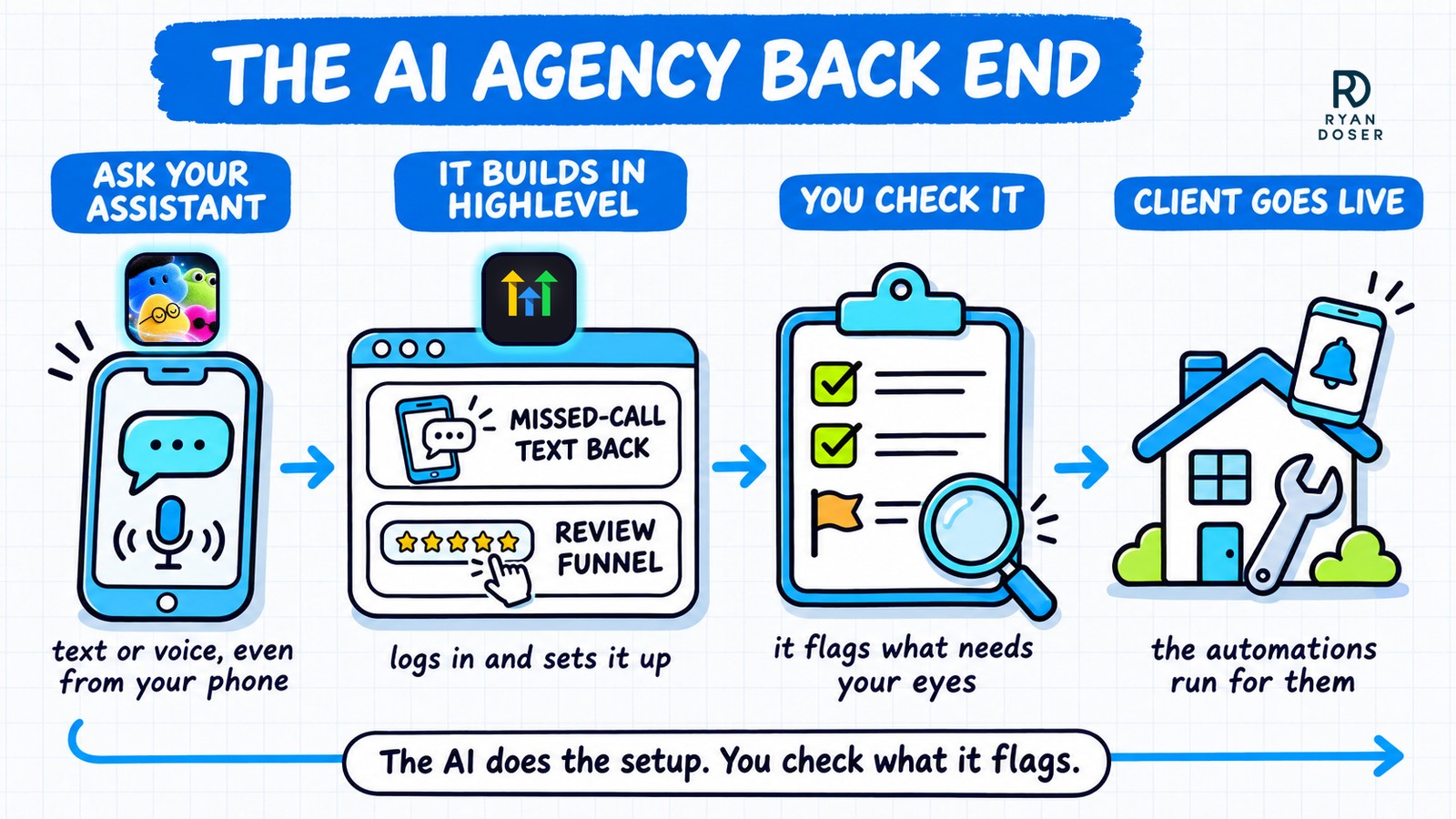
Dalton says a build takes 10 to 30 minutes with Theo, against "over an hour, two hours maybe" without it.
His biggest gripe is the single long chat. Results show up later in the middle of another conversation, he says, and he has to go back and look for what he missed.
That never-ending chat was my biggest gripe with my own dot, and I explain why I moved my automations to Claude Duet in my best AI personal assistant breakdown.
What Dalton Had Going In
Dalton started with a year's worth of money saved and a wife whose nursing job carries the family's benefits. Before that, he spent about five years as marketing director at a Des Moines bathroom remodeler, then moved into agency sales.
At that agency, the cheapest website he was allowed to sell cost $6,500. My own take from the episode: for twenty bucks a month, I could build a better website than what some agencies charge ten grand for.
He calls himself "not a technical guy whatsoever" and couldn't hand code a website. What he brings is marketing judgment, like keeping a contact form short instead of asking 10 or 15 questions.
The revenue figure comes from my intro on the episode: "I think you're almost at 10K MRR, if I saw that correctly." His timeline reflects that head start, since he learned how to start an AI agency with sales and marketing experience already behind him.
Dalton's worst case was no income for 12 months, and then, in his words, "month thirteen, I can go push carts at Costco."
How Dalton Wins and Keeps Home Service Clients
Turn Recorded Calls Into Next Week's Posts
Dalton records his calls with Granola, and an automation he runs every Friday around 3pm drafts the next week's posts from those conversations. He reviews the drafts, then tells Theo to schedule them through its HighLevel connection.
Theo can also pinpoint repeats, in Dalton's words: "you've had this conversation three different times now. Maybe we should adjust your products and your strategy and your pricing."
Recording calls is what I tell business owners to do all the time when they ask me about AI: record and transcribe every sales call, save it as context, and feed it to your AI systems. If you work under HIPAA or similar rules, check what you're allowed to record first.
Granola sits at #1 in my roundup of the best AI note takers.
Is GoHighLevel a Scam?
Dalton says the "scam" threads about GoHighLevel on Reddit were his biggest apprehension. He now calls it "a pretty good product" and manages his entire business through it.
He blames the affiliate program. HighLevel's affiliate page offers 40% recurring commissions, and Dalton says you don't need to be a customer or know marketing to join, so too many sellers have never built anything in it.
I've used it, and it's a great product on the automation side, I would argue. My issue is the creator pitches, which feel almost MLM.
HighLevel's pricing page lists Starter at $97 a month for one business or a few clients and Unlimited at $297 for agencies managing unlimited clients, as of November 2026.
Dalton didn't say which plan he's on. Add his $100-a-month ChatGPT plan, and by my math his two core tools come to roughly $200 to $400 a month.
His clients "don't even know what Go High Level is." They pay for a website, a missed-call text back and his review funnel, where the owner enters a customer's name and number and one click sends the review request.
Competing With Private Equity and Big Agencies
I asked Dalton about this because a Des Moines HVAC company, one of the few not owned by private equity, had just reached out to me. Its PE-backed rivals spend millions on ads, and clicks run $20 to $30 to $50 in some instances.
"You're not gonna outspend these private equity firms," Dalton said. His playbook is to niche down, tell the founder story, go heavy on organic and find the keywords competitors miss.
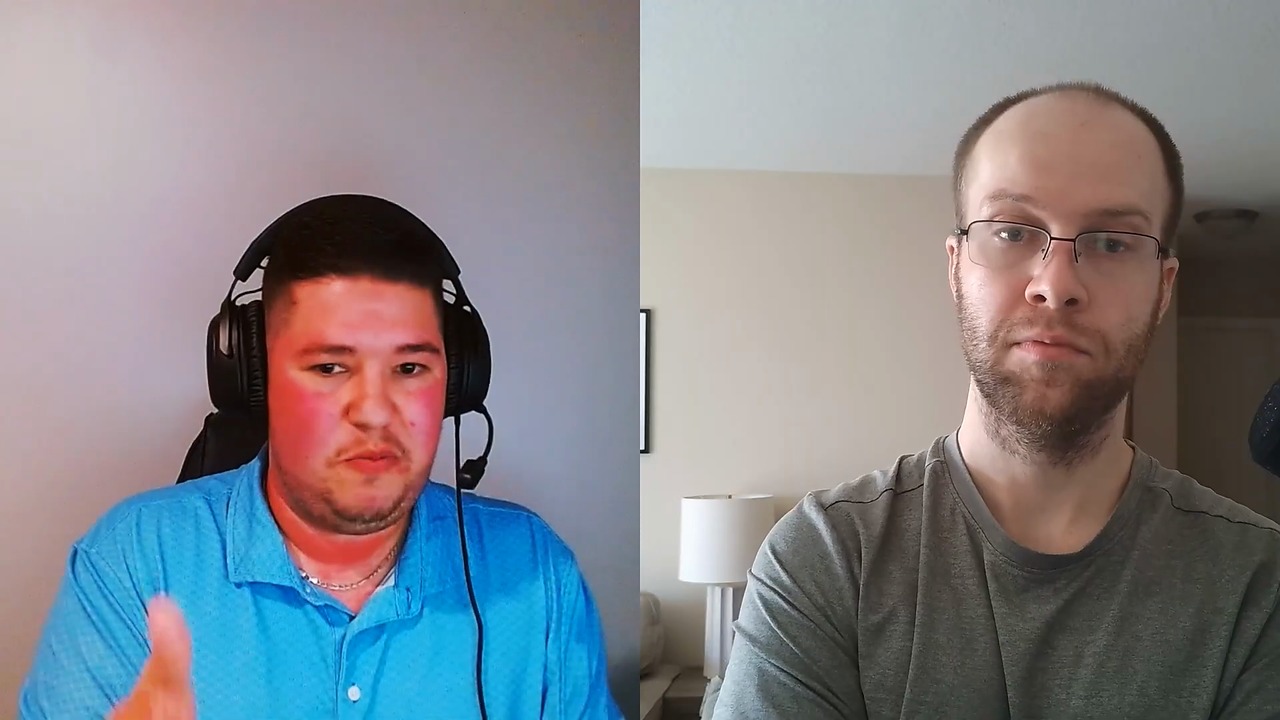
My line in the episode was that big agencies put the A team on the sales call, and once you sign the deal, it's over to the C team. The roofing client Dalton just signed in Memphis told him the same: he loved the sales rep, but the account manager "didn't really seem like she knew what she was doing."
Claim Clients' ChatGPT Business Profiles
Dalton is "hounding" his clients to claim their business profile in ChatGPT. He calls it "almost a carbon copy" of Google Business Profiles, and he remembers that early Google adopters were the ones who won.
One precision note: Dalton said you can see how many impressions you're getting. OpenAI's setup guide lists mentions, website clicks and discovery topics over the past 28 days, and its launch demo also shows profile views, the closest thing to impressions.
OpenAI opened these profiles in beta on November 10, 2026, months after Dalton had worked out how to start an AI agency, and he's already asking whether profile setup could become a paid service. My ChatGPT Business Hub guide walks through claiming one and reading the numbers.
Pick a Niche, Pick a Platform, and Run With It
My last question was what Dalton would tell someone in a nine-to-five who wants to know how to start an AI agency, and his answer fits in one line: "Just pick a niche, pick a platform, and run with it." He also said to skip the woman in the red dress, a phrase he credits to Alex Hormozi for the next shiny AI tool.
His other advice was to find one pain a group of people has, whether that's websites, AI receptionists, SEO or paid ads, and solve it. The rest, he said, comes down to making the decision.
If coaching suits you better than building, Corey Ganim's route on how to start an AI business is teaching owners to use Claude on two calls a month.
How to Start an AI Agency FAQs
What is an AI agency?
The label covers two very different businesses. Operators like Dalton Speers sell finished marketing work, such as websites and automations, built faster with AI tools, while other firms build custom AI software for clients. Ask which kind you're looking at before you hire one or copy its model, since custom software usually needs engineers and Dalton's model doesn't.
Do you need to know how to code to start an AI agency?
A fast AI build can still look fine and convert poorly, so the skill you need most is knowing what good looks like, not code. Dalton calls himself non-technical and leans on his years as a marketing director to judge what the AI produces before a client ever sees it.
How much does it cost to start an AI agency?
Dalton's two core tools, a $100-a-month ChatGPT plan and HighLevel at $97 or $297 a month, put the software at roughly $200 to $400 a month as of November 2026, before any runway. He didn't say which HighLevel plan he's on, and plans change often, so check each pricing page first.
Is GoHighLevel worth it?
It pays off if you'll run your whole agency inside it, the way Dalton handles automations, payments, proposals and client conversations there. Expect a learning curve, since he says people get turned off by how much there is to learn. Judge it by building one real client automation, and read the Reddit scam threads knowing he traces them to the affiliate program.