
8 Best AI Marketing Agents in 2026 (and What They Bill)
When I asked ChatGPT, Claude, Gemini and Perplexity for the best AI marketing agents, 11 of 12 answers named HubSpot Breeze, a brand HubSpot retired for its agents in July. Here are the two agents I run every day, six popular picks, and what each one bills you for.
The Best AI Marketing Agents at a Glance
An AI marketing agent takes a goal and carries out the steps in your apps itself, using tools, instead of handing you advice to act on. Prices below were read off each vendor's pricing page on November 4, 2026, with monthly payment quoted wherever a vendor offers it.
| # | Agent | Best for | Starts at | What it bills by | My experience |
|---|---|---|---|---|---|
| 1 | Claude Code agents | Marketers who want their own research, review and reporting agents | $20/mo (Claude Pro) | Plan usage limits | Use it daily |
| 2 | ChatGPT dots + Codex | An always-on assistant plus a second reviewer for your work | Codex free, dots from $100/mo (includes Codex) | Plan usage limits | Use it daily |
| 3 | HubSpot Agent Hub | Teams whose leads and email already live in HubSpot | $20/seat/mo (Starter), social agent needs Professional | HubSpot credits | Researched, not tested |
| 4 | Jasper | Content teams producing on-brand copy at volume | $69/seat/mo | Seats | Researched, not tested |
| 5 | Gumloop | Building your own SEO and research agents without code | $37/mo | Credits | Researched, not tested |
| 6 | AI by Zapier | Adding an agent step to automations you already run in Zapier | $29.99/mo (Professional) | Zapier tasks | Researched, not tested |
| 7 | Lindy | Inbox, meeting prep and lead follow-up for a small team | $49.99 per user/mo | Credits, billed per user | Researched, not tested |
| 8 | Madgicx | Ecommerce brands running Facebook and Instagram ads | $45/mo under $1K ad spend | Your monthly ad spend | Researched, not tested |
What Each AI Marketing Agent Bills You For
The sticker price is only half the bill. The other half is the meter each agent runs on.
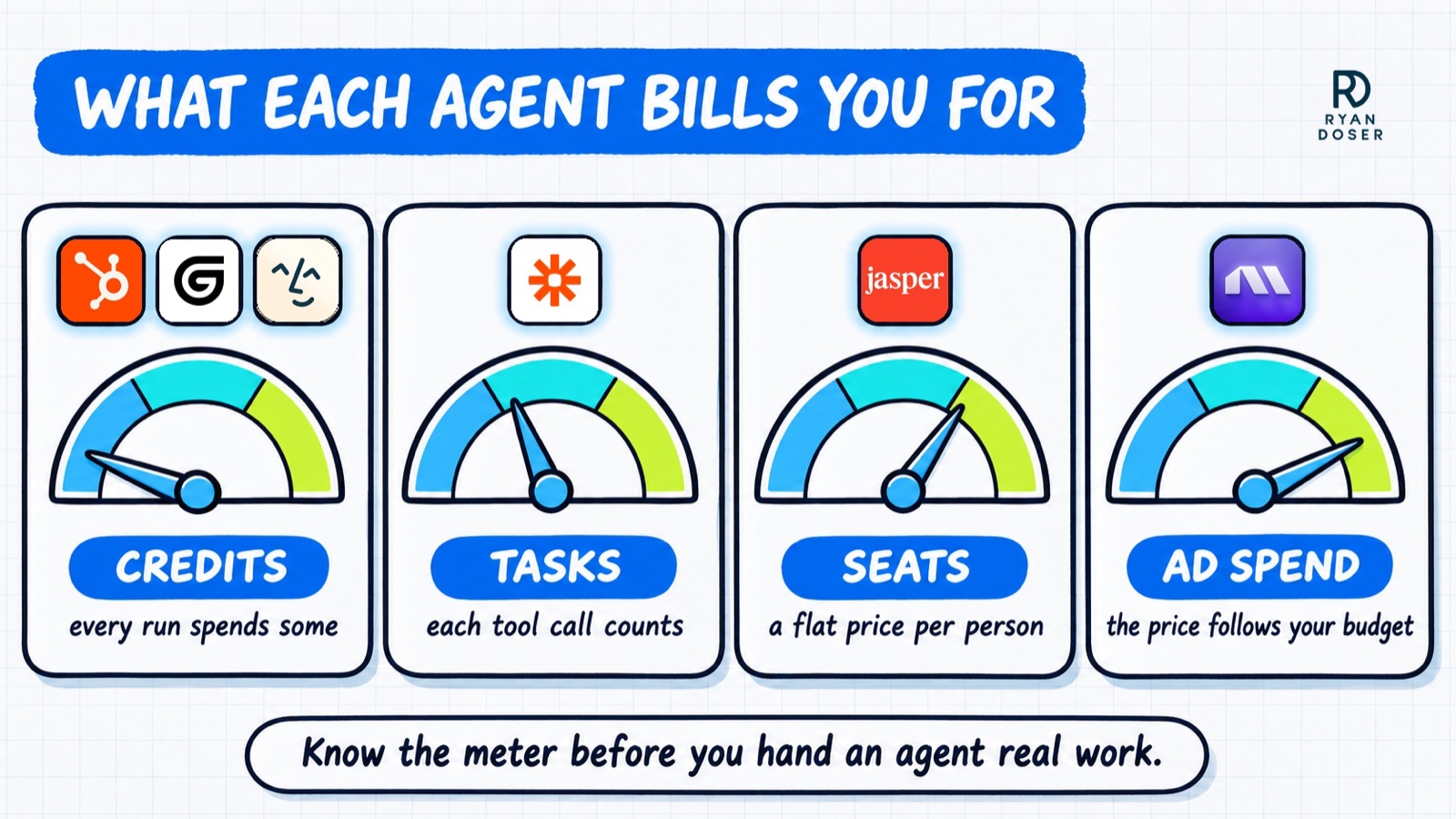
HubSpot's credits page prices its content agent, still in beta, at 1,000 credits per piece of content, and Marketing Hub Professional includes 3,000 credits a month. That's about three agent-written pieces before you buy more at $10 per 1,000. On Zapier, new agent steps default to the Premium model tier, which uses 5 tasks per step plus 5 for every tool call, so a run with four tool calls costs 25 tasks.
How I Picked These Eight
Two of these are my own setup. For the rest, I asked ChatGPT, Claude, Gemini and Perplexity which AI agents marketers should use, three different ways each, on November 4. I ran them through DataForSEO, which pulls ChatGPT's live answers and the other three models with web search on. All 12 answers searched the web first. HubSpot came up in 11, Jasper and Salesforce Agentforce in 8, Copy.ai in 7, Zapier, Relevance AI and Klaviyo in 6, Madgicx in 5, and Lindy and Gumloop in 4 each. Claude Code and Codex, the two agents my week actually runs on, came up in none of them.
I also read 11 of the top-ranking roundups. Most come from companies that sell an agent, and several rank their own product first. A vendor has little reason to spell out how a rival's bill grows, so every card here names its meter. From the most-named tools, I kept one per marketing job that a small team can buy without a sales call. I haven't tested those six, so each is labeled researched, not tested. Relevance AI would have made the list, but its pricing page now shows one Enterprise plan behind a sales call, so it sits with the enterprise tools below.
Best AI Marketing Agents in 2026
My two daily agents come first, then the popular six from the broadest marketing job to the most specialized.
My daily two
1. Claude Code Agents (Best for Building Your Own Marketing Team of Agents)
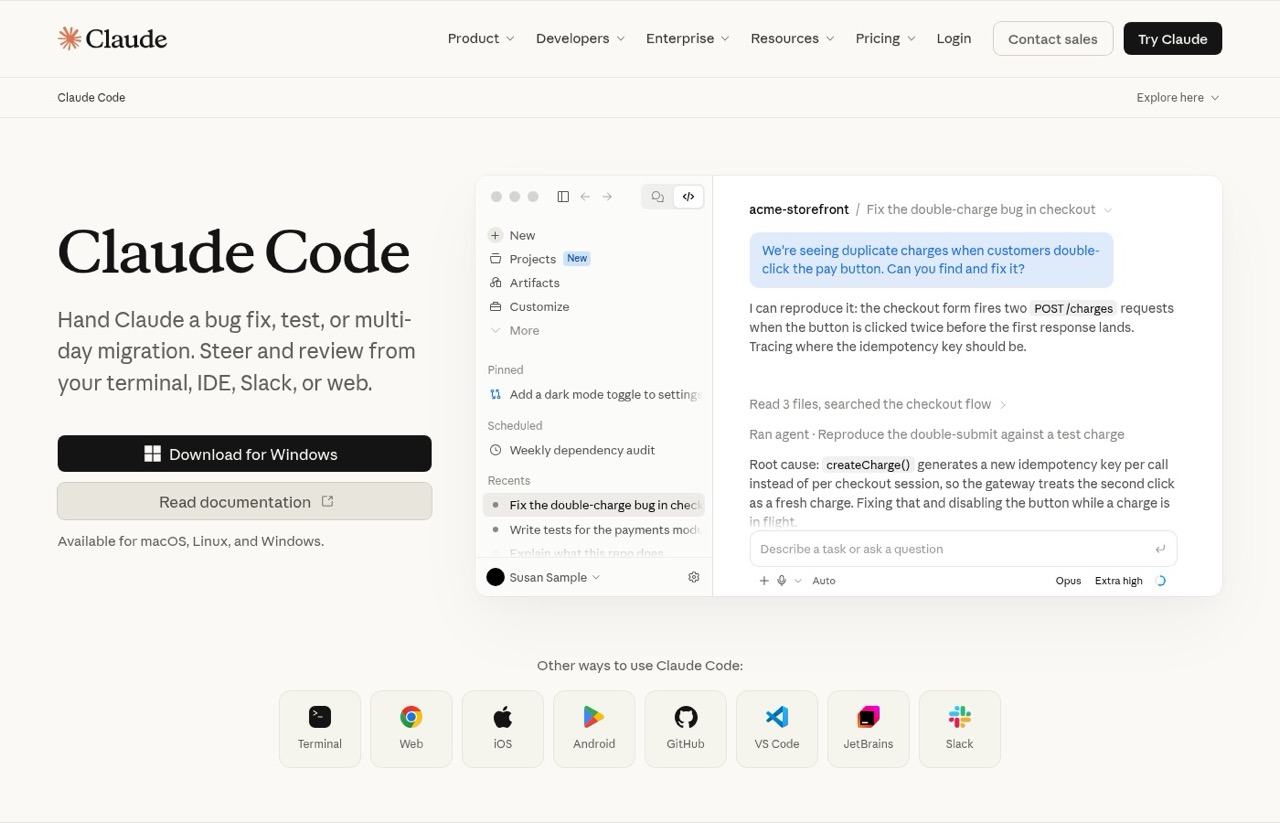
Claude Code is where my marketing agents live. Each one is a set of written instructions that does one job: one fact-checks every number against its source, one hunts for AI-slop wording, one checks brand voice, and a final "manager" agent gives a ship or no-ship verdict before anything goes live. Others run my monthly site refresh using Search Console and keyword data.
The research behind this post ran through it too. Claude Code wrote and ran the script that pulled keyword volume, four Google results pages and 12 AI answers for about $0.33. It isn't flawless. On November 4, all nine of my review runs stalled at the 10-minute mark, and I had to run each review separately. The first job I'd give it: check every number in a draft against its source before you publish. If you want to build the "AI CMO" version, my guide to Claude Code AI marketing agents walks through it.
Pros:
- You decide exactly what each agent does, in plain English
- One subscription covers the agent work, though data tools like DataForSEO bill separately
Cons:
- I run it in a code editor, which takes some getting used to
- Busy days can hit your plan's usage limit, so I keep a backup agent
Best for: Marketers willing to write their process down once so an agent can repeat it.
Pricing: Included with Claude Pro at $20/mo on monthly billing ($17/mo billed yearly). I'm on a Max plan, which starts at $100/mo.
Free plan: No. Claude's Free plan doesn't include Claude Code.
Bottom line: The most flexible agent I've used, and the one that asks the most of you up front.
2. ChatGPT Dots + Codex (Best for an Always-On Assistant and a Second Reviewer)
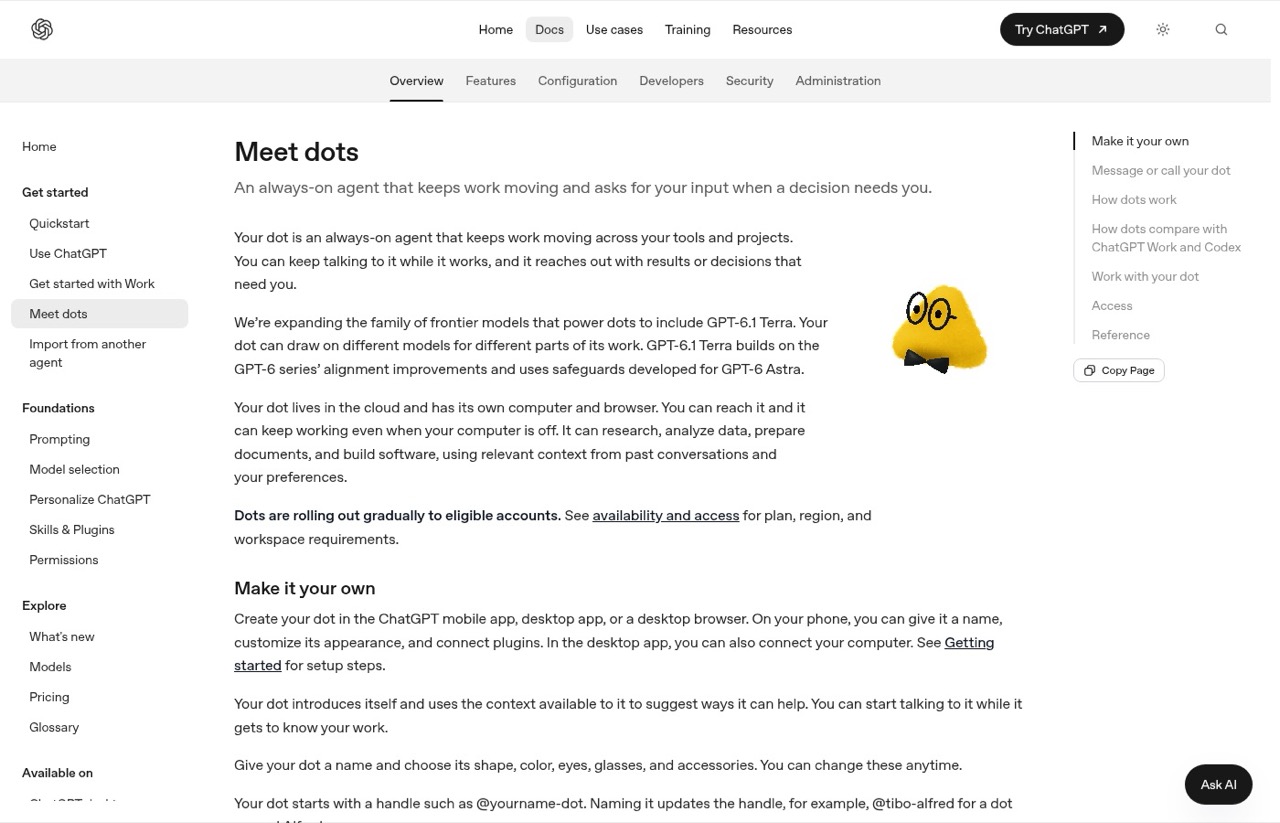
A ChatGPT dot is an agent that keeps working in OpenAI's cloud after you close the app. Mine is connected to a Mac Mini that stays on, and it works from a private repo of more than 5,000 files covering my skills, brand rules and daily jobs. Codex is OpenAI's coding agent, and I use it as the second reviewer on the writing I publish, this post included.
Codex caught a pricing claim that four of my Claude review agents had passed: a draft said a video tool charged per finished clip when it charges per minute of uploaded video. My dot has broken its own rules, though. It ran schedules that never made it into its task list, and it emailed me a priority list when its rules said to ask first. So it drafts and stages work, Claude Code checks it, and I approve before anything goes live. The easiest first job: paste a draft into Codex and ask it to flag every claim that looks wrong. I compared dots to the other personal agents in my personal AI agent breakdown.
Pros:
- A dot keeps working while your laptop is closed
- Codex catches mistakes a single model misses in its own work
Cons:
- OpenAI's docs say a dot's rules "are instructions your dot tries to follow, and it can make mistakes"
- Dots on the Pro plans aren't offered in the EEA, the UK or Switzerland
Best for: Marketers who already pay for ChatGPT and want a second set of eyes on their work.
Pricing: Codex comes with every ChatGPT plan, from Free and Go ($8/mo) to Plus ($20/mo). Dots need ChatGPT Pro, which starts at $100/mo and includes Codex, or Business Premium.
Free plan: Codex is included on ChatGPT Free for quick tasks. Dots aren't.
Bottom line: The best pairing with Claude Code I've found, as long as a human approves what goes out.
The popular picks
3. HubSpot Agent Hub (Best for Teams Already Running on HubSpot)
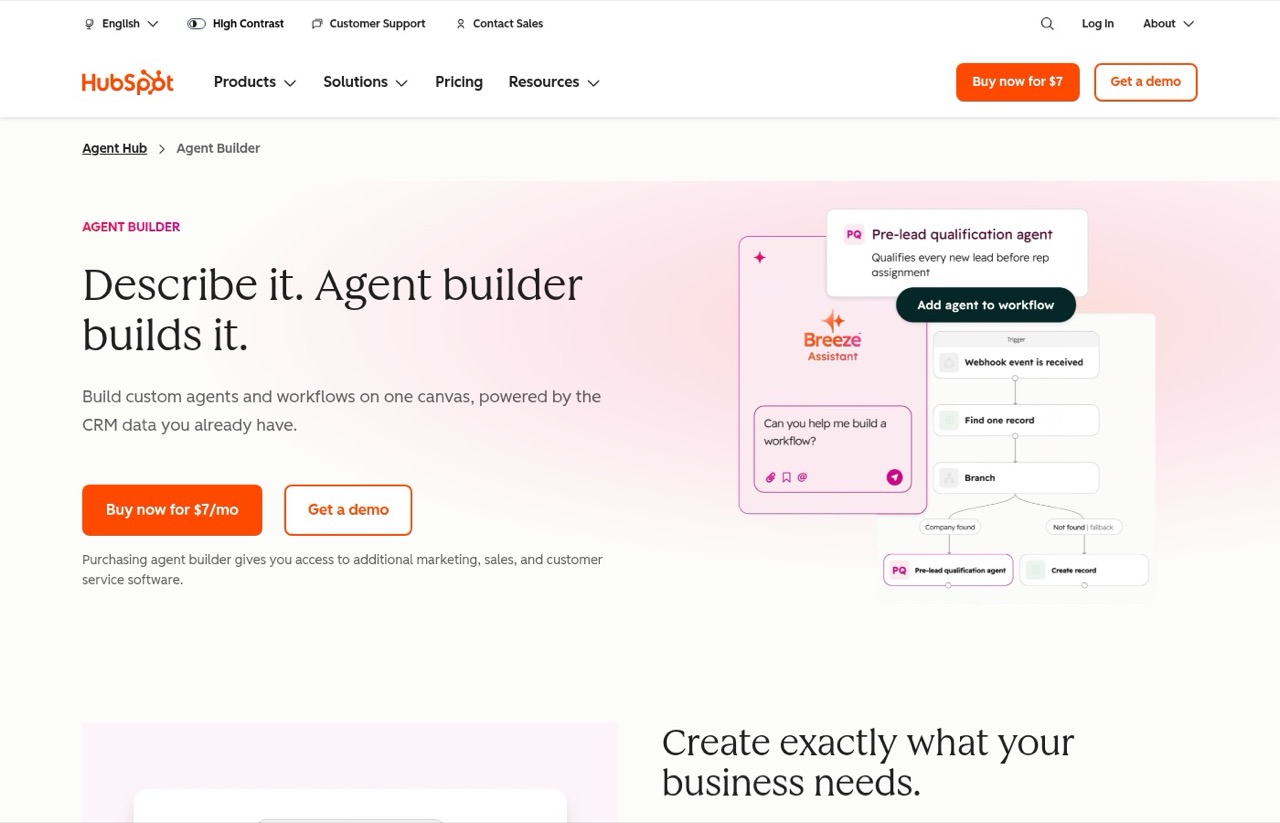
HubSpot's agents now sit under Agent Hub, the name that replaced Breeze for its agents in July. The marketing agents include a content agent and a nurture agent (both in beta) and a social media agent that HubSpot says comes with Marketing Hub Professional and Enterprise.
I don't run HubSpot. The appeal is that its agents work from the contacts and campaign history already in your CRM. Budget for the credit math in the billing section above.
Pros:
- Agents act on your real CRM records, with no copying data between tools
- Agent Builder lets you describe a custom agent in plain language
Cons:
- Professional adds a one-time $3,000 onboarding fee
- Several marketing agents are still labeled beta
Best for: Marketing teams whose leads, emails and campaigns already live in HubSpot.
Pricing: Marketing Hub Starter lists at $20 a seat per month (discounted to $10 when I checked) with 500 credits. Professional is $890/mo paid monthly on an annual commitment ($800/mo paid yearly), with three seats and 3,000 credits. Extra credits cost $10 per 1,000.
Free plan: The free CRM doesn't include Agent Hub. It starts at Starter.
Bottom line: The one to try first if you already pay for HubSpot, and a hard sell if you don't.
4. Jasper (Best for On-Brand Content at Volume)
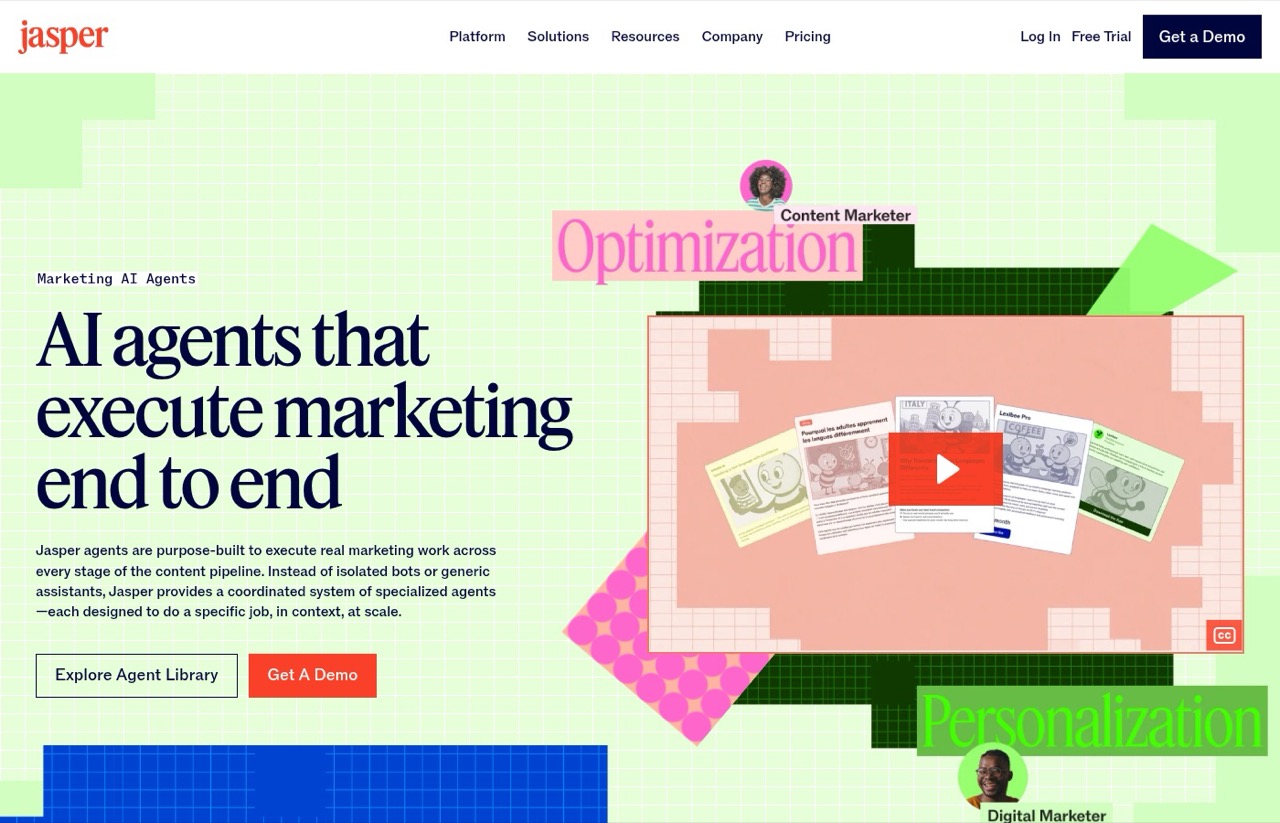
Jasper sells a library of single-job agents: blog posts, search ads, email sequences, social campaigns, schema markup, and a newer set for AI search like Gap Finder and Citable Claims. Its Jasper IQ layer feeds each agent your brand voice, messaging and audience, so you aren't re-briefing a general assistant every time.
I haven't used Jasper's agents. Its writing side is covered in my AI writing tools roundup. One thing to check before you buy: the Pro plan lists "agents for core marketing workflows," while the agent cards I could see in its library are all labeled Business. Ask which agents your plan actually covers.
Pros:
- Brand voice and positioning carry into its agents
- Covers SEO, ads, email and social from one login
Cons:
- Its pricing and agents pages leave it unclear which agents Pro includes
- Business pricing is a sales call
Best for: Content teams that publish a lot and need it to sound like one brand.
Pricing: Pro is $69 a seat per month on monthly billing, or $59 billed yearly. Business is custom.
Free trial: 7 days on Pro.
Bottom line: A good fit for a content team publishing every week in one brand voice.
5. Gumloop (Best for No-Code SEO and Research Agents)
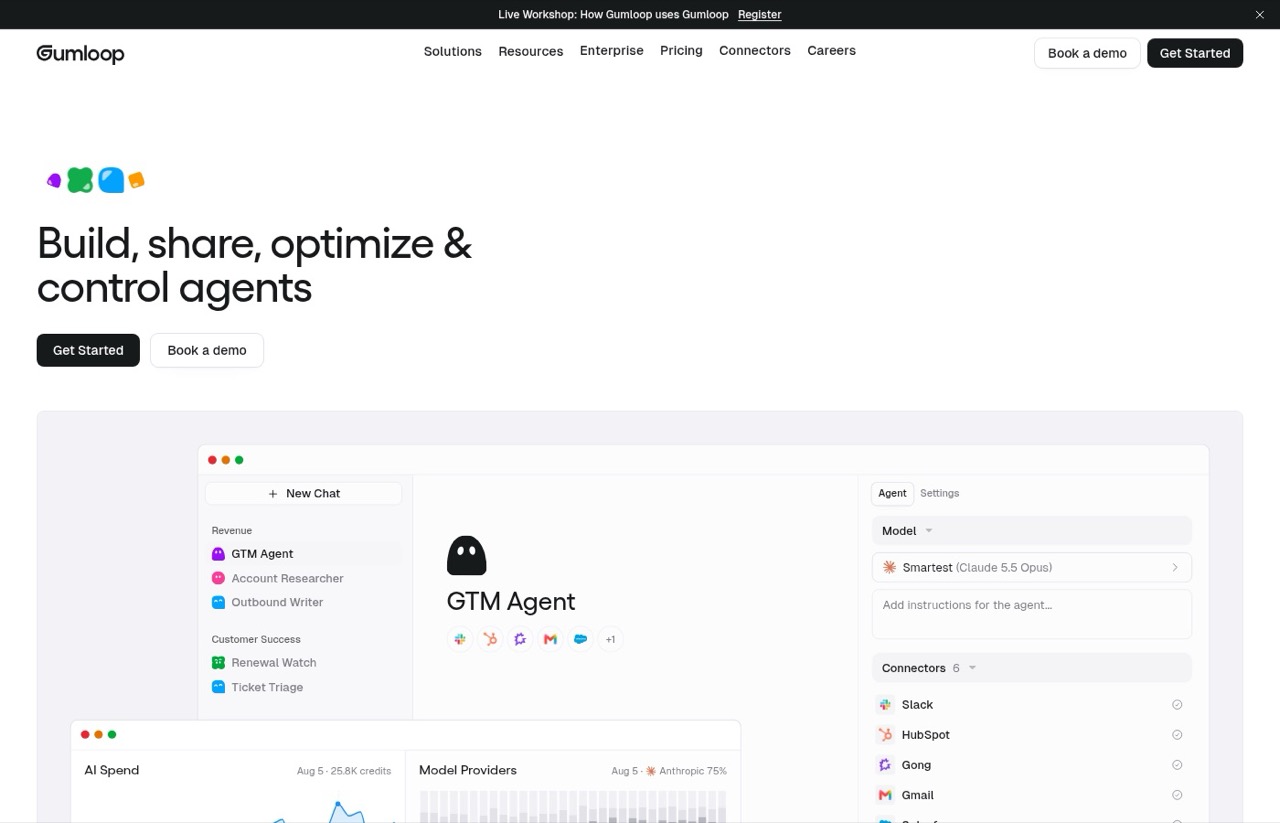
Gumloop lets you describe an agent in plain language, connect it to apps like Gmail, Slack, HubSpot and Google Sheets, and set it to run when something happens. Its own use-case pages cover SEO automation, competitor analysis and ad account audits.
I haven't built in Gumloop. Going by its docs, it's the closest of these six to my Claude Code setup without a terminal. Its docs also spell out the meter: agents spend credits on model use, tool calls and working time (5 credits a minute), with an 8% orchestration fee on top.
Pros:
- Unlimited seats on Pro, so the whole team can build
- You describe what to watch in plain English, like a competitor's pricing page
Cons:
- No free plan, only a trial
- Long-running agents also spend credits on working time
Best for: Marketers who want custom agents but would rather click than code.
Pricing: Pro starts at $37/mo with 20,000 credits a month.
Free trial: 14 days.
Bottom line: Use the 14-day trial to watch how many credits one long-running agent burns.
6. AI by Zapier (Best for Adding an Agent to Automations You Already Run)
Zapier came up in 6 of the 12 AI answers, but its agent product changed a month earlier. On October 6, Zapier announced that Zapier Agents is now AI by Zapier: the agent is a step inside a normal Zap, with a prompt, the tools it may use, a trigger, and approval settings per tool.
I know this one from Zapier's docs, not my own Zaps. The upside is that an agent step can sit next to regular steps you trust, so the AI decides which record to update and a fixed step sends the email the same way every time.
Pros:
- Mix AI decisions with predictable automation in one workflow
- Set human approval per action, not for the whole agent
Cons:
- Chat-style agents now run through a webhook-triggered Zap instead of a chat window
- It can't read HubSpot, Asana, Zendesk, Zoom or Jira as knowledge sources yet
Best for: Teams already running their marketing operations in Zapier.
Pricing: Professional is $29.99/mo on monthly billing for 750 tasks. At the Premium default, that's about 30 runs with four tool calls each, before any other steps in the Zap. Switching to Advanced (3 tasks per step and per call) stretches it to 50.
Free plan: Zapier Free doesn't include AI by Zapier.
Bottom line: Good for adding judgment to automations you already have. If you mostly use Zapier to post to social media, my guide to Zapier alternatives for social posting covers cheaper options.
7. Lindy (Best for Inbox, Meetings and Lead Follow-Up)
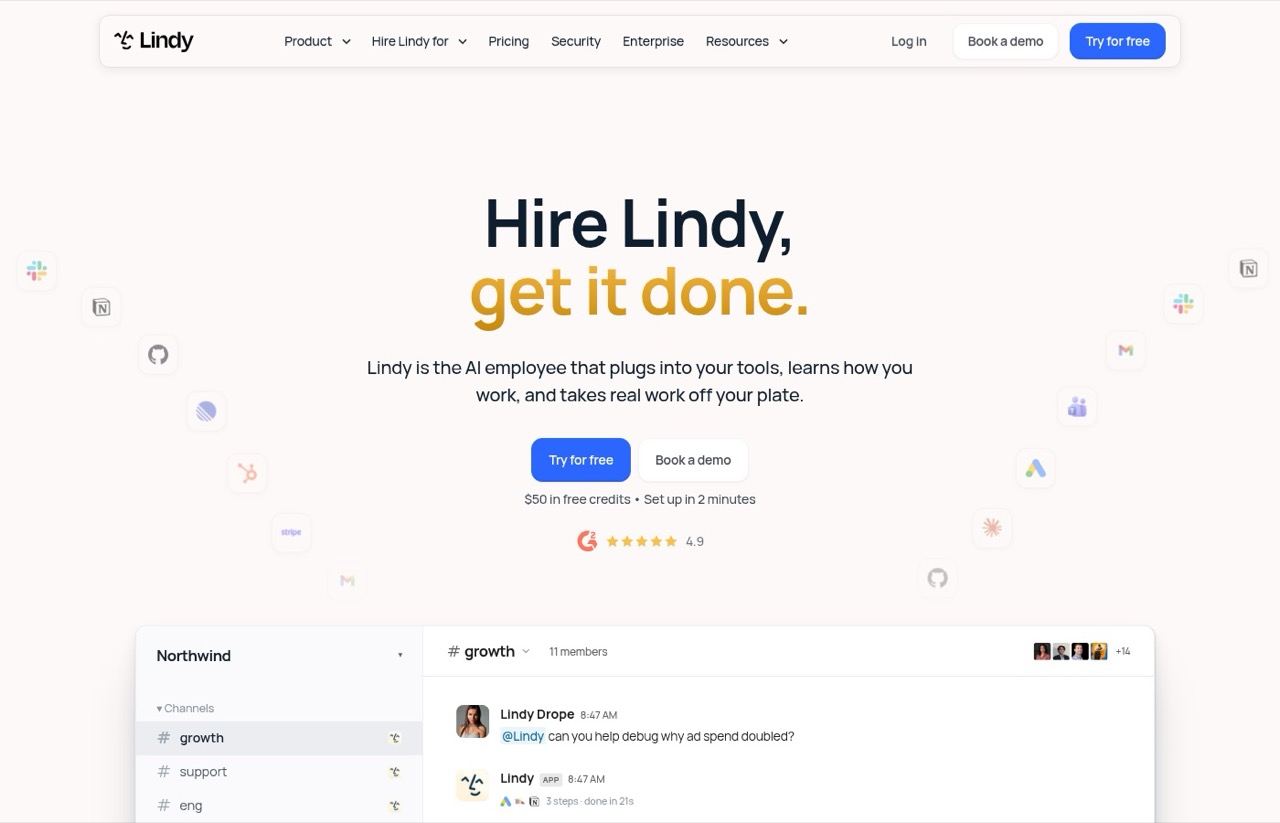
Lindy calls itself an AI employee for your whole team. It clears inboxes, preps meetings, updates the CRM, pulls reports and can make phone calls, and you talk to it in Slack, iMessage, email or the browser. Actions that send or write can wait for a person to approve them.
Lindy isn't part of my setup. It also appears in my AI automation tools list. For a small marketing team, the obvious job is lead follow-up: the reply that should go out within the hour and usually goes out the next day.
Pros:
- Works where your team already talks, including Slack and iMessage
- Credit-using actions pause when credits run out, instead of running up overages
Cons:
- Anyone who uses it becomes a paid seat, including teammates who @mention it in Slack (after a 7-day trial)
- Monthly credits don't roll over
Best for: Small teams losing hours to email and meeting prep.
Pricing: $49.99 per user per month, with 5,000 credits per user in a shared pool. Three users start at $149.97. Extra credits are $10 per 1,000.
Free trial: $50 in free credits that last 7 days, no card required.
Bottom line: More assistant than campaign tool. Watch the seat count as your team starts using it.
8. Madgicx (Best for Meta Ads on Autopilot)

Madgicx is built for Facebook and Instagram ads. Its AI Marketer looks at your campaigns and either acts on its own or prepares changes for you to review first. You pick which.
I don't run paid ads through it. It's the most specialized agent here, and that's the point: it does one channel, so start it in review mode and watch what it would have changed before you let it act.
Pros:
- You choose between hands-off and approve-first
- Built around Meta ads instead of spread across every channel
Cons:
- Meta only, so Google and TikTok ads need something else
- The price climbs as your ad spend grows
Best for: Ecommerce brands where Facebook and Instagram drive most sales.
Pricing: $45/mo on monthly billing for accounts spending under $1K a month on ads, rising with spend. Yearly billing saves 30%.
Free trial: 7 days.
Bottom line: Worth a trial if Meta ads are your main channel. Skip it if they aren't.
What About Agentforce, Adobe and Relevance AI?
Salesforce Agentforce showed up in 8 of the 12 AI answers, and Adobe's agents in several. I left them out because they're built for enterprise marketing departments with Salesforce or Adobe already in place, while this list is for small teams and solo marketers. Relevance AI joins them for the same reason: its only listed plan is Enterprise. Its footer lists Claude Managed Agents and OpenAI Codex among its competitors, which tells you how blurry the line between "marketing agent" and "general agent" has become.
Copy.ai (7 answers) and Klaviyo (6) came up more often than Lindy or Gumloop. I left them out because Copy.ai now pitches itself as "GTM AI" for sales and go-to-market teams, and Klaviyo's agents work inside its own email and SMS platform for ecommerce brands. AirOps, which focuses on content for AI search, came up less often. If an agent's main job is publishing content and social posts, I covered those separately in my roundup of AI agents for content creation.
How to Choose an AI Marketing Agent
These are the questions I'd ask before handing any agent real work.
- Which job eats the most of your week? Start with the agent built for that one job.
- Where does your data already live? An agent inside your CRM or ad account beats one you have to feed by hand.
- What's the meter? Credits, tasks, seats or ad spend. Price out a busy month, not a quiet one.
- Can it send, post or spend without you? Turn on approval for anything that reaches a customer or touches a budget.
- What happens when it's wrong? Every agent here can make mistakes, mine included. Know how you'll catch them.
Best AI Agents for Marketing, by Situation
- Your leads and email live in HubSpot: HubSpot Agent Hub
- You publish a lot of branded content: Jasper
- You want custom agents without a terminal: Gumloop
- Your operations already run on Zaps: AI by Zapier
- Email and meetings eat your week: Lindy
- Meta ads drive most of your sales: Madgicx
- You'll write your process down once and want full control: Claude Code, with Codex reviewing
Hand It One Job You Already Hate
Don't start with an "AI marketing team." Give one recurring job, like the weekly report, lead follow-up or a pre-publish fact-check, to one agent and run it with approval on for two weeks. If it saves you time without new mistakes, give it a second job.
AI Marketing Agents FAQs
What is an AI marketing agent?
An AI marketing agent is software that takes a marketing goal, works through the steps in your apps, and returns finished work, like a drafted email sequence, an updated CRM record or a campaign report. Examples include HubSpot's content agent, Jasper's SEO and email agents, and Madgicx's AI Marketer for Meta ads. A plain chat reply gives you advice to act on. An agent can plan, use tools and work through several steps on its own, usually with approval rules for anything it sends.
Are there free AI marketing agents?
Mostly trials. Lindy gives $50 in credits for 7 days, Jasper and Madgicx offer 7-day trials, and Gumloop offers 14 days. Codex is included on ChatGPT's Free plan for quick tasks. Of these, I've only used Codex. HubSpot's free CRM and Zapier's Free plan don't include their agent features.
Is HubSpot Breeze still called Breeze?
Partly. HubSpot's own notes for AI assistants say Breeze was retired as the umbrella brand on July 23, 2026, and that Agent Hub is now the name for its agents. Breeze Assistant kept its name, and some HubSpot product pages still use Breeze, which may be why most AI answers still say "HubSpot Breeze."
Do I need to code to use AI marketing agents?
No. HubSpot, Jasper, Gumloop, Zapier, Lindy and Madgicx all run in a browser with no code. Claude Code and Codex have web and mobile apps, and I run both in a code editor, but either way you write instructions in plain English, not code. I'm a marketer, not a developer, and my Claude Code and Codex setup runs on written instructions.
Can AI agents replace a marketing team?
Not on their own. They take over repeatable jobs like research, reporting, first drafts and follow-ups, and they still make mistakes. My agents check each other's work and I approve everything before it goes live. In my experience, agents make a good marketer faster. They don't replace knowing what good work looks like.
No company here paid to be listed, and none of these links are affiliate links. I use Claude Code, ChatGPT dots and Codex daily on plans I pay for. Three through eight are researched, not tested. Prices were checked on November 4, 2026, with monthly billing selected where offered. See my full disclosure.