
5 Best Lovable Alternatives in 2026 (Picked by a Non-Coder)
This list of the best Lovable alternatives skips the hosted builders, because when I tested 749 of their sites after my viral "Lovable is a scam" post, ChatGPT could quote just 7.7% of older Lovable sites. For a marketing or lead-generation site, my five picks are Claude Code, OpenAI Codex, Dyad, Google Antigravity and Cursor, because each one works on files you control.
Lovable Alternatives at a Glance
Every price here came off the vendor's live pricing page or its own docs on November 20, 2026, with monthly billing quoted.
| Tool | Best for | Starts at (billed monthly) | Who picks the AI model | Where the project lives |
|---|---|---|---|---|
| Claude Code | Non-coders who want to own the whole site | $20/mo with Claude Pro | You, from Claude's models | Your computer, pushed to your GitHub |
| OpenAI Codex | People who already pay for ChatGPT | Limited free version in the ChatGPT desktop app (rolling out), more with Plus at $20/mo | You, from OpenAI's models on Plus | Your computer, pushed to your GitHub |
| Dyad | A Lovable-style builder that runs on your own laptop | Free with your own model connection, Pro from $20/mo | You, from almost any provider | A normal folder on your computer |
| Google Antigravity | Trying an AI agent editor without paying | $0 for individuals | You, from Google's list for your tier | Your computer |
| Cursor | Developers who want many models in one editor | Free plan, but Claude and GPT need Premium at $30/mo plus usage | You, with Claude and GPT on Premium and up | Your computer |
| Lovable (for comparison) | Fast prototypes inside one hosted app | Free plan with daily credits, Pro at $25/mo | Lovable | Lovable's cloud, with a synced copy on GitHub |
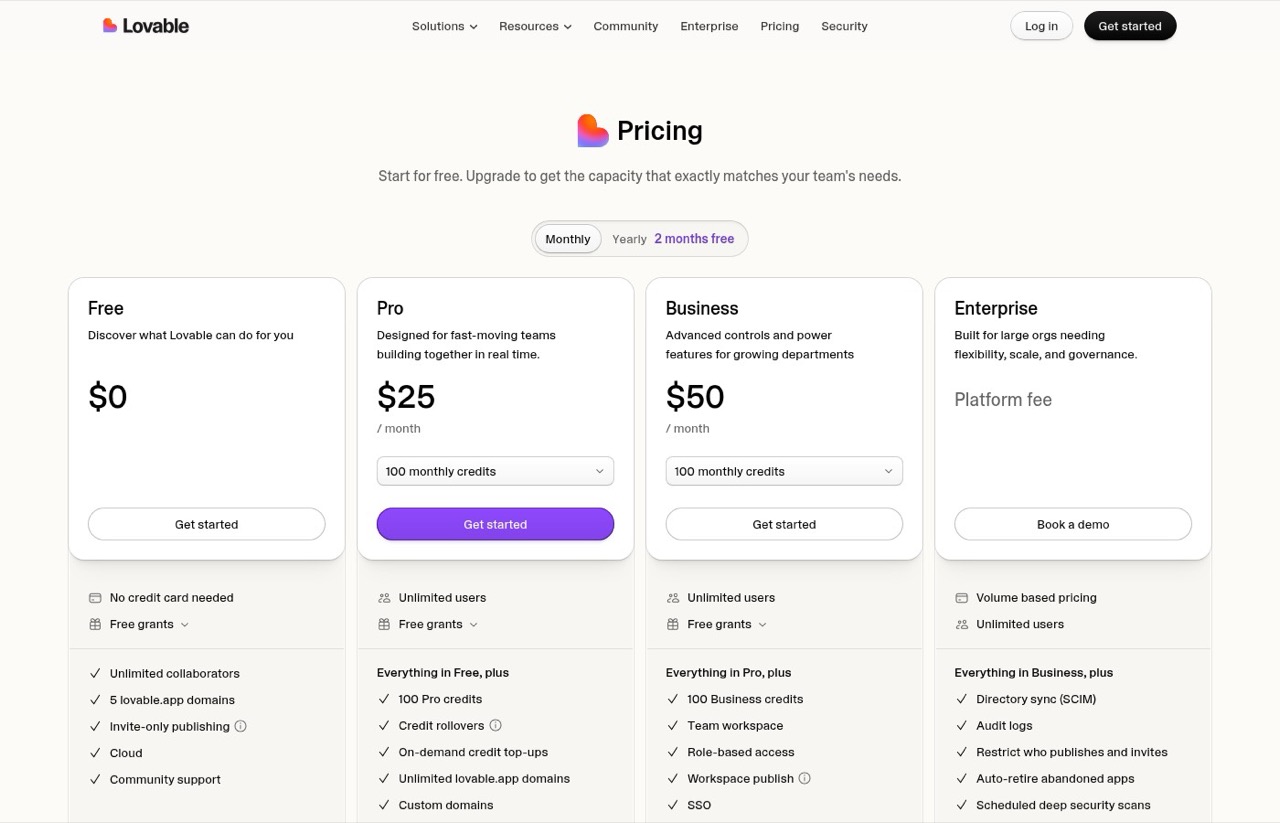
Lovable Pro drops to $21 a month billed yearly and includes 100 monthly credits. Its credits docs give examples like 0.5 credits to make a button gray and 2 to build a landing page with images, and say actual charges vary with the project.
Why I Don't Recommend Lovable or Most Lovable Alternatives
Here's the October 14, 2026 post on X that started this. It passed 577,000 views in a day:
Lovable is a scam. So is Replit, Base44, Framer, and all AI website builders.
Before you weigh my take: I'm a non-technical marketer who didn't open Claude Code until early 2026, and I sell Claude Code products.
A viral post proves nothing, so I had Claude agents test 749 live builder sites for my AI website builder idiot tax research. It walked my own post back: "scam" was too strong, since these tools hand you working software.
The marketing is another story. Lovable says AI bots, ChatGPT's included, get a readable copy of all its older sites, with "No opt-in."
When ChatGPT was actually asked to read those sites, it said it couldn't about 9 times in 10. My test can't see what OpenAI's search bot receives, only what a person asking ChatGPT gets back, but that gap is why I call the marketing deceptive.
Most roundups miss all of this. Of the 22 Lovable alternatives roundups I pulled from Google and AI search in November 2026, twelve came from a vendor ranking itself first, and none checked whether ChatGPT can read builder sites.
In my test, ChatGPT could quote 85.0% of sites on Lovable's newer tech and 7.7% on the older version, which 73.5% of the 302 Lovable sites sampled still used. The test covered lovable.app addresses, not custom domains or sites made with the tools below.
The AI answers lean toward builders, too. On November 20, ChatGPT, Claude, Gemini and Perplexity all led with Bolt, three never mentioned Claude Code, and Gemini filed it under "Pro Devs scaling beyond a prototype."
I don't write code. Claude Code and Codex rebuilt this site when I left WordPress in early 2026, and it has brought in over $50,000 in digital product sales since.
Aaron Makelky and I broke that post down on AI Rabbit Holes, and the test behind this list of Lovable alternatives came out of the episode. For the verdict on Lovable itself, see is Lovable worth it.
The Swap Test Behind These Lovable Alternatives
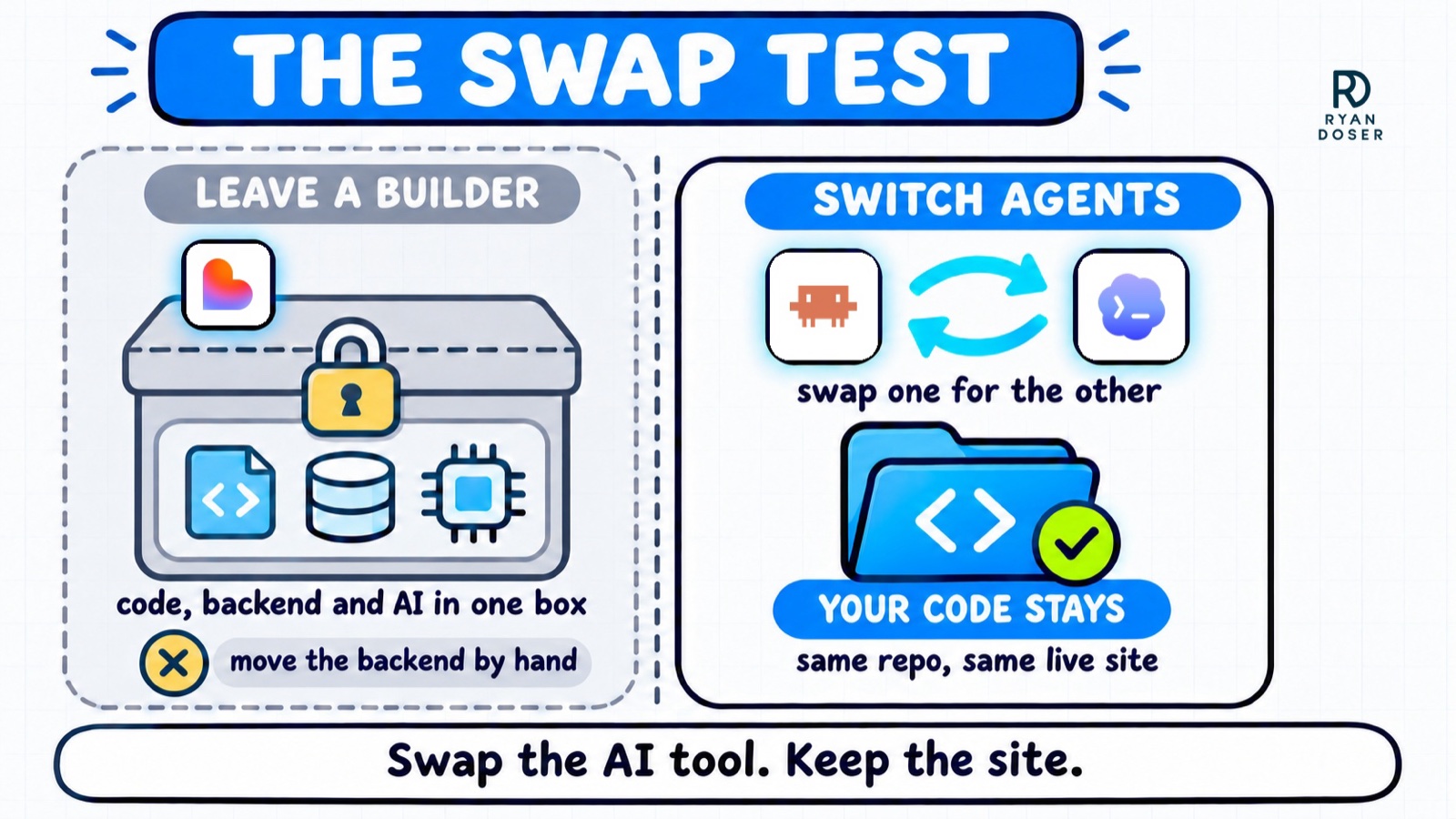
Aaron built on Lovable in the summer of 2025, then left through its GitHub sync for a GitHub repo, Cloudflare hosting and Claude Code. On the episode, he put the idea like this:
"If you cancel Claude Code and you just went to Codex, it wouldn't matter with your websites at all... You can't do that with a Lovable or a Bolt or a Replit."
His own exit shows builders do have a way out, and Lovable, Bolt, Replit, Base44 and v0 all offer one now. Canceling Lovable doesn't even take your site down, since its subscription docs say published apps stay live on the Free plan.
Leaving for good is the harder part. So a tool makes this list only if it passes all three rules:
- The project lives in a folder or repo you control by default, not in the tool's cloud.
- You pick the AI model doing the building.
- Hosting and data sit in accounts you choose, so switching tools never touches what's live.
Lovable misses all three by default. Its FAQ says "you cannot pick a specific model for building," and the project lives in Lovable's cloud with a synced copy on GitHub.
Its ownership docs say the only supported move for the built-in backend (your database and logins) is to Supabase, a separate database service. Any tool can still box you in, since Claude Code will happily wire a site to a managed database, but with these five you pick each piece.
Best Lovable Alternatives in 2026
All five pass the swap test. They're ordered by what I'd tell a non-technical Lovable user with a marketing or business site to open first, so Cursor, built for developers, comes last.
One boundary: I run Claude Code and Codex every day. Dyad, Antigravity and Cursor I judged from their own pricing and help pages, and their cards stick to what those show.
1. Claude Code (Best for Owning the Whole Site)
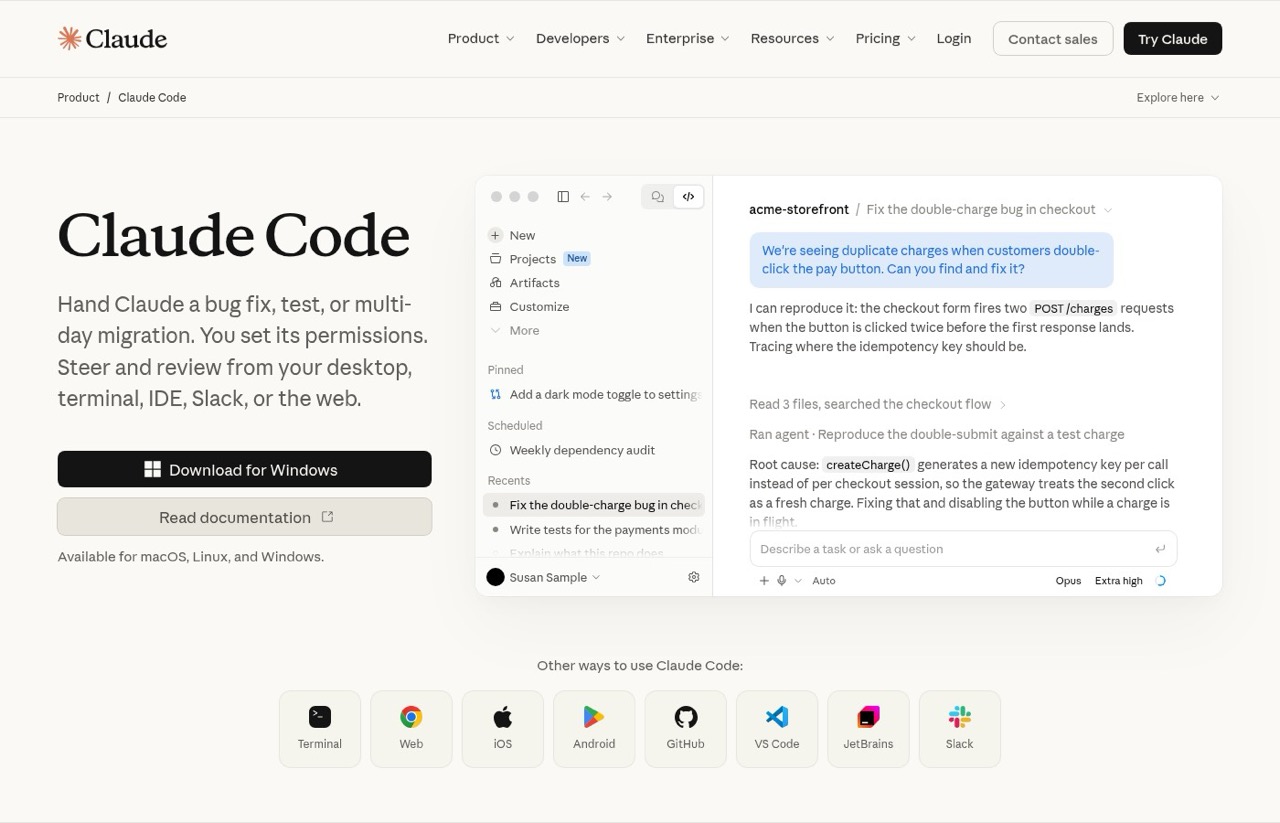
This is what I build with, and it's where I'd send anyone leaving Lovable with a marketing or business site. You describe the site in plain English, and Claude Code writes the files on your computer.
It can then push them to a GitHub repo, which is just a folder of your site's files in your own GitHub account. I run it inside VS Code, which is free.
Pros:
- Included with Claude Pro, which also runs the rest of your work
- Code lives in your GitHub account, so another agent can pick it up
- You choose which Claude model handles each job
- Puts sites live on free hosting like Cloudflare
Cons:
- The first build and deploy (putting the site live) take a while, and you'll paste errors back into the chat when a step fails
- No drag-and-drop canvas, so you judge changes in a browser preview
- Heavy building burns through Pro limits, which is why I'm on Max
Best for: Non-technical marketers and business owners who want a site they fully own.
Pricing: Claude Pro is $20/month billed monthly, or $17/month billed yearly. Max starts at $100/month.
Free trial: No free tier. On a subscription, Claude Code starts with Pro, and developers can also pay per use through Anthropic's API.
Bottom line: The one I'd open first. Pair it with free GitHub and Cloudflare accounts, and for a simple marketing site on Cloudflare's free plan, a domain is the only other bill.
2. OpenAI Codex (Best If You Already Pay for ChatGPT)
Codex is OpenAI's coding agent, and it works the same way as Claude Code: files on your computer, pushed to a repo you own.
On ChatGPT Free and Go, its pricing docs list one model, GPT-6 Luna, in the desktop app, which OpenAI is still rolling out. Plus at $20 adds Codex on the web, in the command line and in code editors, plus GPT-6.1 Sol.
On my sites, Claude Code handles strategy, copy and SEO, and Codex reviews everything before it goes live. I wrote up that split in why I use Claude Code and Codex together.
Pros:
- Works on the same repo as Claude Code, so you can switch mid-project
- A sharp second reviewer for whatever another agent wrote
Cons:
- No drag-and-drop canvas here either
- For copy I still prefer Claude, so Codex mostly reviews on my sites
Best for: Anyone already paying for ChatGPT who wants out of Lovable without a second AI bill.
Pricing: Free and Go include a limited version. Plus is $20/month and Pro starts at $100/month, with no annual option listed for either.
Free trial: A limited version runs on ChatGPT Free in the desktop app, subject to OpenAI's rollout.
Bottom line: Start here if ChatGPT is where you already work. Add Claude Code later and let the two check each other.
3. Dyad (Best Free Lovable Lookalike on Your Own Computer)
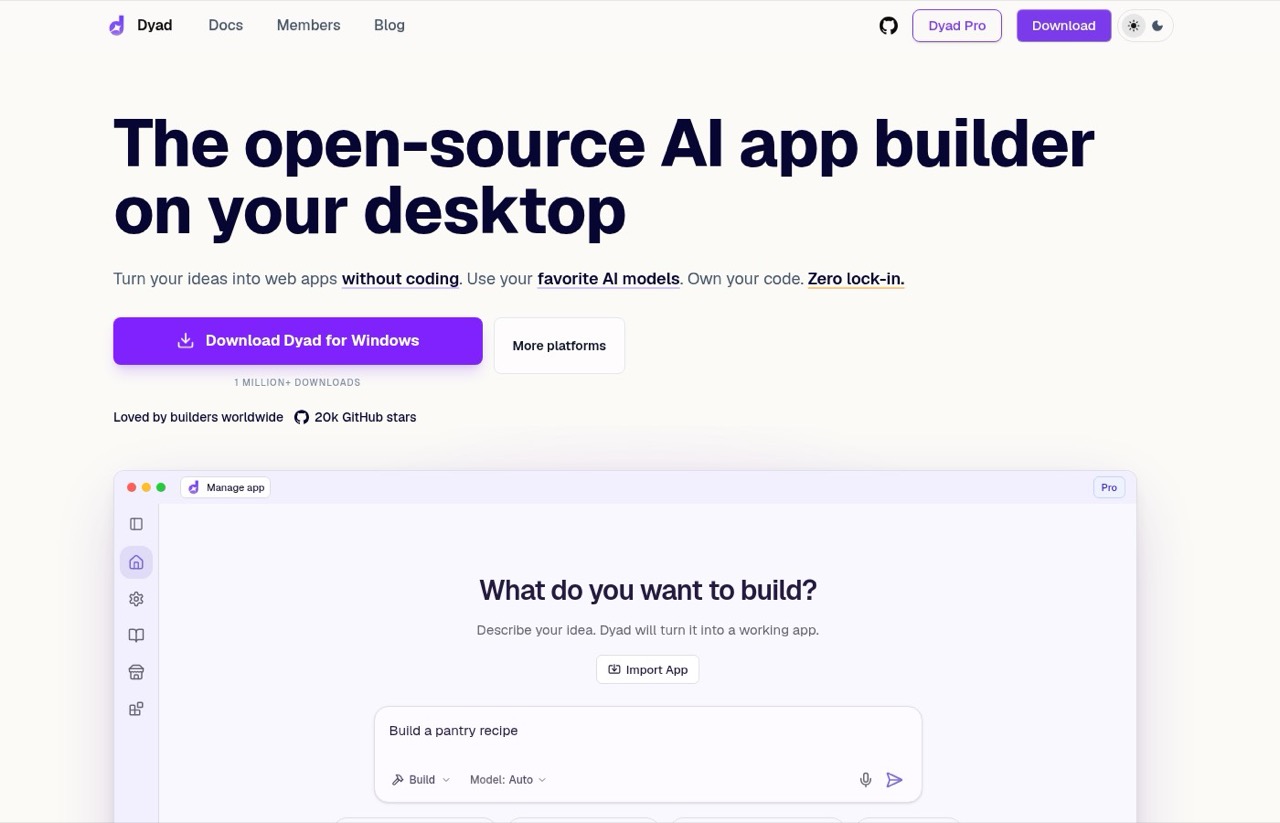
Dyad looks the most like Lovable of anything here: a chat on one side, a live preview of your app on the other. It runs as a desktop app, and its docs describe your project as "normal code in a folder you keep."
Its model docs list plenty of ways to power it. You can plug in an API key (a password that bills your own AI account), use free tiers from Google Gemini or OpenRouter, run a model on your own computer, or connect a ChatGPT or Claude subscription.
I haven't built with Dyad, so this card comes from its site, docs and GitHub repo (about 22,000 stars in November 2026).
Pros:
- Costs nothing to download, and its docs list no-cost model options
- Connects to almost any provider, including your ChatGPT or Claude plan
- The project is an ordinary folder you can open in Claude Code or Codex later
- The core app is open source (Apache 2.0), so anyone can inspect the code
Cons:
- Paid API keys bill you per use, so your costs depend on the model you connect
- Pro features use a stricter "fair-source" license, so that part isn't fully open source
Best for: Lovable users who like its split-screen layout and want it on their own machine.
Pricing: Free with your own model connection. Dyad Pro starts at $20/month with 200 AI credits.
Free trial: The free version stays free.
Bottom line: Judging by its docs and screenshots, the closest match to Lovable's layout on this list. Worth a look if the chat-and-preview window is the part you'd miss.
4. Google Antigravity (Best for Trying an AI Agent Editor for $0)
Antigravity is Google's agent platform, with agents that write and edit code on your own machine. The individual plan is $0 a month with a weekly usage quota, so it costs nothing to see whether an agent editor clicks for you.
I haven't run a site build through it. Its pricing page lists Gemini 3.8 Flash plus Claude Sonnet 4.6 and Opus 4.6 on the free tier, and says those Claude models "will be removed on November 30, 2026." After that, the free tier's Claude access ends.
Pros:
- $0 plan for individuals
- Desktop apps for Mac, Windows and Linux
- Works on local files, so you can switch tools without moving anything
Cons:
- Built around Google's models first
- The free quota refreshes weekly, so running out mid-build means waiting
- Google pitches it as an app, a command line tool, an editor and a developer toolkit, built with coders in mind
Best for: Curious Lovable users who want to try an agent editor before paying anyone.
Pricing: $0/month for individuals. Higher quotas come with Google AI Pro and Ultra subscriptions.
Free trial: The individual plan is free.
Bottom line: A free way to find out if you like working with an agent. If you outgrow the free quota, compare Google's plans with a Claude or ChatGPT plan, which gets you Claude Code or Codex instead.
5. Cursor (Best for Developers Who Want Many Models in One Editor)
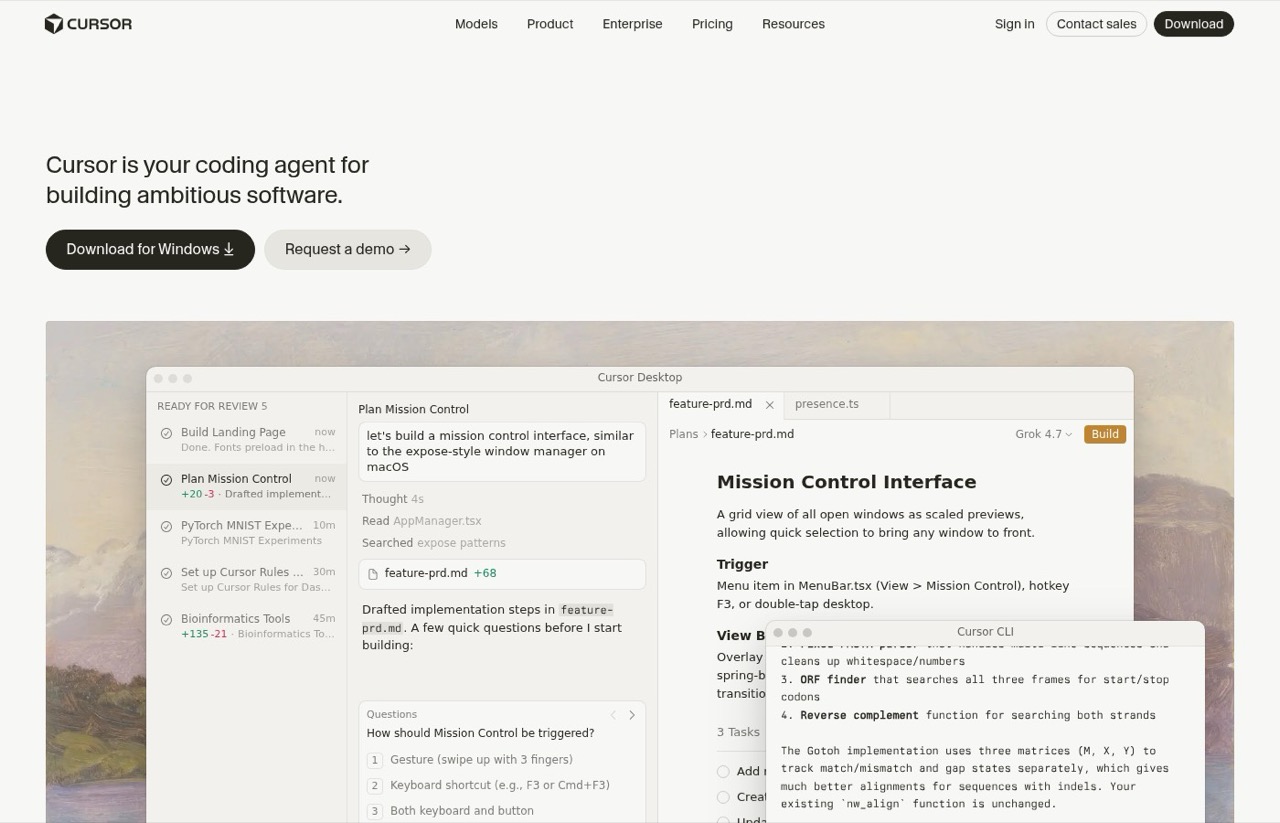
Cursor is an AI code editor that started as a fork of VS Code, and it passes the swap test easily because it works on files on your computer. What changed this year is the pricing, after a change of owner.
SpaceX closed its acquisition of Cursor on August 14, 2026, and the pricing page now leads with an $8 Plus plan built around Grok. Claude, GPT and Gemini need Premium at $30 a month, with that usage billed on top at API list prices.
For someone already paying Anthropic or OpenAI, that's $30 a month plus usage for models Claude Code or Codex already run on your existing plan. I haven't used Cursor's current plans, so this comes from its pricing page and model docs.
Pros:
- One editor for Grok, Claude, GPT, Gemini and more
- A free plan with limited agent requests
- Works on local files you can open anywhere
Cons:
- It changed owners in August, and its plans changed with it
- The $8 Plus plan is labeled introductory and skips Claude, GPT and Gemini
Best for: Developers who want one editor and switch models by task.
Pricing: Free plan, Plus at $8/month (introductory), and Premium at $30/month, with third-party model usage billed separately.
Free trial: Free plan with limited requests.
Bottom line: One editor for many models, built for developers. The Premium requirement makes it a poor default for a non-coder leaving Lovable.
What About Bolt, Replit, Base44 and v0?
Those four are the regulars on the 22 Lovable alternatives roundups: Replit on 21, Bolt on 20, v0 on 14 and Base44 on 11.
They work, and each one now has a way out. But each misses at least one of the three rules by default.
- Bolt is the closest copy of Lovable. Pro is $25 a month, metered in tokens, and you pick a Standard or Max agent while Bolt picks the model behind it. Hosting and the database run on Bolt Cloud by default, with GitHub and Netlify as the exits.
- bolt.diy, Bolt's open-source cousin, passes all three rules on paper and lets you choose a model for every prompt. You install and run it yourself from GitHub, though, which is a bigger lift for a non-coder than Dyad's download.
- Replit Core is $20 a month, with agent work charged by effort, and your project runs in Replit's cloud workspace. In my test, most Replit sites (87.5% of 144) loaded blank for any tool that doesn't run the page's code, and ChatGPT could quote 13.2% of them.
- Base44 belongs to Wix, which bought it in 2025. GitHub sync and code export need the Builder plan at $50 a month. Even then, its docs say a site you host yourself still pulls its data from Base44's servers. ChatGPT quoted 15.3% of the 144 Base44 sites I tested, all on free base44.app addresses.
- v0 comes closest. Two-way GitHub sync works even on its free plan, and Plus includes all its models. Its FAQ even tells you to share that repo with anyone using Claude Code or Cursor. You still work in v0's cloud by default, with the full experience running through Vercel. For a hosted app builder, it's the one I'd look at.
Notice that each exit starts with a GitHub repo, which is where the five above work from day one. Starting there means the code never has to move, though hosting and data are still choices you make.
Bubble shows up on 13 roundups, but you build inside Bubble's visual editor, and the app runs on Bubble with no code to take elsewhere.
Framer held up best among the builders in my test: 96.9% of 159 Framer sites shipped their words in the HTML, and ChatGPT quoted 69.2%. For a hosted marketing site with zero code, that's the builder I'd consider, knowing the site lives on Framer.
What Owning the Stack Looks Like on a Site That Gets Leads
Des Moines Septic is a rank-and-rent site I built with Claude Code, Codex, GitHub, Cloudflare and Astro, a free framework that publishes plain HTML. It's not a real septic company.
As of the October episode, it was bringing in three to five leads a week, which I forward to a real local company through CallRail.

Owning it looks like this: the code sits in a private GitHub repo in my account, and Claude shows up as a contributor right next to me.
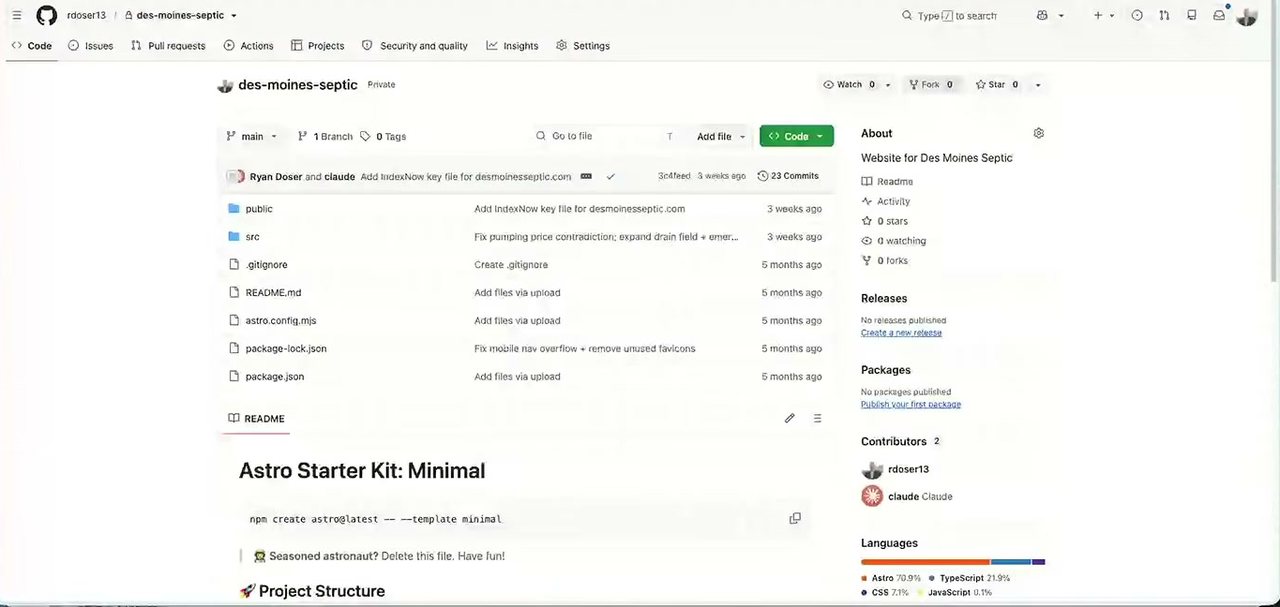
Switching that site from Claude Code to Codex means opening the same repo in a different app. That's the swap test passing on a site that brings in leads.
It's the same stack behind the top two Lovable alternatives above, and I've since copied it for a gutter cleaning site and a basement flooding site in Des Moines.
The running cost is Aaron's math from the episode. A simple site needs a domain at $7 to $10 a year, GitHub and Cloudflare accounts that cost nothing, and the AI plan you already pay for.
My rank-and-rent sites add CallRail for call tracking, which a normal business site doesn't need. The full setup is in how I build a website with Claude.
Four Questions to Ask Before You Leave Lovable
The same four I'd ask about any tool that hosts part of your business, including the Lovable alternatives above.
If I left this tool completely, what would I move by hand? Name it: the code, the database, the logins, the hosting.
Anything on that list is a dependency worth knowing about before you build more on top of it.
Who picks the AI model, and can I see which one ran? Credits are hard to judge when you can't see which model spent them.
Can ChatGPT read my published pages? With web search on, paste your URL into ChatGPT, ask it to quote your headline word for word, and check that your page shows up in its sources.
A refusal, or your meta description coming back as the headline, is a sign it may not be seeing the page. Treat it as a quick first check.
Am I already paying for Claude or ChatGPT? If yes, Claude Code or Codex adds nothing to the bill for a small site, within your plan's usage limits.
How I'd Move Off Lovable This Week
If Claude is your daily AI, turn on Lovable's GitHub sync and open that repo in Claude Code, my top pick of these Lovable alternatives. For a marketing site where search and AI visibility matter, ask it to rebuild the pages in Astro.
If ChatGPT is your daily tool, do the same in Codex. Put the site live on Cloudflare, and cancel Lovable only after the new site works and any logins, payments and stored data have moved.
Do it once, and if Anthropic doubles its price next year, you open the same repo in Codex and keep going.
Lovable Alternatives FAQs
What is the best alternative to Lovable?
For a marketing or lead-generation site, Claude Code. It comes with Claude Pro at $20 a month, builds into a GitHub repo you own and lets you choose the model. For ChatGPT users, Codex does the same job, with the web, command line and editor versions on Plus at $20. If you want Lovable's layout, Dyad is the closest match, though I've only assessed it from its docs.
Is there a free alternative to Lovable?
Three I'd point a non-coder to. Codex includes a limited free version in the ChatGPT desktop app. Dyad is free to download and works with several no-cost models. Google Antigravity has a $0 plan for individuals with a weekly quota. Cursor's free plan is built for developers. I run Codex daily, while Dyad and Antigravity are desk reviews from November 20, 2026.
Is Claude Code better than Lovable?
For a site you plan to keep editing, yes in my experience. Claude Code builds on your computer, pushes to a GitHub repo you own, lets you pick the model and comes with Claude Pro at $20 a month. Lovable Pro is $25 a month and picks the model for you. In my view, Lovable is still a faster start for a clickable prototype with logins and a database wired up for you. I go deeper in my Claude Code vs Lovable breakdown.
Can I move a Lovable project to Claude Code?
Yes. Turn on Lovable's GitHub sync, which every plan includes, then open that repo in Claude Code. The backend is the hard part. Lovable's docs list managed or self-hosted Supabase as the only supported destinations for its built-in backend, and logins, stored files and secrets need moving by hand. Check that list before you cancel.
Is Lovable bad for SEO?
It depends on which version built your site. Google renders JavaScript, so a Lovable site can still rank. In my October 2026 test of lovable.app homepages, ChatGPT could quote 85.0% of sites on Lovable's newer tech and 7.7% on the older version. Most of the 302 sampled (73.5%) were still on the older version, and custom domains weren't tested. Lovable documents an upgrade to its newer tech for older projects.
Disclosure: no affiliate links, and no tool on this list pays me. I use Claude Code and Codex daily. Dyad, Antigravity and Cursor were assessed from their live pricing pages and docs on November 20, 2026. I sell Claude Code products. Full disclosure.