
Did Cloudflare's New CMS (EmDash) Kill WordPress?
The Cloudflare EmDash CMS just launched as an open-source, agent-first WordPress alternative built on Astro. I sat down with SEO expert Nesil Ozer to break down what it actually does and whether WordPress should be worried.
What the Cloudflare EmDash CMS Actually Is
What if WordPress's biggest weakness finally got a real answer? That's the pitch behind EmDash.
EmDash is a new open-source CMS from Cloudflare, written in TypeScript and built on the Astro web framework. Cloudflare acquired Astro earlier this year, so the foundation was already in place.
The headline reason it exists: fix what's broken in WordPress. Plugin security. Slow performance on a 23-year-old codebase. And one more thing nobody talks about, which is that WordPress was never designed for AI agents. My breakdown of Claude Code for SEO covers the same shift from a production angle.
Why EmDash Is Built for AI Agents First
You've probably tried wiring an AI agent into your WordPress site. It works, but it's a mess of third-party plugins and security workarounds.
EmDash flips that. It ships with a built-in MCP server, a CLI, and Agent Skills so tools like Claude and ChatGPT can edit content, upload media, and adjust schemas directly. Plugins run in sandboxed Worker isolates, so one bad plugin can't compromise the whole site.
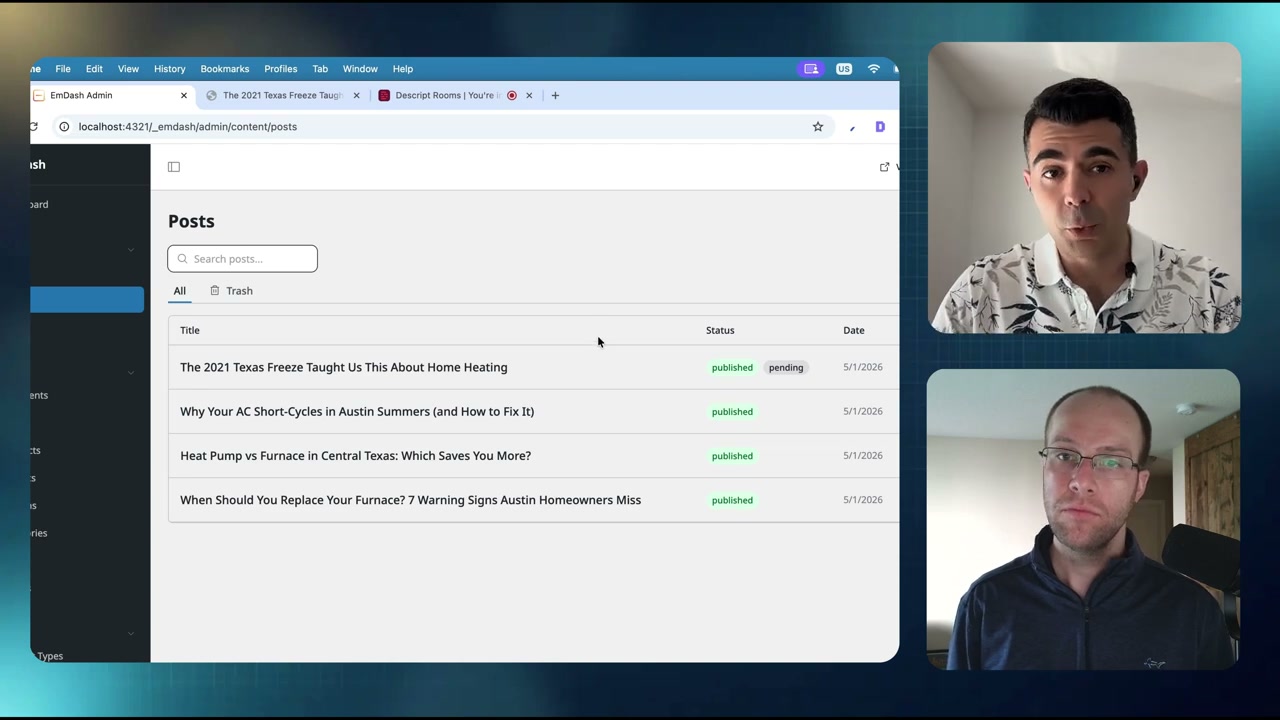
EmDash also stores content differently. Title, body, and images each live in their own slot. That structure lets an LLM pull specific fields without crawling the entire page, which matters more as AI search keeps eating into Google traffic.
EmDash vs WordPress: The Honest Comparison
You've spent years inside WordPress. Switching feels like a tax. Here's how the two stack up right now.
| Feature | WordPress | EmDash |
|---|---|---|
| Plugin security | Shared runtime, full data access | Sandboxed Worker isolates |
| Built for AI agents | No, requires third-party plugins | Yes, native MCP, CLI, Skills |
| Hosting model | Server-based | Serverless on Cloudflare Workers |
| Maturity | 23 years, ~40% of the web | MVP, two months old |
| Plugin ecosystem | Massive | Almost none yet |
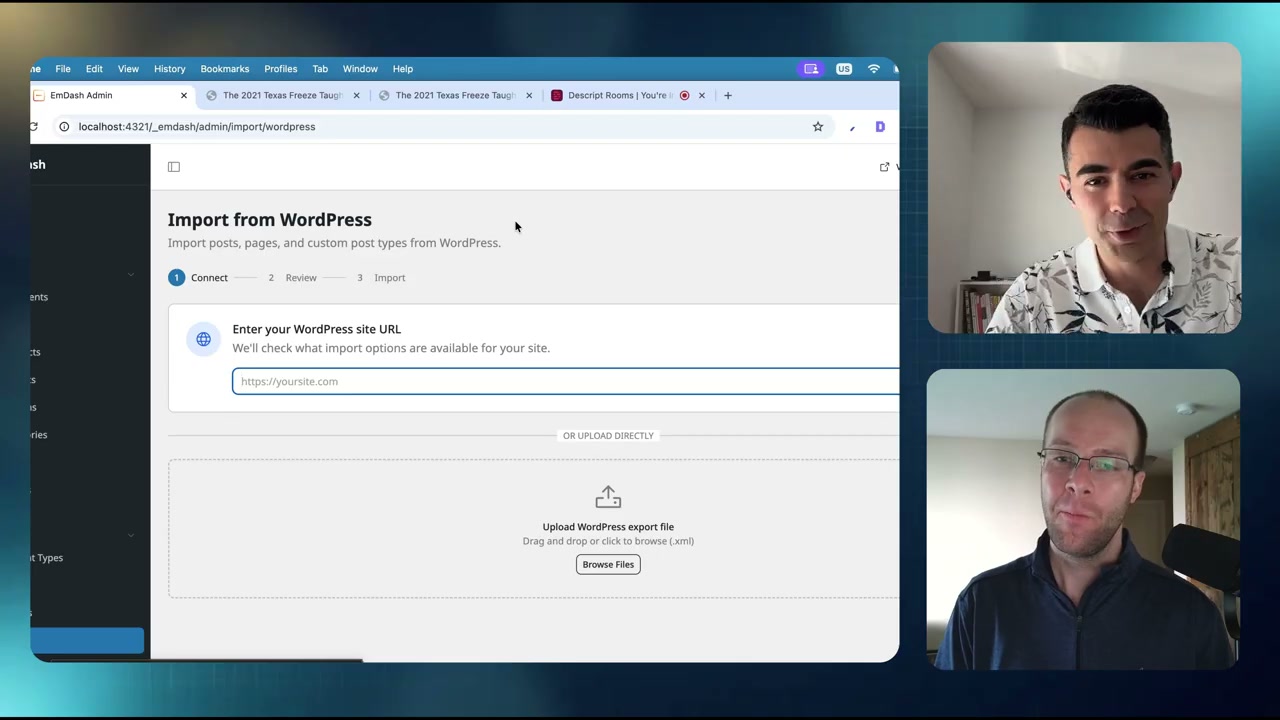
| WordPress import | N/A | Yes, built-in |
WordPress still wins on community size, plugin depth, and team workflows. The Cloudflare EmDash CMS wins on architecture and agent compatibility. Most teams reading this should not migrate today. EmDash is a clear MVP, plugins are not there yet, and editorial workflows for groups of writers are a real gap.
The Yoast Founder Just Bet on EmDash
Here's a fact that surprised me. Joost de Valk, founder of the Yoast SEO plugin and a 15-year WordPress veteran, is now building his next plugin on EmDash.
His argument is direct: WordPress keeps shipping new features without fixing the core issues, and the window to fix them is closing. When the most-downloaded SEO plugin author in WordPress history says that out loud, the signal carries weight.
Nesil agreed on the call. "This story is too big," he said. One defection from a niche developer is noise. A defection from the author of the plugin most WordPress sites run is a different kind of news.
You Might Not Even Need a CMS Anymore
Here is the part I find most interesting, and it goes beyond EmDash.
Nesil and I are working on a project where we ditched the dashboard entirely. The site lives as Markdown files in a GitHub repo. Claude Code edits the files. Vercel or Cloudflare deploys the changes live. No CMS at all.
EmDash supports this same workflow. Drafts are Markdown files you can edit through Claude Code and push live without opening the admin panel. For solo operators, that removes a layer most teams take for granted.
This will not work for every team. If five writers need to review drafts back and forth, you still need a CMS in the middle. For solo entrepreneurs and consultants, the Markdown plus Git plus AI agent stack is genuinely faster than logging into WordPress.
Honest Caveats on EmDash Today
EmDash has real gaps. The plugin system Cloudflare promised does not exist yet. Themes are bare. Editorial workflows for teams are missing. The dashboard looks polished but the ecosystem behind it is essentially empty.
Lovable, Replit, and Base44 are not the answer either. They render content client-side with JavaScript, which means AI crawlers from ChatGPT and Perplexity get back almost nothing. Zero citations. Same reason I tell people to avoid AI slop when scaling content.
For most readers, the right move today is to stay on WordPress and watch EmDash quarterly.
Ryan's Final Thoughts
WordPress is not dead. It powers 40% of the internet and the community is enormous. But the Cloudflare EmDash CMS is the loudest wake-up call WordPress has gotten in a decade. The Yoast founder defection alone should make the WordPress core team uncomfortable.
If plugins ship and editorial workflows mature, the calculus changes fast. For now, run a test site on EmDash, keep your real site on WordPress, and learn the new stack before you need it. Subscribe for more AI Rabbit Holes episodes covering tools like this one.

Cloudflare EmDash CMS FAQs
What is the Cloudflare EmDash CMS?
EmDash is Cloudflare's new open-source CMS, built on Astro and TypeScript as an agent-first alternative to WordPress. It runs serverless on Cloudflare Workers, sandboxes every plugin in an isolated Worker, and ships with native MCP and CLI support for AI agents to manage content directly.
Is EmDash a real WordPress alternative in 2026?
Not yet for most teams. EmDash is currently an MVP with no plugin ecosystem and weak editorial workflows for groups. Solo operators and developers can use it today. Most WordPress sites should keep watching it for two to three quarters before considering a migration.
How is EmDash different from headless CMS options?
EmDash is closer to a hybrid. It provides a familiar dashboard like WordPress but stores content as discrete fields LLMs can pull selectively, ships with native MCP and Agent Skills for AI tools, and runs serverless on Cloudflare. Most headless CMS platforms predate this AI-agent layer and require custom integration to match it.
Can I import my WordPress site into EmDash?
Yes. EmDash includes a built-in WordPress import feature in the admin panel. You enter your WordPress site URL or upload an XML export and it pulls posts, pages, and custom post types into EmDash. The feature is new, so test it on a staging site before trusting it for a production migration.
Should I switch from WordPress to EmDash today?
For most sites, no. WordPress still has the larger community, deeper plugin ecosystem, and proven team workflows. EmDash is worth a test install on a non-critical project to learn the architecture. Revisit the decision once plugins ship and editorial features mature later in 2026.