
Claude Skills vs Perplexity Spaces: Main Differences
People line up Claude Skills vs Perplexity Spaces like they do the same job, and that is where the confusion starts. They sit on opposite ends of your workflow. One helps you know things. The other helps you ship them.
They Are Not Actually Competitors
Here is the reframe that makes this whole comparison click. Perplexity is an answer engine, so a Space is built to help you research a topic and organize what you find. Claude is built to do work, so a skill is built to produce a finished thing.
Put plainly, a Space is where you go to understand a problem, and a skill is what you run to solve it. Once you see that split, picking between them stops being a fight and starts being a question of which stage of the work you are in right now.
That does not mean one is better. It means they belong at different stages, and a lot of people get frustrated because they reach for the research tool when they actually need the production tool, or the other way around.
What a Perplexity Space Actually Is
A Space is a dedicated workspace inside Perplexity where you gather research around one topic or project. Think of it as a smart folder for a question you are chasing.
You can upload files so the Space searches your own documents alongside the web, set custom instructions so every thread in the Space follows the same tone and focus, and pick from leading models like Claude, GPT, and Gemini on the paid tiers. You can also invite a few collaborators to work in the same Space, which makes it genuinely good for team research. Spaces are available on the free plan with limits, and the fuller feature set comes with Perplexity Pro.
What a Space is great at is answering. You point it at a messy question, feed it your sources, and it helps you understand the territory fast. It even has some lightweight task abilities now, but it is built first to help you research, not to ship a finished deliverable.
What a Claude Skill Actually Is
A Claude Skill is the production tool. It is a folder with a markdown file called SKILL.md inside it, holding the instructions for one specific task you want done your way, every time.
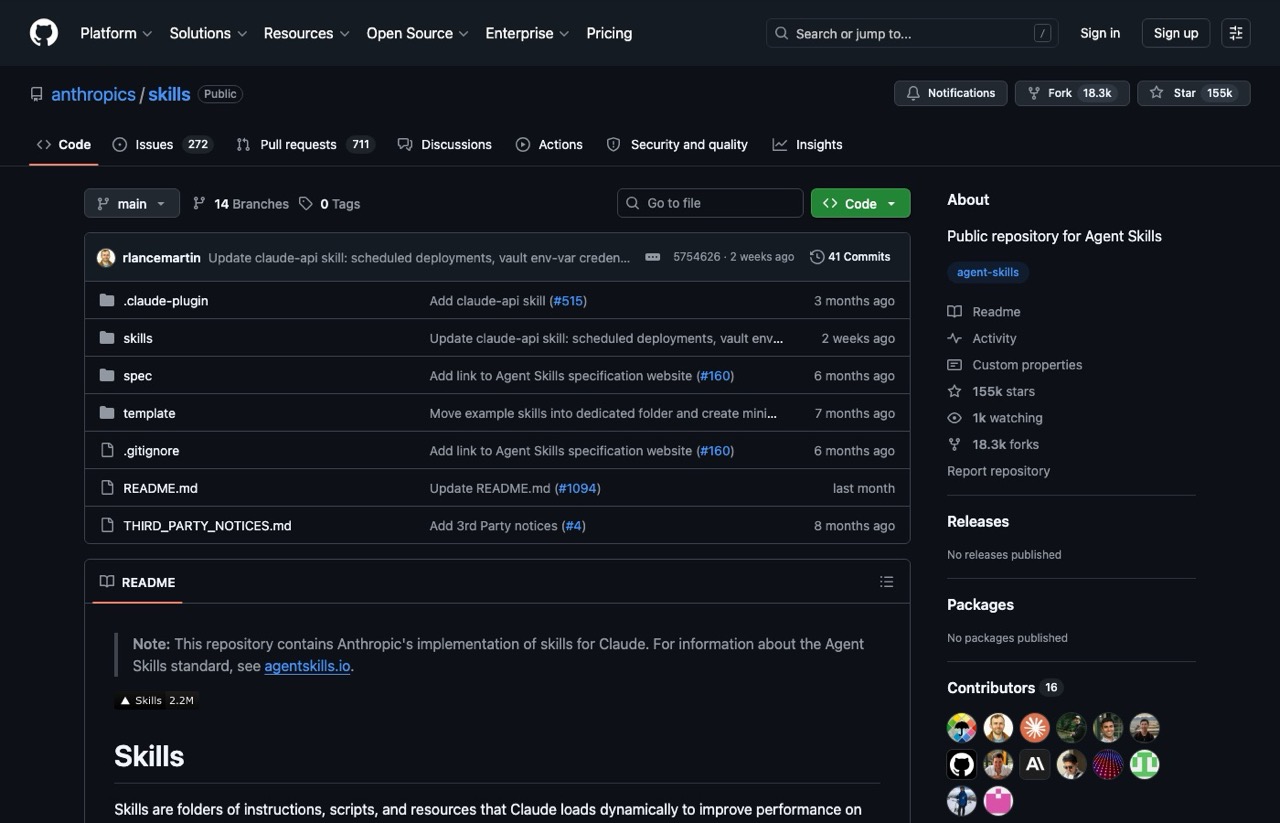
Claude reads the short description of each skill first, then loads the full file only when your request matches. This is called progressive disclosure, and it keeps things fast even with a stack of skills on hand. A skill can also carry scripts and reference files, so it does not just advise, it executes. If the format is new to you, I broke it down in my guide on how to create Claude Skills.
The point of a skill is output. You do not open a skill to learn about SEO. You run it to produce the ranked blog post, the sent email, the finished deliverable. Where a Space ends with understanding, a skill ends with something shipped.
The Real Divide: Research vs Production
Strip away the features and this is the difference that matters. A Space helps you arrive at an answer, while a skill takes a decision you have already made and turns it into a shipped result.
Picture writing a market report. The research phase fits a Space perfectly. You drop in your PDFs, ask hard questions across them and the web, and pull the picture together with a teammate. Then comes the part where someone has to actually write the thing in your voice, with your structure and your standards. That is skill territory, because the skill carries how you produce, not just what you found.
Force a Space to be your production line and you end up doing the writing by hand anyway. Push a skill to act as your research hub and you feed it context it was never meant to gather. Pointed at the wrong stage, both feel weak. Matched to the right one, both are excellent.
Here is where most people go wrong. They run their research inside Perplexity, get a clean answer, and then paste that answer into a chat and ask it to write the final piece from scratch. The output is generic, because the answer told them what is true, not how they ship. A skill closes that gap. It already holds your structure, your voice, your banned words, and the checks you run, so the same research turns into a finished piece that sounds like you instead of like a summary.
The reverse mistake is just as common. Someone builds a skill and then keeps dumping raw research into it every time, treating it like a search bar. That buries the skill in context it was never built to manage, and the quality drops. The fix is to let each tool do its half. Gather and understand in the Space. Hand the clean conclusion to the skill. Produce the deliverable with the skill.
Two More Differences Worth Knowing
Beyond research versus production, two practical gaps shape which you reach for.
The first is ownership. A Space lives inside Perplexity, tied to your account, with no documented way to export it as a file you hold. A Claude Skill is just a folder of text you own outright, so you can copy it, version it, and move it anywhere. If you are building an asset you want to keep, that gap matters, the same ownership case I make in Claude Skills vs Custom GPTs and in Claude Skills vs Gemini Gems.
The second is reach. A Space stays inside the Perplexity app, while a skill runs across Claude apps, Claude Code, and the API. That wider reach is part of why marketers should use Claude Code once you are building real workflows instead of asking one-off questions.
Use Them Together
The smartest move is not to pick a winner. It is to run them in sequence, each on the stage it owns.
Start in a Space when you are learning something new, scoping a project, or pulling scattered sources into one understanding. Then switch to a skill when it is time to produce the output that research pointed to. Research with Perplexity, ship with Claude.
Say you are writing a piece to outrank a competitor. You open a Space, drop in the top-ranking pages and your own notes, and use it to figure out what those pages cover, where they are thin, and what angle is still open. That is research, and a Space is built for it. Once you know the gap, you hand that brief to a blog-writing skill that already knows your structure and standards, and it produces the draft built to beat what you studied. The Space found the opening. The skill shipped through it. If you want production skills ready to run on day one, my AI Skills Stack is a set with the marketing expertise already written in.
Ryan's Final Thoughts
Claude Skills vs Perplexity Spaces is a know-versus-ship question, not a head-to-head. Spaces are a strong research workspace when you need to understand a topic and organize what you find, especially with a team. Claude Skills are what you run when it is time to produce the work, in your voice, that you own and can improve over time. Get smart on the problem inside a Space, then let a skill ship the answer. Most real workflows need both.