
Claude Mythos: Anthropic's Most Dangerous AI Model Yet
Anthropic just announced Claude Mythos Preview, a frontier model so capable at cybersecurity tasks that the company decided not to release it to the public. The news broke on red.anthropic.com, and the benchmarks are the reason everyone in security is paying attention.
What Claude Mythos Actually Is
Anthropic calls it a general-purpose model. Security researchers are calling it something else. The first thing you notice in the official post is how openly the company admits the risk. Mythos Preview scored a 72.4% success rate on Firefox 147 JavaScript shell exploitation. Claude Opus 4.6 hit 14.4% on the same test.
That jump is the whole story. A model that can autonomously write working browser exploits is not a productivity tool. It is a weapon with a chat interface. If you want to go deeper on how Claude is reshaping modern work, I put together the Claude Code Skills Stack with every workflow I actually use.
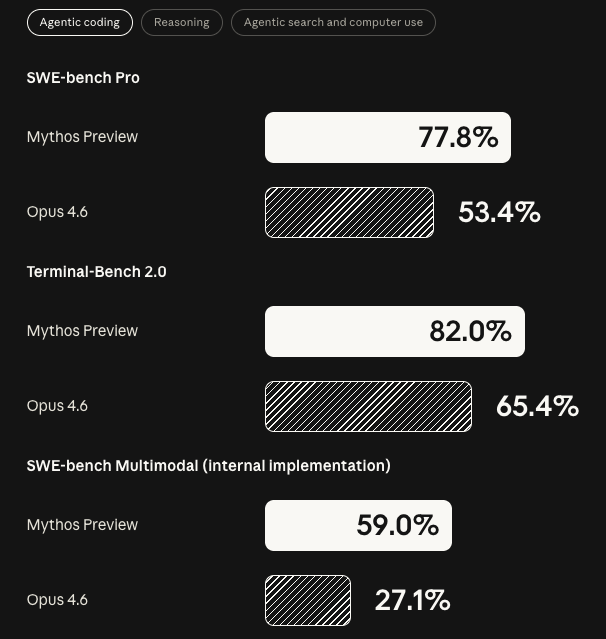
Opus 4.6 built a working Firefox exploit twice across hundreds of attempts. Mythos did it 181 times in the re-run. The post also mentions a 27-year-old OpenBSD TCP bug the model discovered on its own, plus a 16-year-old flaw in FFmpeg's H.264 codec that sat unnoticed for over a decade.
How Claude Mythos Performs on Software Benchmarks
Security was not the only area where Mythos pulled ahead. On SWE-bench Pro, the model scored 77.8% versus 53.4% for Opus 4.6. On SWE-bench Verified, Mythos reached 93.9%. GPQA Diamond came in at 94.6%, and the model also showed strong results on Humanity's Last Exam, a benchmark built to resist AI progress.
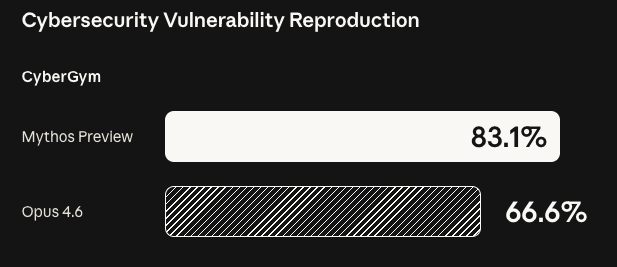
What makes these numbers unusual is the method. Anthropic credits the gains to test-time compute scaling. The longer Mythos is allowed to think through a chain of reasoning, the more accurate it gets. That is different from training a bigger model. It means existing models can improve just by reasoning longer. For a deeper read on how this shift is playing out, see my take on why marketers should use Claude Code.
Why Anthropic Is Holding Claude Mythos Back
Here is where the story shifts from research paper to industry reckoning. Anthropic's own words: "We do not plan to make Mythos Preview generally available." Instead, the company launched Project Glasswing, a limited access program with partners like AWS, Apple, Cisco, CrowdStrike, Google, JPMorganChase, Microsoft, NVIDIA, and the Linux Foundation.
The program commits $100 million in usage credits and $4 million in direct donations to open source security organizations. The goal is defense-first. Get the model into the hands of the people patching critical infrastructure before anyone else can replicate what Mythos can do.
Over 99% of the vulnerabilities Mythos has already found remain unpatched, which is why Anthropic refuses to share details. Simon Willison called the restriction warranted. I agree. The security risks here are credible in a way earlier "AI finds bugs" claims never were. If you are weighing which model to trust for serious work, my guide on switching from ChatGPT to Claude covers the practical tradeoffs.
My Honest Take on the Claude Mythos Rollout
The Anthropic IPO is coming, and a story this loud lands at a convenient time. I do not think the benchmarks are fake. I do think the framing matters. A defense-first narrative is the only way a company ships a model this powerful without regulators pulling the emergency brake.
The cybersecurity angle is real. So is the marketing. Both things can be true. What I keep coming back to is the gap between 14.4% and 72.4% on the same exploitation test. That is not a slow climb. That is a cliff. If an aligned lab can produce this model today, an unaligned one can produce something similar soon. The defense window Anthropic keeps talking about is not rhetorical. It is a clock. For practical applications of safer Claude workflows, my post on Claude Skills walks through the day-to-day use cases I rely on.
Ryan's Final Thoughts
Claude Mythos is the clearest signal yet that AI capability gains are outrunning our ability to govern them. Anthropic made the right call holding it back. The harder question is what happens when the next lab does not. Keep watching Project Glasswing. The partners list tells you which companies already believe the threat is real.
Claude Mythos FAQs
Is Claude Mythos available to use right now?
No. Anthropic has stated it will not release Mythos Preview to the general public. Access is limited to Project Glasswing partners, which includes critical infrastructure companies and open source security maintainers. Regular Claude users will not see Mythos in the app or API.
Why is Claude Mythos considered dangerous?
Mythos can autonomously find and exploit software vulnerabilities at a level previous models could not reach. It scored 72.4% on a Firefox exploitation benchmark where Opus 4.6 hit 14.4%. The same capabilities that make it useful for defenders would make it devastating in the wrong hands, which is why Anthropic is gating access.
What is Project Glasswing?
Project Glasswing is Anthropic's controlled deployment program for Mythos Preview. It gives limited model access to 12 partners including AWS, Apple, Cisco, CrowdStrike, Google, JPMorganChase, Microsoft, NVIDIA, and the Linux Foundation. Anthropic committed $100M in usage credits and $4M in donations to open source security organizations.
How does Claude Mythos compare to Claude Opus 4.6?
Mythos beats Opus 4.6 across every benchmark Anthropic shared. SWE-bench Pro jumped from 53.4% to 77.8%. SWE-bench Verified reached 93.9%. GPQA Diamond hit 94.6%, and the model also showed strong results on Humanity's Last Exam, a benchmark built to resist AI progress. The biggest gap is in cybersecurity, where Mythos scored nearly five times higher than Opus 4.6 on Firefox shell exploitation.