
The AI Marketing Stack Behind a 100K YouTube Channel
Every marketer wants to know what ai marketing stack a successful creator actually uses day to day. I sat down with Grace Leung, an AI marketing expert with over 146,000 YouTube subscribers, to find out exactly that.
Inside This YouTuber's AI Marketing Stack
Grace's answer might surprise you. She doesn't juggle dozens of tools. Her core stack runs on three platforms.
Claude handles roughly 80% of her daily marketing work. She uses both the web application and Claude Code, building reusable skill files and connected workflows that compound over time. For market research, she turns to Perplexity. And for deep topic analysis, NotebookLM remains her go-to.
That's it. Three tools powering a six-figure YouTube channel and consulting business.
The pattern matters more than the specific tools. Grace picked platforms that do multiple jobs well instead of stacking single-purpose apps. This reflects a broader shift in 2026: frontier AI models like Claude and Gemini now handle presentations, landing pages, animations, and content creation. Standalone SaaS tools that only did one thing are getting replaced fast.
Why System Thinking Beats Tool Chasing
I asked Grace whether marketers still using ChatGPT are behind. Her answer was blunt: most people haven't used any AI at all. If you're using ChatGPT and building real workflows, you're already ahead of the majority.
But Grace pushed back on something I said. I argued that marketers winning right now are moving toward IDEs and terminals like Claude Code. She agreed with the direction but added a caveat: the tool isn't what makes the difference. How you think about your work is what matters.
"People say ChatGPT is dumb, so I'm going to jump to Claude," Grace said. "But if you use Claude like a chatbot, you'll get chatbot results. Start with whatever you have. Build a system around it."
This is the core of her ai content creation workflow. She builds reusable SOPs and skill files that work across platforms. If Claude disappeared tomorrow, her systems would transfer because the thinking is portable. The tool is just a container.
The biggest waste of time she sees? FOMO. Marketers chasing every new feature and never building anything that compounds. Remember Sora? People spent hours learning a tool that no longer exists.
How Grace Uses AI for YouTube Content
Grace doesn't automate her content creation. That might sound contradictory for someone with 127K subscribers, but her reasoning is practical: "When we talk about impact, about actually generating clients and building trust, full automation isn't there yet."
Instead, she uses AI for the strategic layer of her ai marketing automation workflow:
- Finding angles and framing for new videos using Claude
- Content gap analysis to spot what competitors miss
- ICP critiques where AI reviews her content from her target audience's perspective
- Pattern analysis across her existing content to find what resonates
She'll feed Claude her ideal customer profile and ask it to critique a video draft. Does it resonate? Is the pacing right? AI becomes a strategic reviewer, not a content factory.
For research, she relies on NotebookLM for marketing because it only uses the sources you provide. It won't mix in random training data the way a GPT or project might. She extracts structured data tables from NotebookLM, then feeds those back into Claude for deeper analysis. That loop between tools is where the real power lives.
Claude Code for Marketing: Grace's Setup
Grace walked through her actual Claude Code project structure during our conversation. She organizes it the way a real business runs.
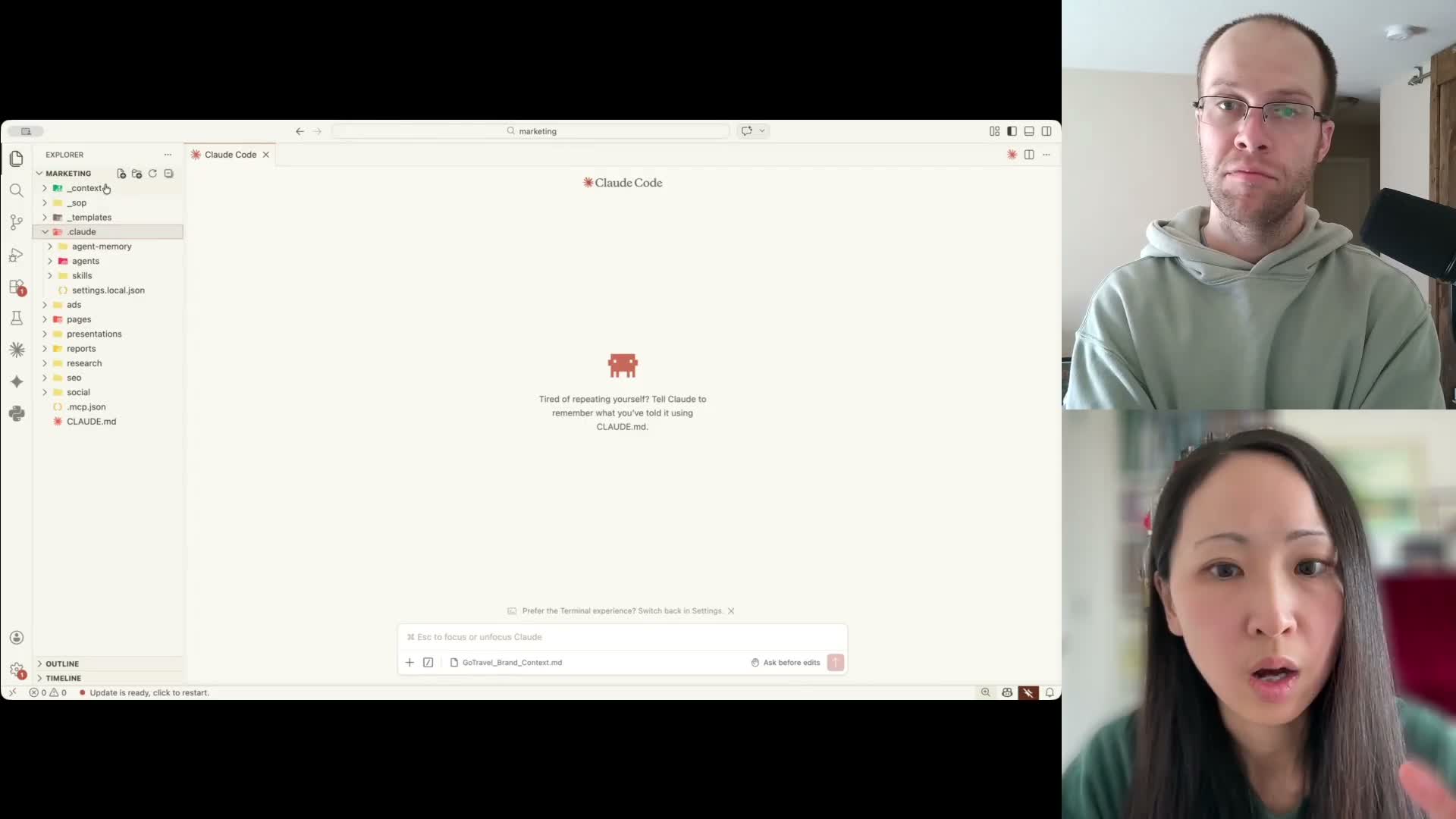
Her setup includes:
- Context files covering brand identity, target audience, product offerings, and marketing strategy
- Skill markdown files for repeatable workflows like branded decks and campaign briefs
- Agent configurations that group related skills for focused output
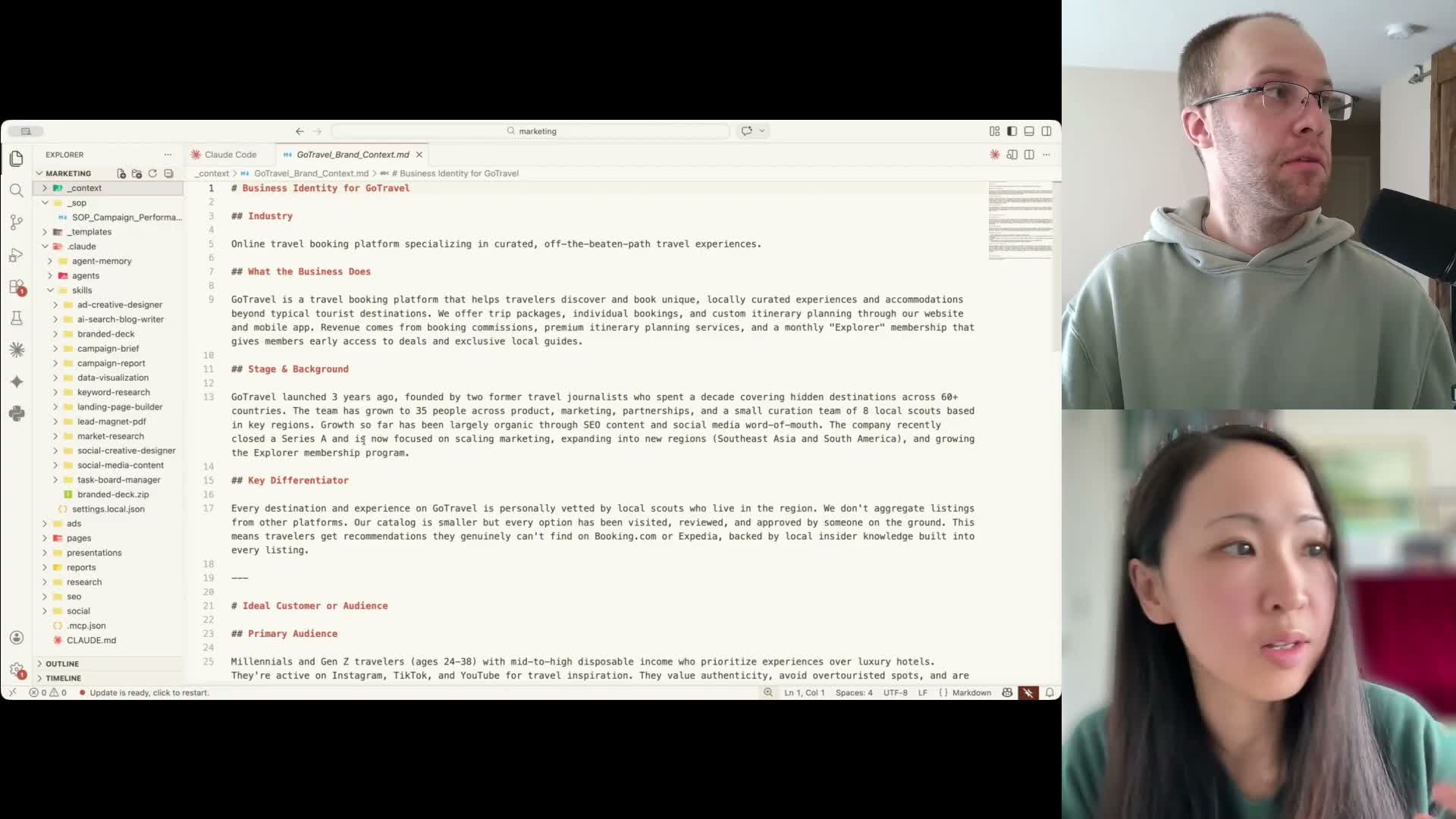
The key insight: start with skill files before building agents. A creative designer agent only works well when you've already defined the skills it should pull from. Skills are the foundation. Agents are the orchestration layer you add later.
Both Grace and I use Claude Code for marketing inside Visual Studio Code. It's free, approachable for non-coders, and keeps everything local. If Claude Code disappeared tomorrow, your skill files still work with whatever AI coding tool comes next.
For marketers just getting started, Grace recommends beginning with the Claude web application first. Build a project. Write a system prompt. Create your first skill. Then graduate to Claude Code when the web app starts limiting you.
YouTube as Your Content Foundation
Grace and I agree on this: YouTube should be the starting point for your ai marketing tools 2026 strategy, not an afterthought.
YouTube videos now appear in almost every Google search result page. Gemini, ChatGPT, and Perplexity all scrape YouTube transcripts as knowledge sources and cite videos directly in AI-generated answers. Your YouTube content feeds blog posts, social media, newsletters, and podcast clips.
That originality is what Google's algorithm rewards through "information gain." Grace recommends using AI to analyze Reddit threads, YouTube comments, and forum discussions to uncover audience pain points. That's a stronger content foundation than copying whatever the current top search results say.
For more on building Claude Skills that automate repurposing, or connecting external data sources through MCPs in Claude Code, I cover both in separate walkthroughs. If you want the repurposing workflow ready-made instead of built from scratch, that is what my AI Content Engine is.
Final Thoughts from Ryan
Grace's ai marketing stack proves that fewer tools with better systems will always beat a bloated toolkit. Three core platforms. Reusable skill files. A system thinking mindset that transfers regardless of which AI tool is on top next month.
Start with what you have, build a system around it, and upgrade only when the tool genuinely limits your output.
Follow Grace Leung on YouTube for more on AI marketing systems. You can also find her on her website and LinkedIn.
AI Marketing Stack FAQs
What is an AI marketing stack?
An AI marketing stack is the set of AI tools and systems a marketer uses for daily work. A strong stack connects a few core platforms through reusable workflows rather than juggling disconnected apps. Grace Leung's stack centers on Claude, Perplexity, and NotebookLM.
Do I need Claude Code to build an AI marketing stack?
Not right away. Grace recommends starting with the Claude web application. Build a project, write a system prompt, and create repeatable skill documents there first. Move to Claude Code once the web app starts limiting you.
How many AI tools should be in my marketing stack?
Fewer than you think. Grace runs her entire 127K-subscriber channel and consulting business on three core tools. The trend in 2026 is consolidation, not expansion. Pick platforms that handle multiple workflows well.
Is ChatGPT still a viable AI marketing tool in 2026?
Yes. Most marketers haven't adopted any AI yet. If you're actively building workflows in ChatGPT, you're ahead of the majority. The tool matters less than the systems you build with it.
What's the biggest mistake marketers make with AI tools?
Chasing every new feature and product launch instead of building systems that compound. Grace calls it FOMO. Tools like Sora attracted massive attention and then vanished. The marketers who invested in reusable workflows instead of hype stayed ahead.