
Why I Quit ChatGPT in 2026 (Best ChatGPT Alternatives)
The following article explains why I quit ChatGPT in 2026 including the best ChatGPT Alternatives. I don't see myself coming back.
Best ChatGPT Alternatives in 2026
You might be wondering if quitting ChatGPT Plus is even worth the hassle of switching. Here's the short answer: for me, yes. The platforms I moved to are doing things OpenAI simply can't match right now.
Claude: My Daily Driver for Business Work
The main reason I moved was Claude Opus 4.5, the best model available at the time. Anthropic has since shipped Claude Fable 5 and then Fable 5.1 for the hardest work, but my daily driver in Claude Code today is Opus 5.5, for the reasons in why I switched to Opus 5.5 for writing. I was using Claude Sonnet 4.5 for a while, but every flagship upgrade since has made the outputs noticeably better.
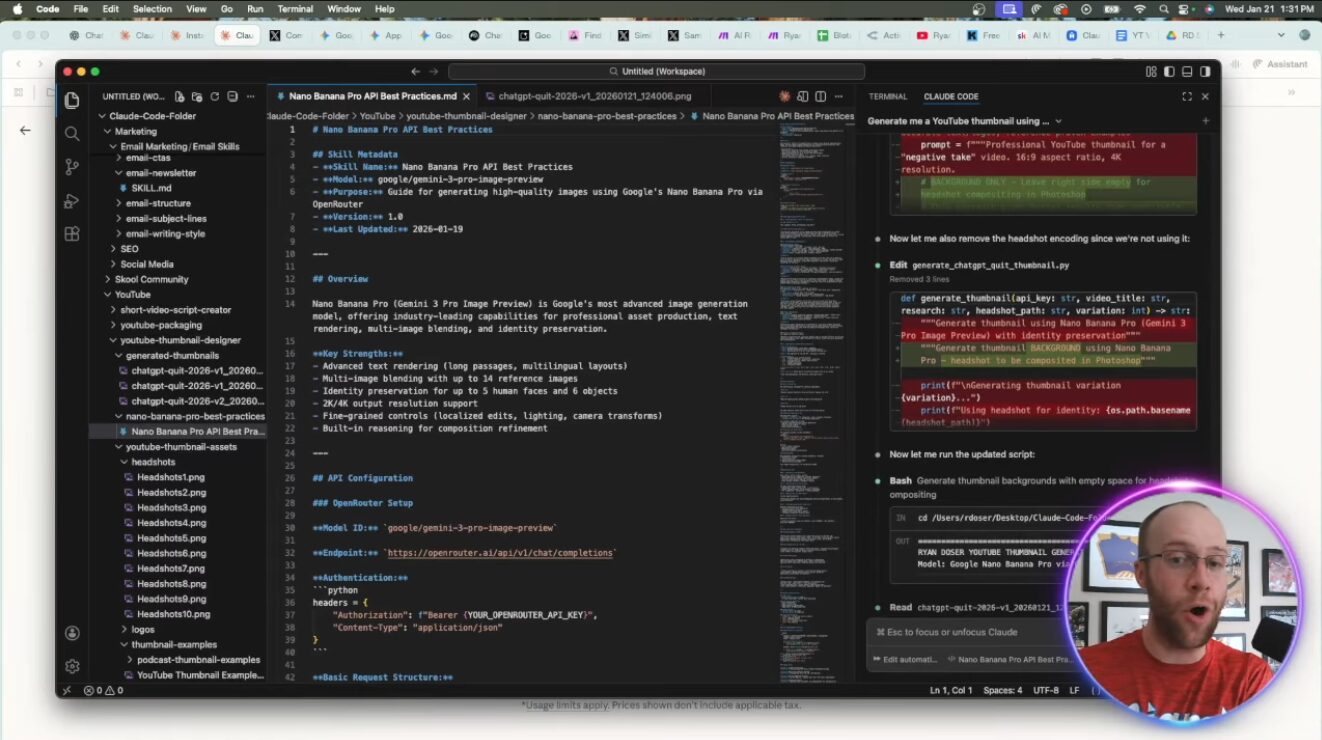
I'm now on the Claude Max plan at $100/month. That sounds like a lot, but Claude Code is a huge part of why. I'm generating YouTube thumbnails inside Claude Code by connecting to Google's Nano Banana 2 API, writing automation scripts, and building marketing workflows I couldn't run before. The more I use it, the more the light bulb clicks.
If you try to get serious work done on Claude Pro or the free version, you'll hit limits fast. Max gives you five or twenty times Pro's usage, which is the headroom that heavy work needs.
If you're weighing ChatGPT's own top tier instead, here is why ChatGPT Pro stopped being worth it as a solo plan after DevDay.
Perplexity's Comet agentic web browser now runs on Claude by default (Opus 4.6 for Max subscribers). Even third-party platforms are betting on Anthropic's models. That tells you something.
Google Gemini: The Ecosystem Nobody's Talking About
This is the bigger story. Google went from the laughingstock of AI (remember Google Bard?) to a powerhouse in under two years. Since Gemini 3 dropped, they've been shipping constantly. Gemini 3.1 Pro is still the newest Pro model, in preview, while the Flash line has kept moving and is now up to Gemini 3.8 Flash.
I'm on Google AI Pro at $20/month. For that, I get expanded Gemini access across the entire Google suite: Docs, Sheets, Gmail, and NotebookLM. Plus five terabytes of storage. As a content creator with large video files, that storage alone is worth it.
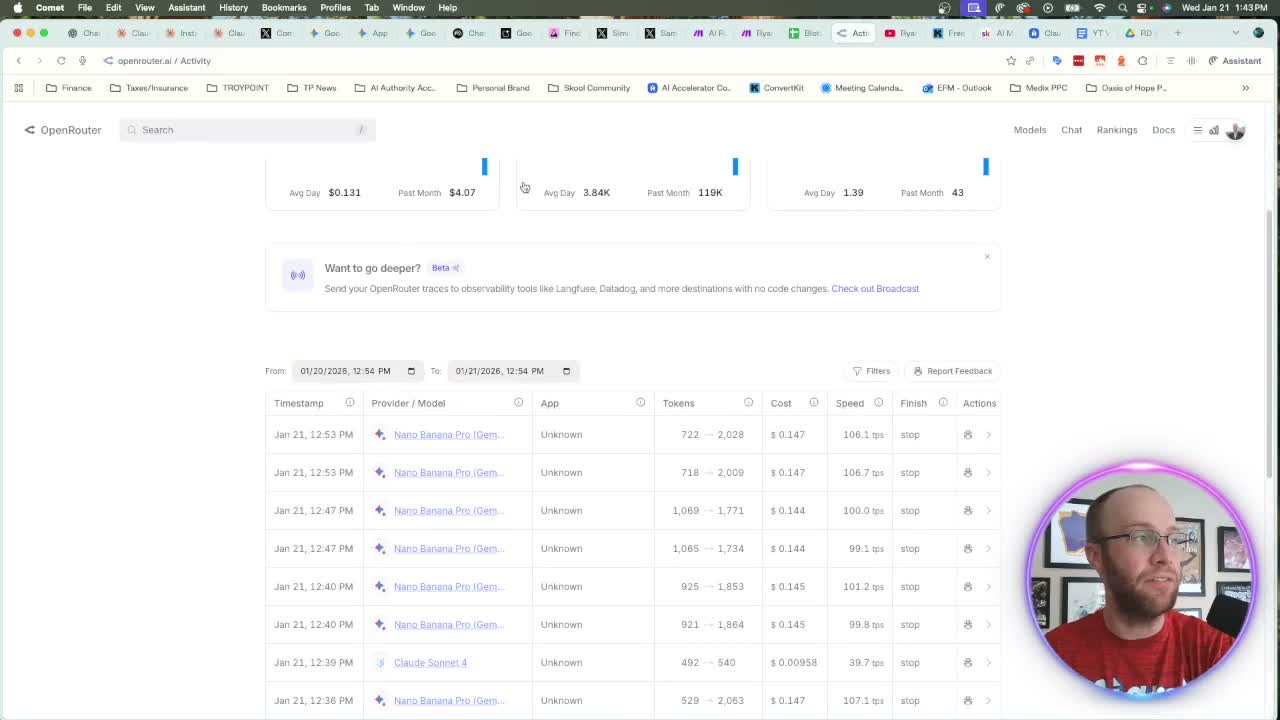
Here's why I think Google wins long-term on media generation: they have YouTube to train their Veo 3.1 video model and billions of indexed images to train the Nano Banana image models. No competitor can replicate that data advantage. If you're doing anything with AI images or video, being in Google's ecosystem is the obvious call.
The SimilarWeb data backs this up. In early 2025, ChatGPT held 86.7% of generative AI traffic share and Gemini sat at 5.7%. By January 2026, ChatGPT had dropped to 64.5% while Gemini climbed to 21.5%. That's a massive shift. Google's distribution machine (Android, Chrome, Apple's Siri partnership, Google Play) means that gap will keep closing.
Why Memory Was the Last Thing Keeping Me on ChatGPT
ChatGPT has always had better memory than Claude or Gemini. That's the honest truth. It was the main reason I stuck around as long as I did.
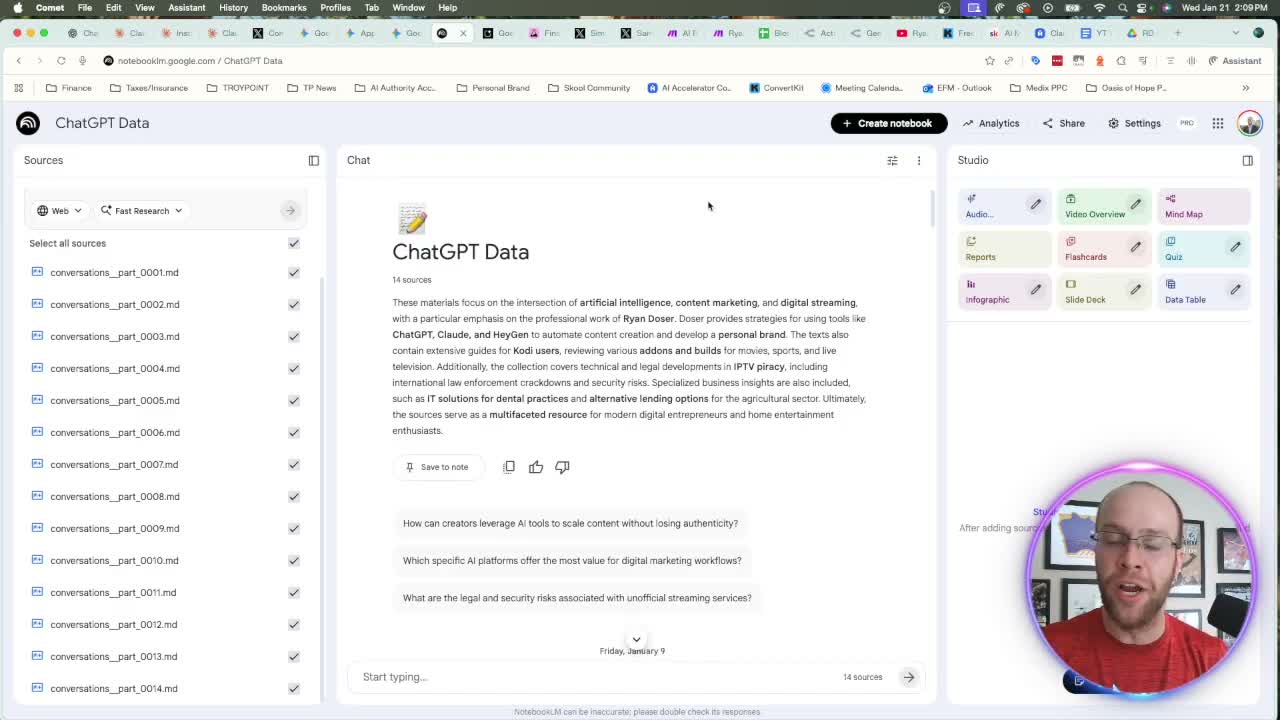
But two things changed. First, I found a way to export all my ChatGPT history and upload it to NotebookLM, Gemini, and Claude. So I didn't lose anything. Second, Google launched Personal Intelligence, which pulls from your history across Search, YouTube, Gmail, Drive, Maps, and more. That kind of cross-app memory context blows ChatGPT's memory out of the water.
Once I cracked both of those problems, there was nothing left holding me to OpenAI's ecosystem.
The Google Tools Worth Knowing About
Beyond the Gemini chat app, Google has built out a suite of free tools most people overlook.
NotebookLM is the most useful. You upload sources (PDFs, YouTube videos, markdown files, website links) and use a Gemini-powered chatbot to extract exactly what you need. No irrelevant training data bleeding through like you get with a custom GPT. The Studio tab keeps adding features: infographics via Nano Banana, slide decks, mind maps, and video overviews powered by Veo.
Google AI Studio is another one. You can build apps, generate images with the latest Nano Banana models, and screen share directly with Gemini to get real-time help debugging an automation. I've used that screen share feature to troubleshoot workflows in real time. It works.
Google Labs is where new experiments live before they graduate into full products. NotebookLM came out of Labs. Google Flow and Pali are recent ones worth watching.
None of this is available inside OpenAI's ecosystem at this quality level or price point.
Should You Cancel ChatGPT Plus?
Let me be straight about this. If ChatGPT Plus is working for you, I'm not telling you to drop everything and switch today.
But if you're paying $20/month and you're not sure you're getting the value, here's what I'd do instead. Spend that same $20 on Google AI Pro. You get the Gemini 3 model family (which SimilarWeb data shows closing the gap on ChatGPT fast), five terabytes of storage, NotebookLM access, and Nano Banana for image generation. That's a better return on $20 for most people.
If your work involves serious coding, long-form content, or complex reasoning, Claude is worth the investment. Even Claude Pro at $20/month is a meaningful upgrade over ChatGPT Plus for writing quality. Claude Pro already includes Claude Code. Claude Max is for people who run it hard and need five or twenty times Pro's usage.
The reality is OpenAI had a three-year head start, and that advantage is shrinking fast. I'd rather build my workflows inside ecosystems that are growing stronger, not ones that are playing defense.
Ryan's Final Thoughts
I cancelled ChatGPT Plus because the tools I use every day are simply doing more for my work. Claude handles business writing and Claude Code. Google handles research and media. The memory advantage that kept me on ChatGPT is gone. Google's Personal Intelligence and the ability to export ChatGPT history solved that problem.
This isn't about hating on OpenAI. ChatGPT built this entire category. But for what I'm doing in 2026, Anthropic and Google are where I'm putting my time and money.
If you're on the fence, try the free versions of Claude and Gemini for a week before you decide anything.
When you do commit, the official import tool makes the move take about five minutes.
ChatGPT Alternatives FAQs
Why did Ryan quit ChatGPT Plus?
After three-plus years as a power user, the memory advantage that kept him on ChatGPT was solved by exporting his history and using Google's Personal Intelligence feature. Claude's current models (Opus 5.5 day to day, Fable 5.1 for the hardest work) and Google's Gemini 3 family outperform ChatGPT for his actual daily work in content creation, copywriting, and automation.
Is ChatGPT Plus worth it in 2026?
For most users, probably not at the same value-to-cost ratio it once had. Google AI Pro at $20/month now includes the Gemini 3 models, NotebookLM, Nano Banana image generation, and five terabytes of storage. Claude Pro at $20/month produces better long-form writing and reasoning for many tasks. ChatGPT Plus still makes sense if you rely heavily on its ecosystem or specific integrations.
What are the best ChatGPT alternatives in 2026?
The two strongest are Claude (Anthropic) and Google Gemini. Claude leads on reasoning, copywriting, and code, with Opus 5.5 as the everyday model and Fable 5.1 for the hardest problems. The Gemini 3 family leads on research, media generation, and cross-app context through Google's ecosystem. Perplexity is worth adding for research and real-time web queries.
Is Claude better than ChatGPT for marketing?
Based on real production use, Claude produces tighter, less verbose copy and follows brand guidelines more consistently than ChatGPT. It's less prone to the generic, over-hedged outputs ChatGPT often defaults to. For long-form content, email, and landing page copy specifically, Claude is the stronger choice.
How do I switch from ChatGPT to Claude or Gemini?
Export your ChatGPT data from your account settings, then upload the conversation history to NotebookLM or Claude as a source file. This preserves the context and preferences you've built up. From there, spend a week running your normal prompts in Claude and Gemini to find where each one fits your workflow best.